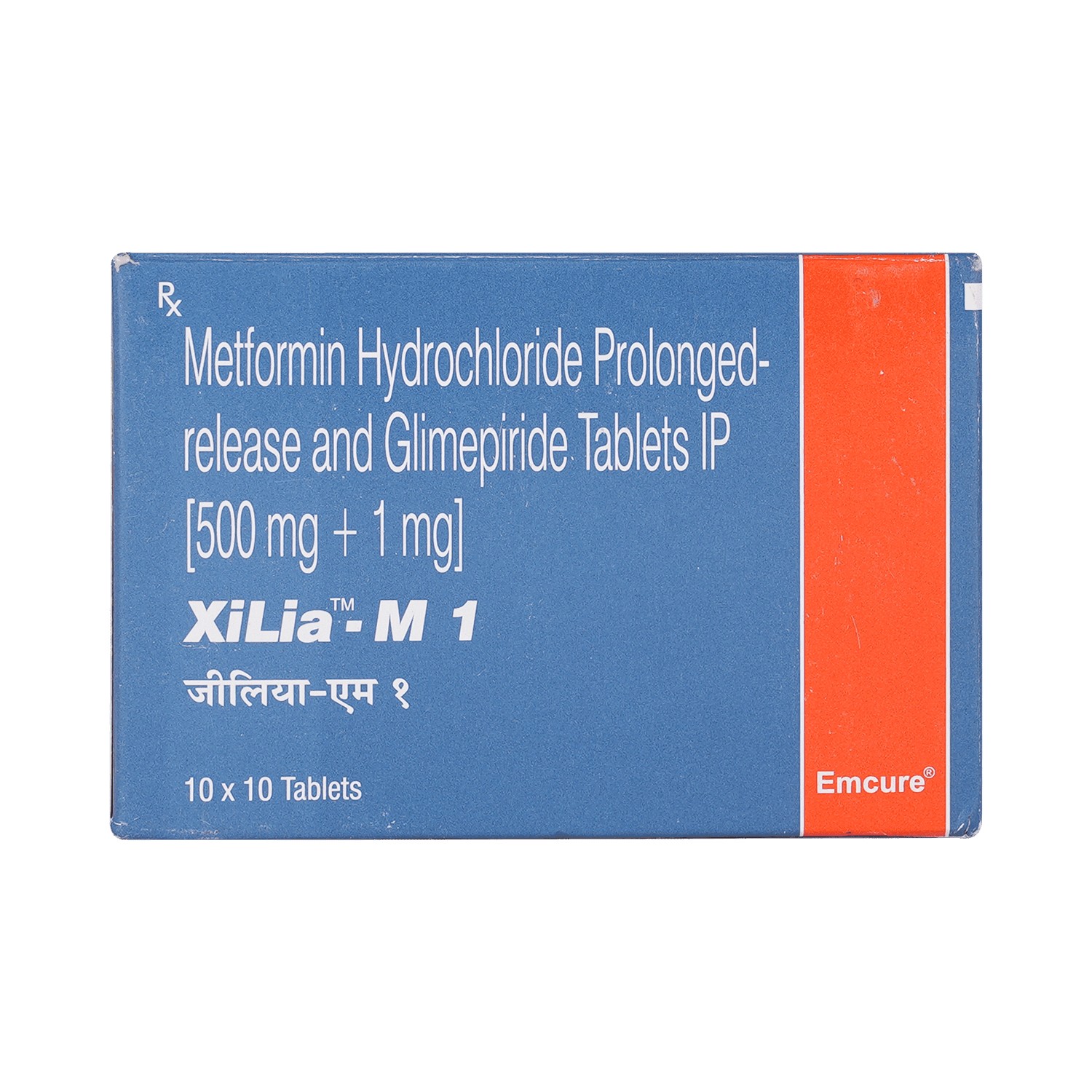
Images are for product identification. Refer to the selected batch for packaging and availability.
Xilia M 1
Glimepiride (1mg) + Metformin (500mg)
YOUR PURCHASE PRICE
1 in stockInclusive of all taxes
Available batch
1 offerSign in to order for your pharmacy.
Product information
- Manufacturer
- Emcure Pharmaceuticals Ltd
- Category
- Allopathy
- Composition
- Glimepiride (1mg) + Metformin (500mg)
- Packaging
- 10 TABLET
- Box / case pack
- 1 / —
Description
XILIA M 1
XILIA M 1 is a combination medication manufactured by Emcure Pharmaceuticals Ltd., primarily prescribed for the management of Type 2 Diabetes Mellitus in adults. It is commonly available under names such as Xilia M 1 Tablet PR, Xilia M1/500MG TABLET, Xilia M 1mg Tablet, and Xilia-M 1 Forte Tablet.
Composition Each tablet of XILIA M 1 typically contains two active ingredients:
- Glimepiride (1mg): A sulfonylurea that stimulates the pancreas to release more insulin.
- Metformin (500mg): A biguanide that works by decreasing glucose production in the liver, delaying glucose absorption from the intestines, and improving the body's sensitivity to insulin.
Uses XILIA M 1 is used to:
- Effectively manage Type 2 Diabetes Mellitus in adults, especially when diet and exercise alone are insufficient to control blood sugar levels.
- Lower high blood glucose levels and improve insulin sensitivity.
- Reduce the risk of diabetes-related complications such as kidney damage, eye problems, nerve issues, and cardiovascular events.
Dosage and Administration The dosage of XILIA M 1 is determined by a physician based on individual factors like blood glucose levels and response to treatment. It is typically taken orally, once or twice daily, with meals to minimize gastrointestinal discomfort. Tablets should be swallowed whole and not crushed or chewed.
Side Effects Common side effects may include:
- Nausea, vomiting, diarrhea, abdominal pain, loss of appetite, and metallic taste.
- Hypoglycemia (low blood sugar), headache, and dizziness.
Serious, though rare, side effects can include:
- Lactic acidosis, a serious metabolic condition requiring immediate medical attention.
- Severe allergic reactions, skin rash, itching, urticaria, or photosensitivity.
- Liver problems or changes in blood counts.
Precautions
- Pregnancy and Breastfeeding: Generally not recommended during pregnancy and breastfeeding; consult a doctor for alternatives.
- Kidney and Liver Issues: Use with caution and dose adjustment may be necessary in patients with kidney or liver problems, as it can increase the risk of lactic acidosis.
- Alcohol: Avoid excessive alcohol consumption as it can increase the risk of hypoglycemia and lactic acidosis.
- Other Conditions: Contraindicated in individuals with Type 1 diabetes, diabetic ketoacidosis, severe heart problems, or a history of lactic acidosis. Caution is advised in patients with G6PD deficiency.
- Regular monitoring of blood sugar levels and kidney function is recommended.
Storage Store XILIA M 1 at room temperature below 30°C. Protect from direct sunlight and moisture, and keep out of reach of children.
Frequently asked questions
XILIA M 1 is a combination medication containing Glimepiride (1mg) and Metformin (500mg), primarily used to manage Type 2 Diabetes Mellitus. It helps control blood sugar levels when diet and exercise alone are insufficient.
What is XILIA M 1 used for?
XILIA M 1 is prescribed for adults with Type 2 Diabetes Mellitus to lower high blood sugar levels. It is used as part of a comprehensive treatment plan that also includes a healthy diet and regular exercise. Effective management of blood sugar with this medicine can help reduce the risk of long-term diabetes-related complications such as kidney damage, eye problems, nerve issues, and cardiovascular diseases.
How does XILIA M 1 work?
XILIA M 1 contains two active ingredients: Glimepiride and Metformin. Glimepiride, a sulfonylurea, stimulates the pancreas to release more insulin and enhances the body's response to insulin. Metformin, a biguanide, works by decreasing the amount of glucose produced by the liver, reducing sugar absorption from the intestines, and improving how effectively the body's cells use insulin. Together, these actions help to regulate blood sugar levels.
What is the usual dosage for XILIA M 1?
The dosage of XILIA M 1 is determined by your doctor based on your individual blood sugar levels, overall health, and response to treatment. It is typically taken orally, once or twice daily, with meals to minimize gastrointestinal discomfort. It's important to swallow the tablet whole without crushing or chewing it, and to adhere to the prescribed dosage and timing for stable blood glucose levels.
What are the possible side effects of XILIA M 1?
Common side effects may include nausea, vomiting, diarrhea, abdominal pain, loss of appetite, metallic taste, headache, dizziness, weakness, and hypoglycemia (low blood sugar). Less common or serious side effects can include skin rash, itching, urticaria, photosensitivity, vitamin B12 deficiency (with long-term use), liver problems, and changes in blood counts. In rare cases, Metformin can cause a serious condition called lactic acidosis, characterized by weakness, muscle pain, trouble breathing, stomach pain, dizziness, and irregular heartbeat, which requires immediate medical attention.
Is XILIA M 1 safe during pregnancy or breastfeeding?
XILIA M 1 is generally not recommended during pregnancy due to potential harmful effects on the developing baby; alternative treatments should be discussed with a doctor. For breastfeeding, it is generally considered unsafe as components of the medicine may pass into breast milk and could cause adverse effects, particularly hypoglycemia, in the infant. It is crucial to consult your doctor if you are pregnant or breastfeeding to determine the safest treatment options.
Can XILIA M 1 be taken with other medications?
XILIA M 1 can interact with several medications. Other anti-diabetic medications (e.g., insulin, gliclazide) can increase the risk of low blood sugar. Certain blood pressure medications (e.g., ACE inhibitors, Angiotensin II receptor antagonists, thiazides) and corticosteroids can also affect its efficacy. Oral contraceptives, estrogen, and H2 blockers like cimetidine may also interact. Combining XILIA M 1 with carbonic anhydrase inhibitors (e.g., acetazolamide) can increase the risk of lactic acidosis. Always inform your doctor about all medications, supplements, and herbal products you are taking to avoid potential drug interactions.
What precautions should be taken while on XILIA M 1?
It is essential to monitor your blood sugar levels regularly as advised by your doctor. Maintain a consistent daily routine for taking the medication and adhere to a healthy diet and regular exercise. Be aware of the symptoms of hypoglycemia (low blood sugar), such as shakiness, sweating, dizziness, and confusion, and always carry a fast-acting source of glucose (like glucose tablets or fruit juice). Avoid excessive alcohol consumption, as it can significantly increase the risk of hypoglycemia and lactic acidosis. This medicine should be used with caution in patients with kidney or liver problems, heart disease, or a history of lactic acidosis. It is not suitable for Type 1 diabetes or diabetic ketoacidosis.
What happens if a dose of XILIA M 1 is missed?
If you miss a dose of XILIA M 1, take it as soon as you remember. However, if it is almost time for your next scheduled dose, skip the missed dose and continue with your regular dosing schedule. Do not double the dose to make up for a missed one, as this can increase the risk of side effects like hypoglycemia.
How should XILIA M 1 be stored?
XILIA M 1 should be stored in a cool, dry place at room temperature, typically below 30°C. It should be protected from direct sunlight and moisture to maintain its effectiveness. Always keep the medication out of reach of children and check the expiry date before use.