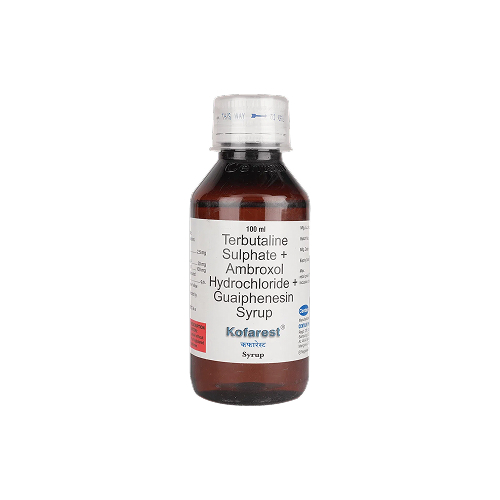
Images are for product identification. Refer to the selected batch for packaging and availability.
Kofarest Syryp 100 Ml
Ambroxol (30mg/5ml) + Guaifenesin (100mg/5ml) + Terbutaline (2.5mg/5ml)
YOUR PURCHASE PRICE
40 in stockInclusive of all taxes
Choose your batch
2 offersSign in to order for your pharmacy.
Product information
- Manufacturer
- Centaur Pharmaceuticals Pvt Ltd
- Category
- Allopathy
- Composition
- Ambroxol (30mg/5ml) + Guaifenesin (100mg/5ml) + Terbutaline (2.5mg/5ml)
- Packaging
- 100 ML
- Box / case pack
- 1 / —
Description
KOFAREST SYRUP 100 ML
Name: Kofarest Syrup (Brand Name)
Composition: Each 10 ml of Kofarest Syrup contains:
- Ambroxol Hydrochloride: 30 mg
- Guaiphenesin: 100 mg
- Terbutaline Sulphate: 2.5 mg
- Menthol: 5 mg
Uses: Kofarest Syrup is primarily used to treat productive cough associated with various respiratory conditions. It is indicated for conditions such as bronchitis, bronchial asthma, chronic obstructive pulmonary disease (COPD), bronchiectasis, and emphysema, where there is tenacious mucus, wheezing, and chest congestion. It helps by thinning and loosening mucus, making it easier to cough out, and by relaxing and widening the airways for easier breathing.
Dosage and Administration: The recommended oral dose for Kofarest Syrup is typically 10 ml, 3-4 times a day, or as directed by a physician. It can be taken with or without food, though taking it with food may help reduce stomach upset. Shake the bottle well before each use and use a measuring cup for accurate dosing.
Side Effects: Common side effects may include nausea, vomiting, diarrhea, stomach discomfort, headache, dizziness, drowsiness, skin rash, itching, tremors, increased heart rate, palpitations, sweating, and muscle cramps. If any side effects persist or worsen, consult a healthcare provider.
Precautions:
- Hypersensitivity: Contraindicated in patients with known hypersensitivity to any of its ingredients.
- Underlying Conditions: Use with caution in patients with hypertension, cardiovascular disease, uncontrolled diabetes mellitus, hyperthyroidism, or a history of seizures.
- Peptic Ulceration: Mucolytics like ambroxol may disrupt the gastric mucosal barrier, so use with care in patients with a history of peptic ulceration.
- Pregnancy and Lactation: The safety during pregnancy and lactation is not fully established; benefits should be weighed against possible risks.
- Driving/Operating Machinery: May cause dizziness or drowsiness; avoid activities requiring mental alertness until the effects are known.
- Drug Interactions: Caution is advised with monoamine oxidase (MAO) inhibitors, tricyclic antidepressants, other sympathomimetic bronchodilators, xanthines, corticosteroids, or diuretic therapy.
Storage: Store Kofarest Syrup below 30°C (some sources mention below 25°C) in a dry place, away from direct heat and light. Keep out of reach and sight of children.
Frequently asked questions
What is Kofarest Syrup used for?
Kofarest Syrup is primarily used to treat productive coughs, also known as wet coughs, which are accompanied by mucus. It is effective in managing respiratory conditions such as bronchial asthma, chronic obstructive pulmonary disease (COPD), bronchitis, bronchiectasis, and emphysema, by helping to clear congestion and ease breathing. The syrup can also help relieve symptoms of sinusitis and some allergy symptoms like watery eyes, sneezing, and runny nose.
How does Kofarest Syrup work?
Kofarest Syrup is a combination medication containing Ambroxol, Guaifenesin, and Terbutaline.
- Ambroxol acts as a mucolytic agent, thinning and loosening mucus in the airways to make it easier to cough up. It also has anti-inflammatory properties.
- Guaifenesin is an expectorant that increases the volume of fluid in the airways and reduces the stickiness of mucus, aiding its removal from the respiratory tract.
- Terbutaline is a bronchodilator that relaxes the smooth muscles in the airways, widening them to facilitate easier breathing and reduce bronchospasms.
What is the usual dosage of Kofarest Syrup?
The dosage of Kofarest Syrup should be followed as directed by your doctor. For adults, a common recommended oral dose is 10ml (approximately two tablespoons) 3-4 times a day, or 10ml twice daily for 5 days. For children, the syrup is not recommended without a doctor's prescription, and the dosage will depend on the child's age, weight, and the severity of their condition. For example, Kofarest PD Syrup dosages for children are often cited as: 2.5 ml twice or thrice a day for ages 2-4 years, 5 ml twice or thrice a day for ages 4-6 years, and 5-10 ml twice or thrice a day for ages 6-12 years. It is typically taken with or without food, often twice daily (morning and bedtime). Always shake the bottle well before use and use a measuring cup for accurate dosing.
What are the possible side effects of Kofarest Syrup?
Some common side effects may include nausea, vomiting, diarrhea, dizziness, headache, skin rash, itching, indigestion, bloating, dry mouth, stomach discomfort, sweating, muscle cramps, tremors, nervousness, increased heart rate, and drowsiness. Most of these side effects are temporary and usually resolve on their own. If you experience any severe or persistent side effects, or if your symptoms worsen, consult your doctor immediately.
Is Kofarest Syrup safe during pregnancy or breastfeeding?
Pregnancy: The safety of Kofarest Syrup during pregnancy is generally unknown, and it is often recommended to avoid this medicine unless specifically prescribed by a doctor who has weighed the potential benefits against the risks. Animal studies have shown potential harmful effects on the developing baby. Breastfeeding: It is unknown whether Kofarest Syrup is excreted in human milk, and it may cause unwanted effects in a breastfed infant. Therefore, it is generally recommended to avoid this medicine while breastfeeding, or to consult your doctor to assess the potential risks and benefits.
Can Kofarest Syrup be taken with other medications?
It is crucial to inform your doctor about all other medications, herbal preparations, and supplements you are currently taking to avoid potential drug interactions. You should generally avoid taking Kofarest Syrup with other cough medications, as they may contain similar active ingredients which could lead to an overdose. Concomitant use with certain medicines like propranolol (for high blood pressure) should be avoided, and caution is advised with other heart or blood pressure medications. The action of Terbutaline in Kofarest Syrup may be potentiated by monoamine oxidase (MAO) inhibitors or tricyclic antidepressants. There is also an increased risk of hypokalemia (low potassium levels) with high doses of beta-2 agonists, which can be enhanced by concurrent use of aminophylline, other xanthines, corticosteroids, or diuretic therapy. Do not use with other sympathomimetic bronchodilators or epinephrine. Some sources also advise against combining it with amitriptyline, ketoconazole, xylometazoline, furosemide, formoterol, and pseudoephedrine.
What precautions should be taken while using Kofarest Syrup?
Several precautions should be observed when taking Kofarest Syrup. You should consult your doctor if your cough persists for more than 5 days to a week, recurs, or is accompanied by a fever, rash, or persistent headache. Caution is advised for individuals with underlying medical conditions such as hypertension, cardiovascular disease, uncontrolled diabetes mellitus, hyperthyroidism, seizures, or those unusually sensitive to sympathomimetic amines. Patients with a history of peptic ulceration should use this syrup with care, as mucolytics like Ambroxol may affect the gastric mucosal barrier. If you have liver or kidney problems, use Kofarest Syrup with caution, as dose adjustments may be necessary. This medicine may cause dizziness or drowsiness, so it's advisable to avoid driving or operating heavy machinery until you know how it affects you. Alcohol consumption should be avoided as it can worsen drowsiness. Drinking plenty of fluids can also help to further loosen mucus. Do not stop taking the medication abruptly, even if symptoms improve, unless advised by your doctor.
What happens if a dose of Kofarest Syrup is missed?
If you miss a dose of Kofarest Syrup, take it as soon as you remember. However, if it is almost time for your next scheduled dose, skip the missed dose and continue with your regular dosing schedule. Do not take a double dose to compensate for the missed one.
How should Kofarest Syrup be stored?
Kofarest Syrup should be stored below 30°C (or 25°C) in a cool, dry place. It should be kept away from direct sunlight and heat. Always keep the medicine out of the reach and sight of children and pets to prevent accidental intake.