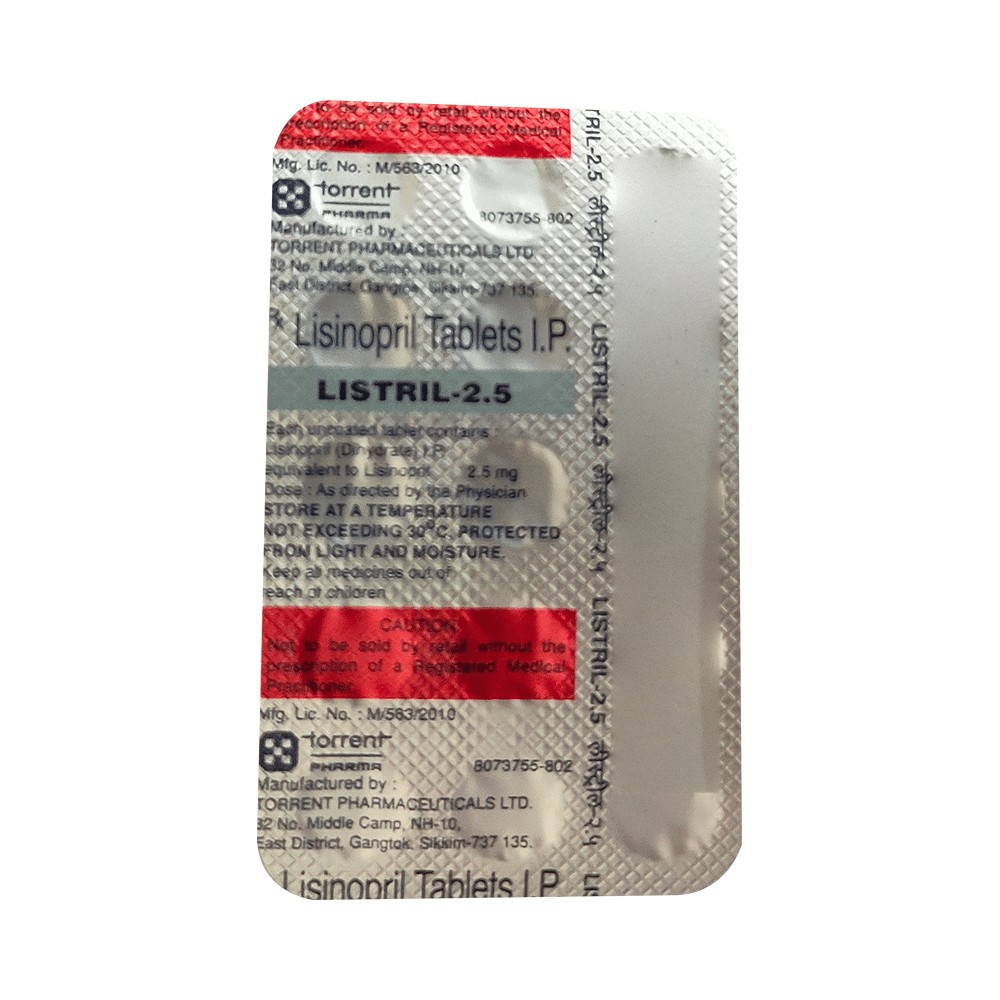
Images are for product identification. Refer to the selected batch for packaging and availability.
Listril 2.5 Mg Tablet (15 Tab)
Drug Formula unavailable
YOUR PURCHASE PRICE
3 in stockInclusive of all taxes
Available batch
1 offerSign in to order for your pharmacy.
Product information
- Manufacturer
- Torrent Pharmaceuticals Ltd
- Category
- Allopathy
- Composition
- Not provided
- Packaging
- 15 TABLETS
- Box / case pack
- 1 / —
Description
LISTRIL 2.5 MG TABLET
LISTRIL 2.5 MG TABLET, manufactured by Torrent Pharmaceuticals Ltd., is an angiotensin-converting enzyme (ACE) inhibitor.
Name
- Brand Name: LISTRIL 2.5 MG TABLET, Listril-2.5, LIStril 2.5 Tablet
- Common Name: Lisinopril (active ingredient)
Composition
- Each tablet contains 2.5 mg of Lisinopril.
Uses LISTRIL 2.5 MG TABLET is prescribed for several cardiovascular conditions:
- Treating high blood pressure (hypertension) in adults and children 6 years and older.
- Managing heart failure.
- Improving survival and preventing further cardiovascular events after a heart attack.
- Improving kidney issues caused by diabetes in adult patients with high blood pressure.
Dosage and Administration
- Take LISTRIL 2.5 MG TABLET orally, with or without food, at the same time each day.
- Swallow the tablet whole with water; do not chew, crush, or break it.
- The exact dosage and duration will be determined by your doctor based on your medical condition.
- Your doctor may recommend taking the first dose at bedtime as it can cause dizziness.
- Do not stop taking the medicine without consulting your doctor, as this may worsen your condition.
Side Effects Common side effects may include:
- Headache, dizziness, fatigue, weakness
- Dry cough
- Nausea, diarrhea
- Skin rash
- Increased potassium levels (hyperkalemia)
- Decreased blood pressure (hypotension)
Report serious side effects to your doctor immediately, such as:
- Allergic reactions or angioedema (swelling of face, lips, tongue, or throat, trouble breathing or swallowing)
- Signs of kidney injury (decreased urine output, swelling of ankles, hands, or feet)
- Symptoms of liver injury (right upper belly pain, dark urine, yellowing skin or eyes)
Precautions
- Allergies: Do not take if you are allergic to lisinopril, any other ACE inhibitors, or have a history of angioedema.
- Pregnancy and Breastfeeding: Not recommended during pregnancy (especially second and third trimesters) or while breastfeeding.
- Drug Interactions: Inform your doctor about all medications, supplements, and herbal products you are taking. Avoid concomitant use with aliskiren (in diabetics or kidney patients), sacubitril/valsartan, potassium supplements, and alcohol.
- Medical Conditions: Use with caution in patients with heart, kidney, or liver problems. Regular monitoring of blood pressure, kidney function, and electrolyte levels is advised.
- Driving: This medicine may cause dizziness or affect vision; avoid driving or operating heavy machinery if you experience these effects.
Storage
- Store below 30°C.
- Keep in a cool, dry place, away from heat and direct light.
- Keep out of the sight and reach of children and pets.
Frequently asked questions
LISTRIL 2.5 MG TABLET, containing the active ingredient lisinopril, is a medication used to treat high blood pressure (hypertension), heart failure, and to improve survival after a heart attack. It belongs to a class of drugs called Angiotensin-Converting Enzyme (ACE) inhibitors.
Here are some frequently asked questions about LISTRIL 2.5 MG TABLET:
What is LISTRIL 2.5 MG TABLET used for?
LISTRIL 2.5 MG TABLET is primarily used to treat high blood pressure (hypertension) in adults and children aged 6 years and older. It is also prescribed for adults with congestive heart failure and to improve survival after an acute myocardial infarction (heart attack). Additionally, it can be used to prevent kidney problems in people with diabetes mellitus.
How does LISTRIL 2.5 MG TABLET work?
LISTRIL 2.5 MG TABLET contains lisinopril, which is an ACE inhibitor. It works by blocking the action of an enzyme called angiotensin-converting enzyme (ACE) in the body. This prevents the conversion of angiotensin I to angiotensin II, a powerful substance that causes blood vessels to narrow. By reducing angiotensin II, lisinopril causes blood vessels to relax and widen, making it easier for blood to flow through. This lowers blood pressure, reduces the workload on the heart, and increases the supply of blood and oxygen to the heart. It also decreases the release of aldosterone, which helps the kidneys excrete sodium and water, further lowering blood pressure.
What is the usual dosage for LISTRIL 2.5 MG TABLET?
The dosage of LISTRIL 2.5 MG TABLET depends on the condition being treated and the patient's individual needs, as determined by a doctor. For high blood pressure in adults, the usual starting dose is often 10 mg once a day, which may be increased to a maximum of 40 mg per day. If a patient is already taking a diuretic, a lower starting dose of 5 mg once daily may be used. For heart failure, the recommended initial dose is typically 2.5 mg to 5 mg once daily, with a maximum of 40 mg per day. After a heart attack, therapy may be initiated at 5 mg, followed by subsequent doses as directed by a healthcare provider, usually continuing for at least 6 weeks. Children 6 years and older will have a dose based on body weight, as determined by a doctor. It is important to take the medicine exactly as prescribed by your doctor.
What are the possible side effects of LISTRIL 2.5 MG TABLET?
Many side effects of lisinopril are mild and temporary. Common side effects can include headache, dizziness, fatigue, nausea, diarrhea, and a dry, persistent cough. Less common side effects might include blurred vision and mildly elevated potassium levels.
Serious, though rare, side effects can occur, such as severe low blood pressure, angioedema (swelling of the face, lips, tongue, or throat, which can be life-threatening), severe skin rashes, kidney damage, or liver problems. If you experience any severe symptoms like swelling of the face or difficulty breathing, seek immediate medical attention.
Is LISTRIL 2.5 MG TABLET safe during pregnancy or breastfeeding?
Pregnancy: LISTRIL 2.5 MG TABLET (Lisinopril) is generally not recommended during pregnancy and is contraindicated during the second and third trimesters, as it can harm the unborn baby, potentially leading to kidney damage, poor lung development, skull bone defects, and even fetal death. If you become pregnant while taking this medication, you should stop taking it and contact your doctor immediately.
Breastfeeding: It is generally recommended to avoid lisinopril during breastfeeding, especially in the infant's first month of life, due to concerns about potential low blood pressure in the baby. While minimal transfer into breast milk has been reported, the FDA states it is unknown if lisinopril is excreted in human milk. A doctor will weigh the potential benefits against the risks and may suggest an alternative medication.
Can LISTRIL 2.5 MG TABLET be taken with other medications?
Lisinopril can interact with several other medications. It's crucial to inform your doctor about all medicines, supplements, and herbal products you are taking.
- Diuretics (water pills): Taking lisinopril with diuretics can lead to a significant drop in blood pressure.
- Potassium supplements or potassium-sparing diuretics (e.g., amiloride, spironolactone): Combining these with lisinopril can cause dangerously high potassium levels in the blood (hyperkalemia).
- Nonsteroidal anti-inflammatory drugs (NSAIDs) like ibuprofen or naproxen: These can reduce the blood pressure-lowering effect of lisinopril and increase the risk of kidney damage, especially in older individuals or those with existing kidney problems.
- Aliskiren: If you have diabetes, you should not use lisinopril with medications containing aliskiren (a blood pressure medicine). This combination increases the risk of side effects like low blood pressure, high potassium, and kidney damage.
- Sacubitril/Valsartan (Entresto): This combination should be avoided due to an increased risk of angioedema. Do not take lisinopril within 36 hours before or after taking sacubitril/valsartan.
- Lithium: Lisinopril can increase lithium levels in the body, potentially leading to toxicity.
- Antidiabetic medications (insulin, oral hypoglycemic agents): Co-administration can increase the risk of hypoglycemia (low blood sugar).
What precautions should be taken with LISTRIL 2.5 MG TABLET?
- Angioedema: Inform your doctor if you have a history of angioedema (swelling of the face, lips, tongue, or throat) or an allergy to ACE inhibitors.
- Dehydration: Be careful if you experience severe vomiting, diarrhea, or excessive sweating, as these can lead to dehydration and a significant drop in blood pressure. Drink plenty of water and consult your doctor.
- Kidney or Liver Conditions: Inform your doctor if you have kidney disease, liver disease, or diabetes, as these conditions may require dose adjustments or careful monitoring.
- Surgery: Inform your doctor or dentist that you are taking lisinopril before any surgery, including dental procedures.
- Dizziness: The first dose may cause dizziness; consider taking it before bedtime. Stand up slowly from a sitting or lying position to prevent lightheadedness.
- African Ancestry: Some studies suggest that people of African ancestry may not respond as well to ACE inhibitors and might have an increased risk of angioedema.
What happens if a dose is missed?
If you miss a dose of LISTRIL 2.5 MG TABLET, take it as soon as you remember. However, if it is almost time for your next scheduled dose, skip the missed dose and continue with your regular dosing schedule. Do not take a double dose to make up for a missed one, as this could increase the risk of side effects.
How should LISTRIL 2.5 MG TABLET be stored?
Store LISTRIL 2.5 MG TABLET at room temperature, ideally between 68°F to 77°F (20°C to 25°C). Keep the tablets in their tightly closed original container, protected from moisture, freezing, and excessive heat. Keep this medicine out of the reach of children and pets. Do not use any medication past its expiration date.