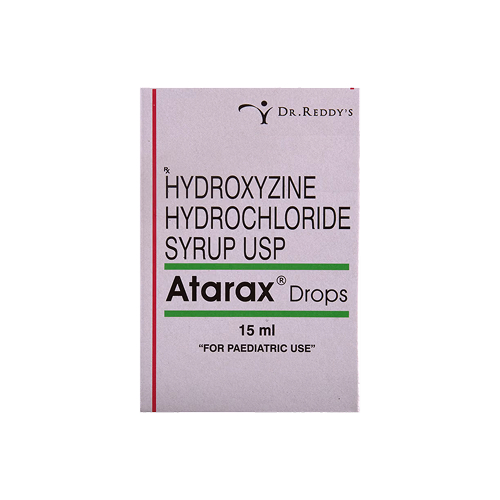
Images are for product identification. Refer to the selected batch for packaging and availability.
Atarax Drop -15ml
Hydroxyzine (6mg)
YOUR PURCHASE PRICE
129 in stockInclusive of all taxes
Available batch
1 offerSign in to order for your pharmacy.
Product information
- Manufacturer
- Dr Reddy S Laboratories Ltd
- Category
- Allopathy
- Composition
- Hydroxyzine (6mg)
- Packaging
- 15 ML
- Box / case pack
- 1 / —
Description
ATARAX DROP -15ML by DR REDDY S LABORATORIES LTD
Atarax Drops, manufactured by Dr. Reddy's Laboratories Ltd., is a medication primarily used in pediatric care.
-
Composition: The active ingredient in Atarax Drops is Hydroxyzine Hydrochloride, typically at a strength of 10mg/5ml or 6mg/ml. Hydroxyzine is an antihistamine.
-
Uses: Atarax Drops are prescribed for:
- Treating allergic skin reactions in children, such as inflammation, itching, rashes, urticaria, eczema, dermatitis, and psoriasis.
- Relieving anxiety and tension, and inducing sedation before surgery in children. It calms the brain by affecting certain chemical activities.
-
Dosage and Administration: Atarax Drops should be given to a child at the dose and for the duration suggested by a doctor, based on the child's medical condition, age, and weight. It can be administered with or without food. The maximum daily dose for children up to 40 kg is generally 2 mg/kg/day, given in divided doses. For children over 40 kg, the maximum daily dose is 100 mg per day, also in divided doses. It is important to shake well before use and use a measuring dropper for accuracy.
-
Side Effects: Common side effects include:
- Drowsiness, sleepiness, and tiredness.
- Headache and dizziness.
- Dry mouth.
- Nausea, vomiting, upset stomach, constipation, or diarrhea. Serious side effects like irregular heart rhythms have been reported in rare instances, especially with higher doses.
-
Precautions:
- Inform the doctor about any allergies to hydroxyzine or other ingredients.
- Caution is advised in children with pre-existing medical conditions such as heart problems, kidney or liver issues, glaucoma, high blood pressure, or breathing problems like asthma.
- Atarax Drops may interact with other medications, including CNS depressants and certain drugs that prolong the QT interval.
- Avoid giving more than the prescribed dose to prevent overdose symptoms like severe sedation or seizures.
-
Storage: Store in a cool and dry place, away from direct sunlight, and out of the sight and reach of children. Protect from freezing, with recommended temperatures between 10ºC to 25ºC or below 30ºC.
Frequently asked questions
ATARAX DROP (hydroxyzine hydrochloride) is an antihistamine medication available in liquid form. It is primarily used to manage allergic reactions and anxiety.
What is Atarax Drop used for?
Atarax Drop is used to treat various conditions, including allergic reactions that cause itching, swelling, and rashes in conditions such as eczema, dermatitis, and psoriasis. It is also prescribed to relieve anxiety and tension, and to induce relaxation or sedation before or after surgery. In infants, it can help manage allergies, sleep issues, itching, and anxiety.
How does Atarax Drop work?
Atarax Drop contains hydroxyzine, which is an antihistamine. It works by blocking the action of histamine, a natural chemical in the body responsible for allergic symptoms like itching and rashes. Additionally, it reduces activity in the brain, which helps to alleviate anxiety and promote a calming or sedative effect.
What is the usual dosage?
The dosage of Atarax Drop varies depending on the individual's age, medical condition, and response to treatment. For adults, a typical dosage for anxiety and tension can be 50-100 mg four times a day, and for pruritus, 25 mg three to four times a day. For sedation in adults, 50-100 mg orally or 25-100 mg via IM injection is used. For children, the dosage for anxiety and tension is typically 50-100 mg per day in divided doses for those 6 years and older, and 50 mg per day in divided doses for children younger than 6 years of age. It is crucial to follow the dose and duration prescribed by your doctor and use an accurate measuring device.
What are the possible side effects?
Common side effects of Atarax Drop include drowsiness, dry mouth, dizziness, headache, and fatigue. Less common but serious side effects can include changes in heart rate or rhythm (palpitations, fast or skipping heartbeat), confusion, tremors, seizures, and severe skin reactions like rashes, pus-filled bumps, or blistering. If you experience any severe side effects, contact your doctor immediately.
Is it safe during pregnancy or breastfeeding?
Atarax Drop is generally not recommended during early pregnancy due to potential harm to the unborn baby and possible birth defects. If you are pregnant or planning to become pregnant, discuss safer treatment options with your doctor. It is also not recommended during breastfeeding, as hydroxyzine may pass into breast milk and cause serious side effects in infants, such as low oxygen levels, drowsiness, slowed reactions, increased crying, sleep disorders, and feeding difficulties.
Can it be taken with other medications?
Atarax Drop can interact with many medications. It should be used with caution, and often in reduced dosages, when taken with central nervous system (CNS) depressants like narcotics, non-narcotic analgesics, hypnotics, sedatives, psychotherapeutic agents, barbiturates, benzodiazepines, and alcohol, as this can increase drowsiness and other side effects. It also interacts with medicines that can affect heart rhythm (QT prolongation), including certain antidepressants, antipsychotics, antibiotics (like erythromycin, clarithromycin), antiarrhythmics (like amiodarone), and others. Always inform your doctor about all prescription, over-the-counter medications, vitamins, and herbal products you are taking to avoid potential interactions.
What precautions should be taken?
Several precautions should be taken when using Atarax Drop. Due to its sedative effects, avoid driving or operating dangerous machinery until you know how the medicine affects you. Alcohol consumption should be avoided as it can increase drowsiness and other side effects. Inform your doctor if you have heart problems (especially a history of QT prolongation or irregular heartbeat), liver or kidney conditions, glaucoma, bladder obstruction, seizure disorders (epilepsy), asthma, emphysema, chronic bronchitis, myasthenia gravis, or a thyroid disorder. Elderly patients may be more susceptible to side effects like confusion and drowsiness. Avoid grapefruit and grapefruit juice, as they can increase levels of hydroxyzine in your blood and potentially increase the risk of heart rhythm issues.
What happens if a dose is missed?
If a dose of Atarax Drop is missed, take it as soon as you remember. However, if it is almost time for your next scheduled dose, skip the missed dose and continue with your regular dosing schedule. Do not take a double dose to make up for a missed one.
How should it be stored?
Atarax Drop should be stored in a cool and dry place, away from direct sunlight and out of the sight and reach of children.