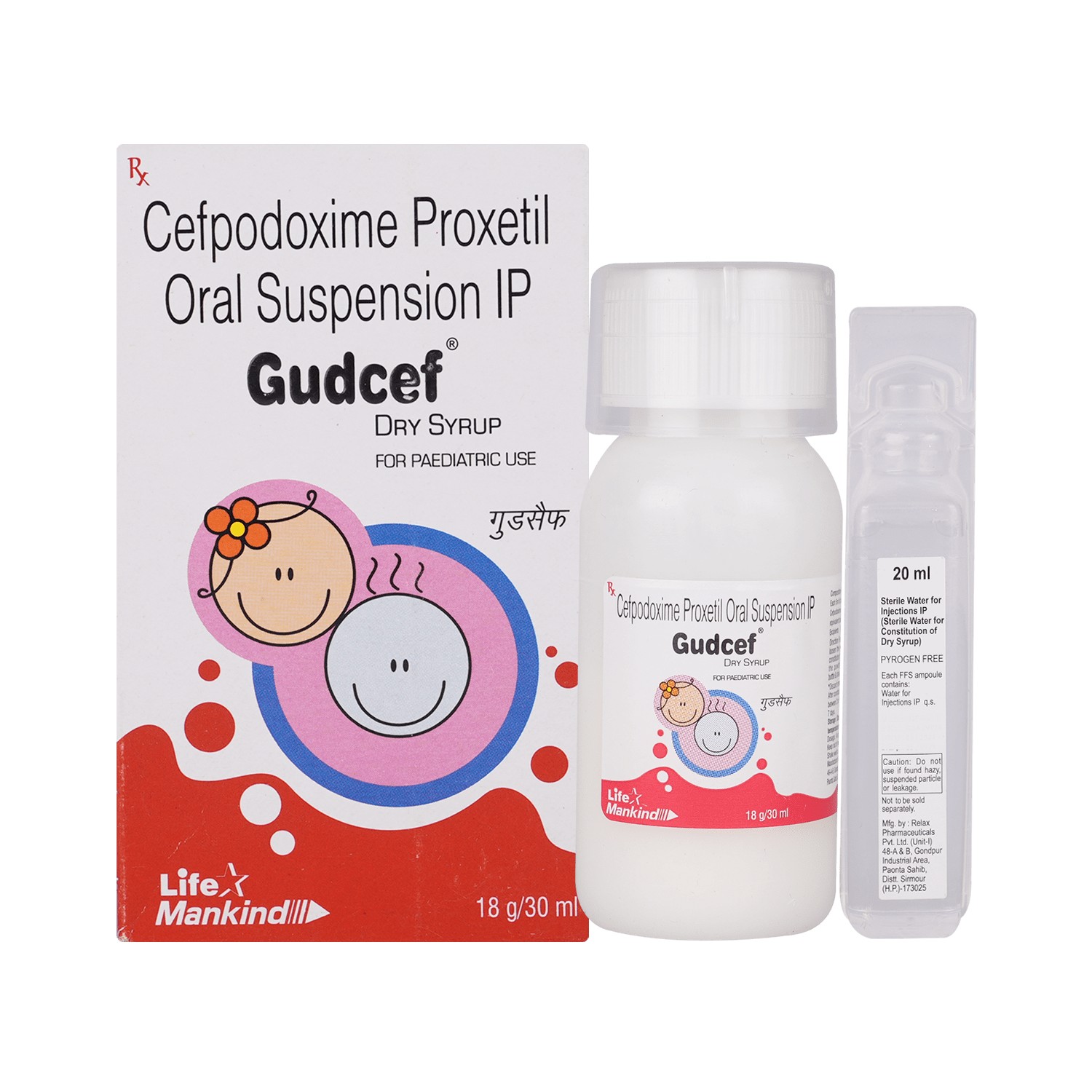
Images are for product identification. Refer to the selected batch for packaging and availability.
Gudcef Dry Syrup 18g/30 Ml
Drug Formula unavailable
YOUR PURCHASE PRICE
14 in stockInclusive of all taxes
Choose your batch
2 offersSign in to order for your pharmacy.
Product information
- Manufacturer
- Mankind Pharma Ltd.
- Category
- Allopathy
- Composition
- Not provided
- Packaging
- 30 ML
- Box / case pack
- 1 / —
Description
Gudcef Dry Syrup is an antibiotic medication manufactured by Mankind Pharma Ltd., primarily prescribed for children to treat a variety of bacterial infections.
Name
- Brand Name: GUDCEF DRY SYRUP
- Common Name: Cefpodoxime Proxetil (as the active ingredient)
Composition
Gudcef Dry Syrup contains Cefpodoxime Proxetil, a broad-spectrum antibiotic belonging to the cephalosporin class. It is typically available as 50 mg of Cefpodoxime per 5 ml of reconstituted syrup. Cefpodoxime works by inhibiting the formation of the bacterial cell wall, which is essential for bacterial survival, thereby killing the bacteria and preventing the spread of infection.
Uses
Gudcef Dry Syrup is used to manage a wide range of bacterial infections in children, including:
- Respiratory tract infections such as pneumonia, bronchitis, tonsillitis, pharyngitis, and sinusitis.
- Urinary tract infections (UTIs).
- Skin and soft tissue infections.
- Ear infections (acute otitis media).
- Gastrointestinal infections.
- Typhoid fever in children and adolescents.
- Bone and joint infections, meningitis, and septicaemia.
Dosage and Administration
Gudcef Dry Syrup should be administered to your child as prescribed by a doctor, with the dosage tailored to the child's age, body weight, and the type and severity of the infection.
- The dry powder needs to be reconstituted with sterile water (often provided with the pack) up to the marked volume on the bottle.
- Shake the bottle vigorously after adding water and allow it to stand for 5 minutes.
- Administer the prescribed quantity using a medicine dropper or measuring cup.
- It can be given with or without food, but giving it with food may help avoid stomach upset.
- Complete the full course of treatment as prescribed, even if symptoms improve, to prevent the infection from returning or developing antibiotic resistance.
Side Effects
Common side effects may include:
- Abdominal pain or cramps.
- Diarrhea (watery or loose stools).
- Nausea or vomiting.
- Skin rash or itching.
- Changes in stool color or consistency.
- Headache.
Serious side effects are rare but can include severe gastrointestinal infections, kidney damage, or allergic reactions (rash, itching, swelling of face/mouth, difficulty breathing). Seek immediate medical attention if any severe or persistent side effects occur.
Precautions
- Allergies: Inform the doctor if your child has a history of allergies to cefpodoxime, other cephalosporins, penicillin, or any beta-lactam antibiotics.
- Kidney/Liver Conditions: Use with caution and potential dosage adjustments in children with impaired kidney function. Inform the doctor about any liver problems.
- Gastrointestinal Disease: Caution is advised in children with a history of gastrointestinal diseases, especially colitis.
- Drug Interactions:
- Antacids (containing aluminum or magnesium), H2 receptor antagonists (like ranitidine, cimetidine) can decrease the effectiveness of Gudcef Dry Syrup.
- Probenecid may increase the blood levels of Cefpodoxime.
- Diuretics (like furosemide) may increase the risk of kidney problems when taken with Gudcef Dry Syrup.
- Avoid taking with dairy products, juice, or calcium-based food products.
- Vaccines: May interact with live vaccines; a time gap of at least 2 hours should be maintained.
- Gudcef Dry Syrup is an antibiotic and is not effective against viral infections like the common cold or flu.
Storage
- Store the dry powder at room temperature, not exceeding 25°C, protected from light and moisture.
- After reconstitution, store the suspension in the refrigerator.
- Keep out of reach and sight of children.
- Do not use the reconstituted solution past the expiry date or the duration mentioned on the bottle.
Frequently asked questions
GUDCEF DRY SYRUP is an antibiotic primarily used in children to treat a variety of bacterial infections. It contains Cefpodoxime, which belongs to the cephalosporin class of antibiotics.
Here are some frequently asked questions about GUDCEF DRY SYRUP:
What is GUDCEF DRY SYRUP used for?
GUDCEF DRY SYRUP is used to treat a range of bacterial infections in children. These include infections of the ears (acute otitis media), throat (pharyngitis or tonsillitis), sinuses (sinusitis), lungs (pneumonia, bronchitis), urinary tract, skin, and soft tissues. It is also effective against gonococcal infections and can be used for typhoid fever in children and adolescents.
How does GUDCEF DRY SYRUP work?
GUDCEF DRY SYRUP contains Cefpodoxime, which is a broad-spectrum antibiotic. It works by preventing bacteria from forming their protective cell walls, which are essential for their survival. By disrupting cell wall synthesis, Cefpodoxime weakens and ultimately kills the bacteria, stopping the infection from spreading.
What is the usual dosage?
The dosage of GUDCEF DRY SYRUP is determined by a doctor based on the child's age, body weight, and the type and severity of the infection. It is crucial to follow the prescribed dose and duration as advised by the physician. The dry powder needs to be reconstituted with sterile water (provided with the pack) before use.
What are the possible side effects?
Common side effects of GUDCEF DRY SYRUP include abdominal pain, diarrhea, nausea, vomiting, and headache. Skin rashes, including diaper rashes, may also occur. If your child experiences severe diarrhea (due to pseudomembranous colitis) or signs of an allergic reaction (such as skin rash, joint pain, swallowing or breathing problems, swelling of the lips, face, throat, or tongue), seek immediate medical attention.
Is it safe during pregnancy or breastfeeding?
GUDCEF DRY SYRUP is generally not recommended for use in pregnant or breastfeeding women as it is primarily intended for children. If a woman is breastfeeding, she should consult her doctor to weigh the potential risks and benefits and determine whether to continue breastfeeding or temporarily discontinue it during treatment.
Can it be taken with other medications?
GUDCEF DRY SYRUP can interact with certain medications. Inform your doctor about all medicines, supplements, or herbal products your child is currently taking. For instance, acid-lowering medicines (like aluminum hydroxide, sodium bicarbonate, magnesium hydroxide, cimetidine, ranitidine) can decrease the effectiveness of GUDCEF DRY SYRUP. Conversely, probenecid (used for gouty arthritis) can increase the effect of this medicine. Co-administration with diuretics like furosemide may increase the risk of kidney problems.
What precautions should be taken?
GUDCEF DRY SYRUP should be used with caution in children with impaired kidney function, liver problems, or a history of gastrointestinal disease, especially colitis. It is not recommended for infants less than 2 months of age, or if the child is allergic to cefpodoxime or other cephalosporin antibiotics, or has had severe allergic reactions to penicillin or other beta-lactam antibiotics. Complete the full course of treatment even if the child feels better to prevent antibiotic resistance. It's also advisable not to take it with dairy products, juice, or calcium-based food products.
What happens if a dose is missed?
If a dose of GUDCEF DRY SYRUP is missed, give it as soon as you remember. However, if it is almost time for the next dose, skip the missed dose and continue with the regular dosing schedule. Do not double the dose to compensate for a missed one. If your child vomits within 30 minutes of taking the syrup, you may need to give the same dose again.
How should it be stored?
GUDCEF DRY SYRUP should be stored at room temperature, not exceeding 25°C, and protected from light and moisture. The reconstituted suspension should be stored in the refrigerator and used within the duration mentioned on the bottle, typically 7 days. Keep it out of reach of children and pets.