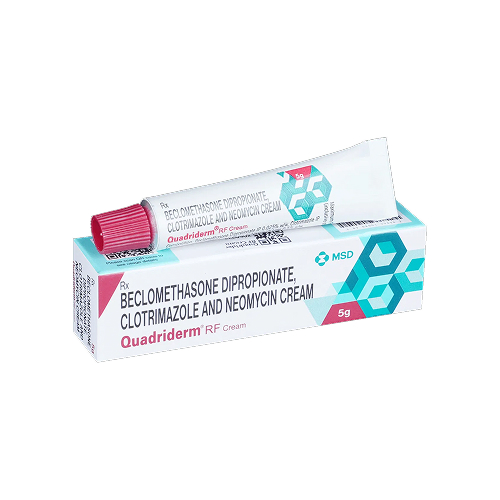
Images are for product identification. Refer to the selected batch for packaging and availability.
Quadriderm Rf Cream -10gm
Beclometasone (0.025% W/w) + Neomycin (0.5% W/w) + Clotrimazole (1% W/w)
YOUR PURCHASE PRICE
268 in stockInclusive of all taxes
Choose your batch
2 offersSign in to order for your pharmacy.
Product information
- Manufacturer
- Msd Pharmaceuticals Pvt Ltd
- Category
- Allopathy
- Composition
- Beclometasone (0.025% W/w) + Neomycin (0.5% W/w) + Clotrimazole (1% W/w)
- Packaging
- 10 GM
- Box / case pack
- 1 / —
Description
QUADRIDERM RF CREAM -10GM
QUADRIDERM RF CREAM, manufactured by MSD PHARMACEUTICALS PVT LTD, is a topical medication used to treat a variety of skin conditions. It combines the effects of a corticosteroid, an antifungal, and an antibiotic to reduce inflammation and combat infection.
-
Name:
- Brand Name: Quadriderm RF Cream
-
Composition:
- Active Ingredients: Each gram of cream typically contains Beclomethasone Dipropionate (0.025%), Clotrimazole (1%), and Neomycin (0.5%).
- Beclomethasone Dipropionate is a corticosteroid that reduces inflammation, itching, and redness.
- Clotrimazole is an antifungal agent that inhibits the growth of fungi.
- Neomycin is an antibiotic that prevents the growth of bacteria.
- Active Ingredients: Each gram of cream typically contains Beclomethasone Dipropionate (0.025%), Clotrimazole (1%), and Neomycin (0.5%).
-
Uses:
- Quadriderm RF Cream is prescribed for skin conditions caused by bacterial or fungal infections.
- It is effective in treating symptoms associated with eczema, dermatitis, and psoriasis.
- The cream also provides relief from common fungal infections such as athlete's foot, jock itch, and ringworm.
- Additionally, it helps manage inflammation, itching, redness, and rashes.
-
Dosage and Administration:
- This medicine is for topical (external) use only.
- Clean and dry the affected skin area thoroughly before application.
- Apply a thin layer of cream to the affected area, usually two to three times a day, or as directed by your doctor.
- Gently massage the cream until it is fully absorbed.
- Wash your hands thoroughly before and after applying the cream, unless your hands are the treatment area.
- Complete the full course of treatment as prescribed, even if symptoms improve.
-
Side Effects:
- Common Side Effects: Burning sensation, itching, redness, dryness, and skin irritation at the application site are frequently reported. Other common effects can include skin thinning and stretch marks with prolonged use.
- Serious Side Effects: Though rare, seek medical advice if you experience signs of an allergic reaction such as widespread rashes, swelling, or difficulty breathing.
-
Precautions:
- Avoid applying the cream to open wounds, blisters, or lesions.
- Do not allow the cream to come into contact with your eyes, nose, mouth, or vagina. Rinse with cold water immediately if contact occurs.
- Consult a doctor before using if you are pregnant or breastfeeding.
- Use with caution in children, especially those under 12 years old, as there is a higher risk of absorption and hormonal effects.
- Inform your doctor if you have known allergies to any of the active ingredients.
- Avoid prolonged use as it can lead to skin thinning and other skin problems.
- Do not cover the treated area with bandages or occlusive dressings unless specifically instructed by your doctor.
-
Storage:
- Store Quadriderm RF Cream at room temperature.
- Keep it away from excessive heat and direct light.
- Ensure it is out of the reach of children and pets.
- Do not freeze the cream.
Frequently asked questions
QUADRIDERM RF CREAM -10GM by MSD PHARMACEUTICALS PVT LTD: Frequently Asked Questions
What is Quadriderm RF Cream used for?
Quadriderm RF Cream is a topical medication primarily used to treat various skin infections caused by bacteria and fungi. It's prescribed for conditions such as eczema, dermatitis, fungal infections (like ringworm, athlete's foot, jock itch), certain bacterial infections, psoriasis, and skin inflammation due to allergies or irritants. It helps to alleviate symptoms like itching, redness, and swelling.
How does Quadriderm RF Cream work?
Quadriderm RF Cream is a combination of three active ingredients: Beclomethasone, Neomycin, and Clotrimazole.
- Beclomethasone is a corticosteroid that reduces inflammation, redness, and itching by blocking the production of certain chemical messengers (prostaglandins) in the skin.
- Neomycin is an antibiotic that inhibits the growth of bacteria by preventing the synthesis of essential proteins required for their survival.
- Clotrimazole is an antifungal that stops the growth of fungi by damaging their cell membranes. Together, these components work to reduce inflammation, fight infections, and relieve symptoms.
What is the usual dosage and how should it be applied?
Quadriderm RF Cream is for external use only. It should be used in the dose and duration advised by your doctor. Typically, a thin layer of the cream is applied to the affected skin area two to three times daily, or as prescribed by your doctor. Before application, clean and dry the affected area gently. Gently massage the cream into the skin until it is evenly distributed. Wash your hands thoroughly before and after applying the cream, unless your hands are the treated area. Avoid applying excessive amounts and do not apply to sensitive areas like eyes, mouth, or inside your nose.
What are the possible side effects of Quadriderm RF Cream?
Common side effects may include mild burning, itching, irritation, or redness at the application site. These effects are usually temporary and should improve as your skin adjusts to the medication. However, if you experience severe redness, swelling, blistering, or an allergic reaction (such as rashes, itching, swelling, or shortness of breath), discontinue use and consult your doctor immediately. Other possible side effects include skin peeling, dryness, acneiform eruptions, and hypopigmentation. Prolonged or excessive use of corticosteroids like Beclomethasone can lead to skin thinning or other skin problems.
Is Quadriderm RF Cream safe during pregnancy or breastfeeding?
Pregnancy: Quadriderm RF Cream may be unsafe to use during pregnancy. While some studies suggest poor absorption after dermal application and no ill effects in the second and third trimesters, there are limited adequate studies in the first trimester. It is crucial to consult your doctor to weigh the benefits and potential risks before using this medication if you are pregnant or planning to become pregnant.
Breastfeeding: Information regarding the use of Quadriderm RF Cream during breastfeeding is not readily available or clear. It is unknown if the active ingredients pass into breast milk or may affect a nursing infant. Therefore, breastfeeding women should consult their doctor before using this cream. If used, contact of the application site with the infant should be avoided.
Can Quadriderm RF Cream be taken with other medications?
Before using Quadriderm RF Cream, inform your doctor about all other medications you are currently taking, including prescription drugs, over-the-counter medicines, herbal supplements, and vitamins. While there are generally no significant drug interactions known with Quadriderm RF Cream when used topically, some medications like amlodipine, ciprofloxacin, ethinyl estradiol, furosemide, ritonavir, or warfarin may interact. The corticosteroid component (Beclomethasone) could potentially enhance the effects of immunosuppressive medicines. Certain antifungals (like ketoconazole or itraconazole) or other antibiotics (like gentamicin or ciprofloxacin) might also have altered effects when used concurrently with the cream.
What precautions should be taken while using Quadriderm RF Cream?
- External Use Only: This cream is for external application only. Avoid contact with eyes, mouth, nose, or mucous membranes. If accidental contact occurs, rinse thoroughly with water.
- Duration of Use: Use the medication for the full prescribed treatment time, even if symptoms improve, to ensure complete eradication of the infection and prevent recurrence. Do not use for more than 2 weeks without consulting your doctor, as prolonged use of corticosteroids can lead to skin thinning.
- Sensitive Areas: Generally, it is not recommended to use Quadriderm RF Cream on the face, underarms, or groin areas, as these are more sensitive. Consult your doctor before applying it to sensitive areas.
- Broken or Infected Skin: Avoid applying the cream to broken, sunburned, or severely irritated skin, open wounds, or lesions unless directed by your doctor.
- Occlusive Dressings: Do not cover the treated area with bandages, dressings, or plastic pants (on children) unless specifically instructed by your doctor, as this can increase absorption and the risk of side effects.
- Allergies: Do not use if you are allergic to any of the ingredients in Quadriderm RF Cream.
- Underlying Conditions: Inform your doctor if you have conditions such as tuberculosis, high blood pressure, diabetes, osteoporosis, glaucoma, cataracts, stomach ulcers, decreased liver or kidney function, or mental health problems.
What happens if a dose is missed?
If you miss a dose of Quadriderm RF Cream, apply it as soon as you remember. However, if it is almost time for your next scheduled dose, skip the missed dose and resume your regular dosing schedule. Do not apply a double dose to make up for a missed one.
How should Quadriderm RF Cream be stored?
Store Quadriderm RF Cream at room temperature (between 15°C-30°C), away from direct sunlight and moisture. Keep it out of reach of children and pets. Do not freeze the cream. Dispose of unused or expired medications properly.