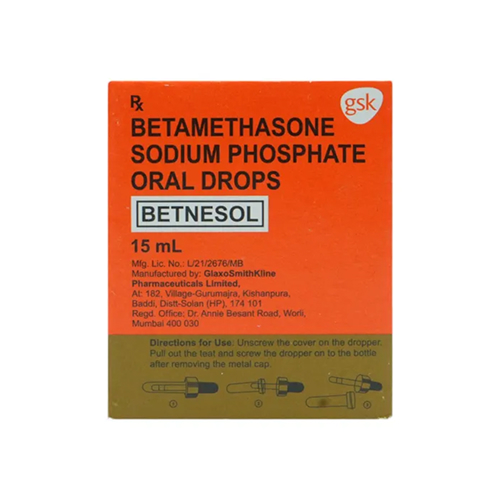
Images are for product identification. Refer to the selected batch for packaging and availability.
Betnesol Oral Drops -15 Ml
Betamethasone (0.5mg)
YOUR PURCHASE PRICE
29 in stockInclusive of all taxes
Available batch
1 offerSign in to order for your pharmacy.
Product information
- Manufacturer
- Glaxo Smithkline Pharmaceuticals Ltd
- Category
- Allopathy
- Composition
- Betamethasone (0.5mg)
- Packaging
- 15 ML
- Box / case pack
- 1 / —
Description
BETNESOL ORAL DROPS -15 ML by GLAXO SMITHKLINE PHARMACEUTICALS LTD
Name: Betnesol Oral Drops (Brand Name: Betnesol Oral Drops)
Composition:
- Active Ingredient: Betamethasone 0.5 mg (per ml).
Uses: Betnesol Oral Drops are a corticosteroid medication primarily used to treat a wide range of inflammatory and severe allergic conditions. These include:
- Inflammation and allergic reactions: Rheumatoid arthritis, asthma, severe allergic reactions (e.g., anaphylaxis), systemic lupus erythematosus (SLS), polyarteritis nodosa.
- Inflammatory conditions of organs: Skin disorders, heart, kidney (minimal change nephrotic syndrome, acute interstitial nephritis), and bowels (ulcerative colitis, Crohn's disease).
- Blood disorders: Autoimmune hemolytic anemia, idiopathic thrombocytopenic purpura.
- Certain cancers: Malignant lymphoma, multiple myeloma.
- Immunosuppression in transplantation.
Dosage and Administration: Betnesol Oral Drops should be taken exactly as prescribed by a healthcare professional. The dosage and frequency depend on the patient's medical condition, its severity, and response to treatment. It is generally recommended to take the drops orally, ideally right after breakfast, to help reduce the chance of side effects. Do not stop taking the medicine abruptly, as it may lead to withdrawal symptoms.
Side Effects: Common side effects may include nausea, indigestion, irregular periods, weight gain, increased susceptibility to infection, reduction in bone density, and upset stomach. Prolonged use at high dosages may lead to more serious effects such as aseptic osteonecrosis (bone cell death), fluid and electrolyte imbalance, subcapsular cataracts, skin thinning, osteoporosis, and glaucoma. Consult your doctor if any side effects persist or worsen.
Precautions:
- Do not use if allergic to Betamethasone or other steroids.
- Inform your doctor if you have an active infection and have not started antibiotic treatment.
- Caution is advised in pregnant or breastfeeding women; consult a doctor.
- Patients with liver, kidney, heart problems, high blood pressure, epilepsy, glaucoma, tuberculosis, peptic ulcers, or diabetes should use with caution and inform their doctor.
- Avoid alcohol consumption as it may increase the risk of gastrointestinal irritation.
- Inform your doctor if you have recently been or are about to be vaccinated.
Storage: Store Betnesol Oral Drops in a cool and dry place, away from direct sunlight, at a temperature below 30°C. Keep out of the sight and reach of children. The bottle should be used within one month of opening. Do not freeze.
Frequently asked questions
What is Betnesol Oral Drops used for?
Betnesol Oral Drops are primarily used to treat various inflammatory, allergic, and autoimmune conditions. These include inflammation, swelling, redness, and allergic reactions affecting the eyes, ears, or nose. It is also prescribed for conditions such as bronchial asthma, severe allergic reactions, rheumatoid arthritis, systemic lupus erythematosus, inflammatory skin disorders, certain kidney conditions (like nephrotic syndrome and acute interstitial nephritis), and inflammatory bowel diseases (such as ulcerative colitis and Crohn's disease). Additionally, it may be used for some blood conditions, connective tissue diseases, specific types of cancer (like malignant lymphoma), and to suppress the immune system during organ transplantation.
How does Betnesol Oral Drops work?
Betnesol Oral Drops contain Betamethasone (0.5 mg), which is a type of corticosteroid. This medication works by reducing inflammation in the body. It achieves this by inhibiting the release of certain natural chemical messengers and inflammatory mediators that are responsible for causing symptoms like redness, itching, swelling, and pain.
What is the usual dosage for Betnesol Oral Drops?
The dosage of Betnesol Oral Drops is determined by your doctor and depends on your age, the severity of your medical condition, and how you respond to the treatment. It is crucial to follow the prescribed dosage and not exceed it without consulting your doctor. For children older than one year, the dosage must be specifically prescribed by a medical professional. Generally, for adults, the dosage might range from 1.5 mg to 5 mg daily for one to three weeks, then gradually reduced to the lowest effective dose. For conditions like rheumatoid arthritis, it could be 0.5 mg to 2 mg daily. It is often recommended to take the drops consistently, possibly right after breakfast, to help minimize side effects.
What are the possible side effects of Betnesol Oral Drops?
While no common side effects are reported with appropriate use, prolonged use or high dosages of Betnesol Oral Drops can lead to some side effects. These may include a reduction in bone density, upset stomach, nausea, indigestion, irregular menstrual periods, weight gain, increased susceptibility to infections, headache, shortness of breath, blurred vision, increased appetite, anxiety, nervousness, skin itching, drying and cracking of the skin, acne, changes in skin color, and growth retardation in children. Long-term use may also cause increased body hair growth, particularly in females. If you experience any persistent or worsening side effects, you should consult your doctor.
Is Betnesol Oral Drops safe during pregnancy or breastfeeding?
Pregnancy: There is limited evidence on the use of Betnesol Oral Drops during pregnancy, and it is generally not recommended if you are pregnant or planning a pregnancy. If you become pregnant while taking this medicine, inform your doctor immediately, but do not stop taking it unless advised by your doctor. Some studies suggest a small risk of fetal damage, such as ear damage, cleft palate, or retarded growth, particularly with topical use.
Breastfeeding: Betnesol Oral Drops should be used cautiously by breastfeeding women as the medicine can pass into breast milk. High doses used for a prolonged period might lower the baby's hormone levels. Always consult your doctor for advice before using this medication while breastfeeding.
Can Betnesol Oral Drops be taken with other medications?
Betnesol Oral Drops can interact with several other medications. Its effects may be reduced by certain antihypertensives (like ephedrine), anti-tuberculosis drugs (like rifampicin), and anti-epilepsy medications (like carbamazepine, phenytoin, and phenobarbitone). Conversely, its blood concentration may increase when taken with protease inhibitors (such as ritonavir), pharmacokinetic boosters (like cobicistat), and antifungals (like itraconazole). It may also reduce the effectiveness of certain medications for myasthenia gravis and non-steroidal anti-inflammatory agents. Dosage adjustments might be needed if you are taking anticoagulants or estrogens. It is essential to inform your doctor about all medications you are currently taking to avoid potential interactions.
What precautions should be taken while using Betnesol Oral Drops?
Do not use Betnesol Oral Drops if you are allergic to betamethasone or any other ingredient in the drops. You should also avoid this medication if you have active infections (especially fungal infections) or if you are scheduled for vaccinations. Exercise caution if you have liver disease, kidney disease, tuberculosis, a history of steroid psychosis, diabetes, electrolyte imbalance, fluid retention, hypothyroidism, myasthenia gravis, osteoporosis, peptic ulcers, or high blood pressure. Alcohol consumption should be avoided as it may increase gastrointestinal irritation. Elderly patients should use the drops cautiously due to an increased risk of side effects such as osteoporosis, diabetes, hypertension, and skin thinning. It is crucial not to stop taking the medication abruptly, as this can lead to withdrawal symptoms; the dosage should be gradually reduced under medical supervision. Long-term use may require regular bone density tests.
What happens if a dose of Betnesol Oral Drops is missed?
If you forget to take a dose of Betnesol Oral Drops, take it as soon as you remember. However, if it is almost time for your next scheduled dose, skip the missed dose and continue with your regular dosing schedule. Do not take a double dose to compensate for the missed one, as this could increase the risk of side effects.
How should Betnesol Oral Drops be stored?
Betnesol Oral Drops should be stored in a cool and dry place, away from direct sunlight. The temperature should generally be below 30°C or between 10°C to 25°C. Keep the medicine out of the sight and reach of children. Do not freeze the drops. If the drops are formulated for eyes, ears, or nose, the bottle should typically be disposed of 28 days after first opening, even if some solution remains.