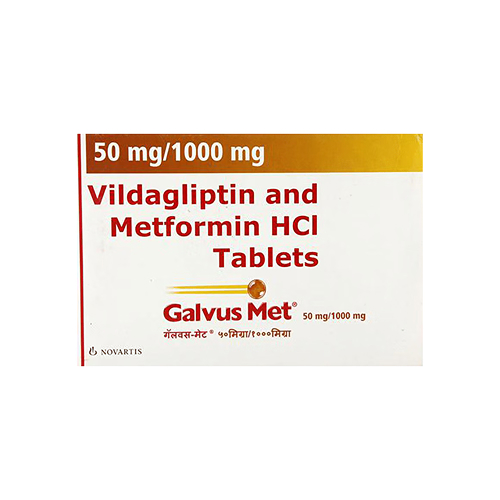
Images are for product identification. Refer to the selected batch for packaging and availability.
Galvus Met 50/1000 Mg Tablet
Metformin undefined (500mg) + undefined Vildagliptin (50mg)
YOUR PURCHASE PRICE
50 in stockInclusive of all taxes
Available batch
1 offerSign in to order for your pharmacy.
Product information
- Manufacturer
- Novartis India Limited
- Category
- Allopathy
- Composition
- Metformin undefined (500mg) + undefined Vildagliptin (50mg)
- Packaging
- 15 TABLET
- Box / case pack
- 1 / —
Description
GALVUS MET 50/1000 MG TABLET
GALVUS MET 50/1000 MG TABLET is an oral antidiabetic medication manufactured by Novartis India Ltd, used for the management of type 2 diabetes mellitus.
-
Name:
- Brand Name: Galvus Met
- Common Name: Vildagliptin/Metformin Hydrochloride
-
Composition: Each film-coated tablet contains two active ingredients:
- Vildagliptin: 50 mg
- Metformin Hydrochloride: 1000 mg (equivalent to 780 mg metformin) Other ingredients may include hydroxypropyl cellulose, hypromellose, iron oxide yellow, magnesium stearate, macrogol, talc, and titanium dioxide.
-
Uses: GALVUS MET is indicated in adults with type 2 diabetes mellitus as an adjunct to diet and exercise to improve glycemic control. It is prescribed in the following situations:
- As initial therapy when diabetes is not adequately controlled by diet and exercise alone.
- In patients inadequately controlled with metformin hydrochloride or vildagliptin alone.
- For patients already treated with the combination of vildagliptin and metformin hydrochloride as separate tablets.
- In combination with other medicinal products, including sulfonylureas or insulin, when these do not provide adequate glycemic control. Galvus Met works by increasing insulin release from the pancreas and improving the body's response to insulin (vildagliptin component), and by lowering glucose production in the liver and delaying glucose absorption from the intestines (metformin component).
-
Dosage and Administration: The dosage of GALVUS MET should be individualized and taken with meals to reduce gastrointestinal side effects associated with metformin.
- Recommended Daily Dose: Typically, one tablet of 50 mg/1000 mg twice daily (one in the morning and one in the evening). The maximum daily dose is 100 mg vildagliptin and 2000 mg metformin hydrochloride.
- Treatment-Naïve Patients: May be initiated at 50mg/500mg once daily and gradually titrated to a maximum dose of 50mg/1000mg twice daily.
- Patients switching from separate tablets: Initiate based on the current doses of vildagliptin and metformin being taken.
- Renal Impairment: A lower dose may be prescribed by the doctor. Do not chew or crush the tablets.
-
Side Effects: Common side effects include:
- Nausea, vomiting, diarrhea, stomach pain
- Headache, dizziness
- Low blood sugar (hypoglycemia), especially when used with insulin or sulfonylurea. Symptoms include sweating, hunger pangs, and tremors. Serious but rare side effects include:
- Lactic acidosis, characterized by symptoms like severe vomiting, nausea, abdominal pain, irregular heartbeat, deep and rapid breathing, muscle pain or weakness, and tiredness.
- Hepatic dysfunction (including hepatitis)
- Severe joint pain
- Vitamin B12 deficiency
- Skin lesions
-
Precautions:
- Hypersensitivity: Do not use if allergic to vildagliptin, metformin, or any other ingredients.
- Kidney Disease: Use with caution in patients with kidney problems; contraindicated in severe renal failure (GFR <30 mL/min) due to increased risk of lactic acidosis. Renal function should be assessed before treatment and annually thereafter.
- Liver Disease: Not recommended in patients with hepatic impairment or pre-treatment ALT or AST >2.5 times the upper limit of normal. Liver function tests should be monitored.
- Alcohol: Avoid excessive alcohol intake due to increased risk of lactic acidosis.
- Pregnancy and Breastfeeding: Not recommended during pregnancy or breastfeeding due to insufficient data.
- Type 1 Diabetes and Diabetic Ketoacidosis: Not for use in type 1 diabetes or for treating diabetic ketoacidosis.
- Surgery: Inform your doctor before surgery as treatment may need to be discontinued temporarily.
- Dehydration: Discontinue use and seek medical attention in cases of dehydration (e.g., severe diarrhea, vomiting, fever).
- Drug Interactions: Inform your doctor about all medicines and supplements being taken. Caution is advised with carbonic anhydrase inhibitors and ACE-inhibitors.
-
Storage: Store below 25°C. Do not refrigerate. Keep in the original package to protect from moisture. Keep out of sight and reach of children.
Frequently asked questions
What is GALVUS MET 50/1000 MG TABLET used for?
GALVUS MET 50/1000 MG TABLET is used to treat adults with Type 2 Diabetes Mellitus. It is prescribed when diet and exercise alone, or treatment with metformin or vildagliptin individually, are not enough to control blood sugar levels. It can also be used in combination with other medications like sulfonylurea or insulin when these therapies do not provide adequate glycemic control. This medication helps prevent serious diabetes complications such as kidney damage, blindness, heart attack, or stroke.
How does GALVUS MET 50/1000 MG TABLET work?
GALVUS MET is a combination of two antidiabetic medicines: vildagliptin and metformin. Vildagliptin is a DPP-4 inhibitor that works by increasing the release of insulin from the pancreas and decreasing the production of glucagon, a hormone that raises blood sugar. Metformin, a biguanide, works by lowering glucose production in the liver, delaying glucose absorption from the intestines, and enhancing the body's sensitivity to insulin. Together, these actions help to regulate blood sugar levels.
What is the usual dosage for GALVUS MET 50/1000 MG TABLET?
The dosage of GALVUS MET is individualized based on the patient's current treatment regimen, effectiveness, and tolerability, without exceeding a maximum daily dose of 100 mg vildagliptin and 2000 mg metformin hydrochloride. It is typically taken twice daily, with one tablet in the morning and one in the evening, preferably with meals to reduce gastrointestinal side effects. For patients new to this combination, treatment may start with a lower strength (e.g., 50mg/500mg once daily) and be gradually adjusted. Your doctor may prescribe a lower dose if you have reduced kidney function or are taking other diabetes medications like sulfonylurea.
What are the possible side effects of GALVUS MET 50/1000 MG TABLET?
Common side effects can include nausea, vomiting, diarrhea, stomach pain, headache, dizziness, tremors, metallic taste, loss of appetite, fatigue, and low blood sugar (hypoglycemia). Serious but rare side effects may include lactic acidosis (symptoms like severe vomiting, abdominal pain, rapid breathing, muscle pain, or unusual tiredness), hepatic dysfunction (including hepatitis), or skin disorders. If you experience severe or persistent side effects, contact your doctor.
Is GALVUS MET 50/1000 MG TABLET safe during pregnancy or breastfeeding?
GALVUS MET is generally not recommended during pregnancy due to insufficient scientific research and limited human data, although animal studies have not shown teratogenic effects. If you are pregnant or planning to become pregnant, consult your doctor. For breastfeeding women, GALVUS MET is not recommended because its components can pass into breast milk, and there's a potential risk of low blood sugar in the infant associated with metformin. Always consult your doctor if you are breastfeeding.
Can GALVUS MET 50/1000 MG TABLET be taken with other medications?
Vildagliptin, one of the active ingredients, has a low potential for drug interactions. It generally does not interact significantly with other antidiabetic drugs (like glibenclamide, pioglitazone), or common medications such as amlodipine, digoxin, ramipril, simvastatin, valsartan, or warfarin. However, certain medications can increase blood sugar levels (e.g., corticosteroids, thiazide diuretics, thyroid hormones, oral contraceptives), potentially requiring adjustments to your GALVUS MET dose. Conversely, some drugs like ACE inhibitors may increase the risk of hypoglycemia. Drugs that affect kidney function, such as NSAIDs, or those that interfere with metformin's elimination (e.g., cimetidine), can increase the risk of lactic acidosis. Always inform your doctor about all medications and supplements you are taking.
What precautions should be taken while using GALVUS MET 50/1000 MG TABLET?
It is important to take GALVUS MET with meals to help reduce gastrointestinal side effects. This medicine is not suitable for individuals with Type 1 diabetes, diabetic ketoacidosis, severe kidney or liver disease, or heart failure. Your doctor will monitor your kidney and liver function before and during treatment. Avoid consuming alcohol, as it can increase the risk of a serious condition called lactic acidosis. Since the medication may cause dizziness or low blood sugar, caution is advised when driving or operating machinery. It is not recommended for children under 18 years of age. If you are scheduled for surgery, inform your doctor, as they may advise discontinuing the medication temporarily.
What happens if a dose of GALVUS MET 50/1000 MG TABLET is missed?
If you miss a dose of GALVUS MET, take it as soon as you remember. However, if it is almost time for your next scheduled dose, skip the missed dose and continue with your regular dosing schedule. Do not take a double dose to make up for a missed one.
How should GALVUS MET 50/1000 MG TABLET be stored?
Store GALVUS MET tablets below 25°C or at temperatures not exceeding 30°C. Keep the medicine in its original packaging (blister pack) to protect it from moisture. Ensure it is kept out of the sight and reach of children. Do not refrigerate, and do not use the medicine after the expiry date printed on the box or blister.