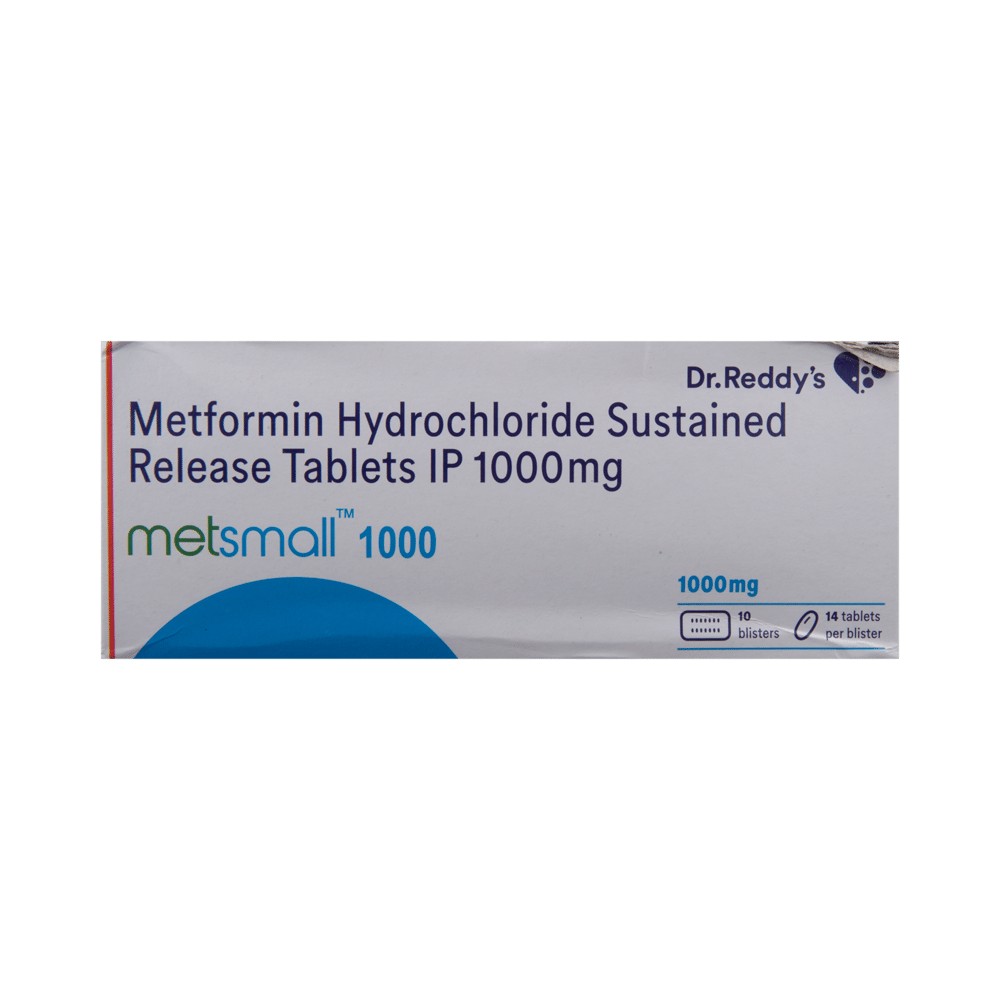
Images are for product identification. Refer to the selected batch for packaging and availability.
Metsmall 1000 Mg Tablet (14 Tab)
Metformin (1000mg)
YOUR PURCHASE PRICE
Out of stockInclusive of all taxes
Choose your batch
0 offersNo batches are available at this hub. Choose another hub to check availability.
Sign in to order for your pharmacy.
Product information
- Manufacturer
- Dr. Reddys Laboratories Ltd.
- Category
- Allopathy
- Composition
- Metformin (1000mg)
- Packaging
- 14 TABLETS
- Box / case pack
- 1 / —
Description
Here is a detailed product description for METSMALL 1000 MG TABLET:
METSMALL 1000 MG TABLET
-
Name:
- Brand Name: Metsmall 1000 mg Tablet
- Common Name: Metformin Hydrochloride
-
Composition:
- Each tablet contains Metformin 1000 mg.
-
Uses: Metsmall 1000 mg Tablet is primarily used for the management of:
- Type 2 Diabetes Mellitus: It helps control high blood sugar levels when diet and exercise alone are insufficient. It achieves this by decreasing glucose production in the liver, improving the body's sensitivity to insulin, and enhancing glucose uptake by muscles.
- Polycystic Ovary Syndrome (PCOS): It is also used to treat this menstruation-related disorder in women by improving insulin sensitivity, lowering insulin levels, and reducing excess male hormone production, which helps regulate menstrual cycles and relieve symptoms like acne and excess hair growth.
- Prevention of Diabetes Complications: By controlling blood sugar, it helps prevent serious complications of diabetes such as kidney damage (diabetic nephropathy), blindness (diabetic retinopathy), nerve damage (diabetic neuropathy), heart attack, and stroke.
- Prediabetes: In some cases, it is recommended to prevent the progression to type 2 diabetes.
-
Dosage and Administration:
- Metsmall 1000 mg Tablet should be taken orally with or after food to minimize gastrointestinal side effects like nausea and abdominal pain.
- Swallow the tablet whole with a glass of water; do not crush or chew it.
- The exact dosage and duration will be determined by a healthcare professional based on the individual's condition and response to treatment. For maximum benefit, take it regularly at the same time each day.
- Regular monitoring of blood sugar levels and kidney function is essential during treatment.
-
Side Effects:
- Common Side Effects: Nausea, vomiting, diarrhea, abdominal pain or discomfort, loss of appetite, flatulence, indigestion, headache, and a metallic taste in the mouth. These often resolve over time or by taking the medicine with food.
- Serious Side Effects (Rare):
- Lactic Acidosis: A rare but serious condition, more likely in individuals with kidney or liver problems, or excessive alcohol consumption. Symptoms include deep or rapid breathing, persistent nausea, vomiting, stomach pain, muscle cramps, reduced body temperature, and severe tiredness.
- Vitamin B12 Deficiency: Prolonged use may lead to reduced Vitamin B12 absorption, potentially causing anemia symptoms like fatigue, pale skin, shortness of breath, or headache.
- Hypoglycemia (Low Blood Sugar): Less common with Metformin alone but can occur when combined with other anti-diabetic medications, alcohol, or if meals are delayed/skipped. Symptoms include sweating, dizziness, shakiness, increased hunger, and weakness.
- Allergic reactions (e.g., hives, swelling of face/lips/tongue/throat) and liver problems are also possible.
-
Precautions:
- Contraindications: Do not take if allergic to Metformin, have type 1 diabetes, diabetic ketoacidosis, severe kidney disease, metabolic acidosis, severe uncontrollable diabetes, shock, or breathing/circulation problems.
- Warnings:
- Caution is advised in patients with a history of liver problems, heart failure/problems, dehydration, or severe infections.
- Inform your doctor if you have low Vitamin B12 levels, as this medicine can interfere with its absorption.
- Pregnancy and Breastfeeding: Consult your doctor if pregnant, planning pregnancy, or breastfeeding.
- Alcohol: Avoid alcohol consumption as it increases the risk of lactic acidosis and hypoglycemia.
- Drug Interactions: Inform your doctor about all medications, supplements, or herbal preparations you are taking, as interactions can occur with diuretics, NSAIDs, antihypertensives, corticosteroids, certain anti-diabetic agents, and iodinated contrast media used for X-rays or scans (Metformin may need to be temporarily stopped).
- Grapefruit and grapefruit juice may interfere with the metabolism of Metformin.
- Lifestyle: Maintain a balanced, low-sugar diet and engage in regular physical exercise to enhance the medicine's effectiveness.
-
Storage:
- Store in a cool and dry place below 30°C.
- Protect from direct sunlight and moisture.
- Keep out of sight and reach of children.
Frequently asked questions
What is METSMALL 1000 MG TABLET used for?
METSMALL 1000 MG TABLET is primarily used to manage Type 2 Diabetes Mellitus in adults, especially when diet and exercise alone are insufficient to control blood sugar levels. It also helps prevent serious complications associated with diabetes, such as kidney damage, blindness, and nerve problems. Additionally, it is used to treat Polycystic Ovary Syndrome (PCOS) in women.
How does METSMALL 1000 MG TABLET work?
METSMALL 1000 MG TABLET contains Metformin, which belongs to a class of anti-diabetic medicines called biguanides. It works by decreasing the amount of glucose produced by the liver, slowing down the absorption of glucose from the intestines after meals, and increasing the body's sensitivity to insulin. This improved insulin sensitivity helps the body's cells utilize more glucose from the blood, thereby lowering blood sugar levels.
What is the usual dosage for METSMALL 1000 MG TABLET?
The dosage of METSMALL 1000 MG TABLET is determined by your doctor based on your individual condition and response to the medicine. It is typically taken once or twice daily, usually with or after meals to minimize stomach upset. It's crucial not to exceed the prescribed dose, and your doctor may start with a lower dose and gradually increase it to reduce side effects. The maximum daily dose is generally 2000mg.
What are the possible side effects of METSMALL 1000 MG TABLET?
Common side effects can include nausea, vomiting, diarrhea, abdominal pain, loss of appetite, flatulence, indigestion, headache, and a metallic taste in the mouth. These often improve over time. A rare but serious side effect is lactic acidosis, which can occur with overdose, severe kidney or liver problems, or excessive alcohol intake. Prolonged use may also lead to a Vitamin B12 deficiency. Hypoglycemia (low blood sugar) is less common with metformin alone but can occur if taken with other anti-diabetic medications, alcohol, or if meals are skipped.
Is METSMALL 1000 MG TABLET safe during pregnancy or breastfeeding?
During Pregnancy: METSMALL 1000 MG TABLET is generally considered safe for use during pregnancy, especially for women with gestational diabetes. However, it is essential to consult your doctor, who will assess the benefits and risks for both you and your baby.
During Breastfeeding: Metformin is known to pass into breast milk, but the amount is usually significantly low and is generally not expected to cause side effects in the infant. It should be used with caution and only if prescribed by your doctor.
Can METSMALL 1000 MG TABLET be taken with other medications?
METSMALL 1000 MG TABLET can interact with other medications. It is vital to inform your doctor about all prescription and non-prescription medicines, supplements, or herbal preparations you are taking. Interactions can occur with diuretics (e.g., furosemide), certain pain and swelling medicines (e.g., ibuprofen, celecoxib), asthma medications (e.g., salbutamol), antianginals (e.g., ranolazine), H2 blockers (e.g., cimetidine), corticosteroids, and some blood pressure medications. If you require an injection of iodine-containing contrast medium for an X-ray or scan, your doctor will likely advise you to stop metformin temporarily.
What precautions should be taken while taking METSMALL 1000 MG TABLET?
Avoid excessive consumption of alcohol, as it can increase the risk of lactic acidosis. Inform your doctor if you have kidney, liver, or heart problems, severe infections, dehydration, or low vitamin B12 levels. This medicine is not recommended for severe kidney disease, Type 1 diabetes, diabetic ketoacidosis, or metabolic acidosis. Take the tablet with food to minimize stomach discomfort. Do not stop taking the medicine without consulting your doctor, as this can worsen your diabetes. It's also advisable to carry a sugary snack or drink for immediate relief if you experience symptoms of low blood sugar. Regular monitoring of blood sugar levels and kidney function will be recommended by your doctor.
What happens if a dose of METSMALL 1000 MG TABLET is missed?
If you miss a dose of METSMALL 1000 MG TABLET, take it as soon as you remember, preferably with food. However, if it is almost time for your next scheduled dose, skip the missed dose and continue with your regular dosing schedule. Do not take a double dose to make up for a forgotten one.
How should METSMALL 1000 MG TABLET be stored?
METSMALL 1000 MG TABLET should be stored in a cool, dry place, away from direct sunlight, moisture, and heat. Keep it in its original packaging and out of the sight and reach of children and pets. The storage temperature is generally recommended to be below 25°C or 30°C.