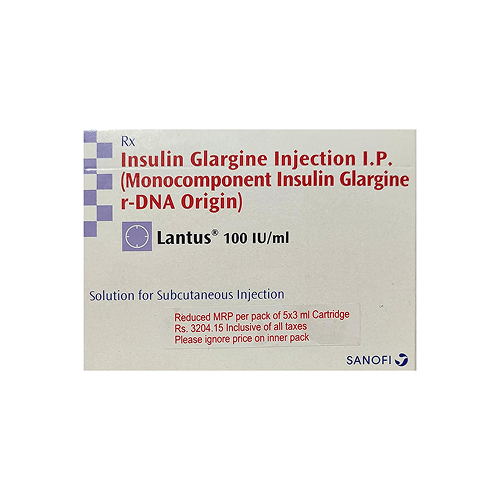
Images are for product identification. Refer to the selected batch for packaging and availability.
Lantus Injection 100 Iu/ml 3 Ml Cartridge
Insulin Glargine (100iu)
YOUR PURCHASE PRICE
55 in stockInclusive of all taxes
Available batch
1 offerSign in to order for your pharmacy.
Product information
- Manufacturer
- Sanofi India Ltd
- Category
- Allopathy
- Composition
- Insulin Glargine (100iu)
- Packaging
- 5 CARTRIGE
- Box / case pack
- 1 / —
Description
LANTUS INJECTION 100 IU/ML 3 ML CARTRIDGE by SANOFI INDIA LIMITED
Name:
- Brand Name: Lantus®
- Common Name: Insulin Glargine injection 100 Units/mL (U-100)
Composition:
- Active Ingredient: Insulin Glargine (100 IU/mL)
Uses: Lantus is a long-acting insulin analog used to improve glycemic control in adults and children (aged 2 years and older) with diabetes mellitus. It is prescribed for both Type 1 and Type 2 diabetes to manage high blood sugar levels. Lantus provides a steady level of insulin in the body for an entire day, helping to control blood sugar and reduce the risk of diabetes complications. It is not recommended for the treatment of diabetic ketoacidosis.
Dosage and Administration: Lantus is administered subcutaneously once daily at the same time every day. The dosage should be individualized based on metabolic needs, blood glucose monitoring, and glycemic control goals. Injection sites should be rotated within the chosen area (abdomen, thigh, or deltoid) to reduce the risk of lipodystrophy and localized cutaneous amyloidosis. Do not dilute or mix Lantus with any other insulin or solution.
Side Effects:
- Common Side Effects: Hypoglycemia (low blood sugar), injection site reactions (redness, swelling, pain, itching), lipodystrophy (skin thickening or pits at the injection site), rash, itching, edema (swelling), and weight gain.
- Serious Side Effects: Severe hypoglycemia (can be life-threatening), severe allergic reactions (rash over the whole body, trouble breathing, fast heartbeat, swelling of face/tongue/throat), and hypokalemia (low blood potassium levels).
Precautions: Do not use Lantus during episodes of low blood sugar (hypoglycemia) or if allergic to insulin glargine or any of its excipients. Never share insulin pens, needles, or syringes between patients. Patients should be instructed to always check the insulin label before each injection to avoid medication errors. Close monitoring of blood glucose is essential, especially when changing insulin regimens, during illness, or with changes in physical activity or meal patterns. Caution is advised in patients with renal or hepatic impairment as insulin requirements may be diminished. Concomitant use with thiazolidinediones (TZDs) may lead to fluid retention and heart failure.
Storage: Unopened Lantus cartridges should be stored in a refrigerator at 2°C to 8°C (36°F to 46°F) and protected from light until their expiration date. Do not freeze Lantus. Once opened or removed from the refrigerator, Lantus cartridges can be stored at room temperature (below 30°C or 86°F) for up to 28 days. The pen containing the cartridge should not be refrigerated after first use. Always replace the pen cap after each use.
Frequently asked questions
Lantus (insulin glargine injection) 100 IU/mL is a long-acting insulin used to manage blood sugar levels in people with diabetes. Below are some frequently asked questions about this medication.
What is Lantus Injection used for?
Lantus (insulin glargine) is a long-acting human insulin analog prescribed to improve blood sugar control in adults and children (6 years and older) with type 1 diabetes, and in adults with type 2 diabetes. It is not used to treat diabetic ketoacidosis.
How does Lantus Injection work?
Lantus works by replacing the natural insulin your body would normally produce. After injection, insulin glargine is released slowly and steadily, providing a relatively constant glucose-lowering effect over 24 hours with no pronounced peak. It helps to lower blood glucose by stimulating glucose uptake by skeletal muscle and fat cells, and by reducing glucose production from the liver.
What is the usual dosage for Lantus Injection?
The dosage of Lantus is highly individualized and determined by your doctor based on your metabolic needs, blood glucose monitoring results, and glycemic control goals. It is administered once daily via subcutaneous injection at the same time each day, into the abdominal area, thigh, or deltoid. For adults with type 2 diabetes not currently on insulin, the recommended starting dose is typically 0.2 units/kg or up to 10 units once daily. For patients with type 1 diabetes, the starting dose is usually about one-third of the total daily insulin requirements, with the remainder covered by short-acting insulin. Lantus should not be diluted or mixed with any other insulin or solution.
What are the possible side effects of Lantus Injection?
The most common side effect of Lantus is low blood sugar (hypoglycemia), which can be serious. Other common side effects include reactions at the injection site (such as redness, pain, itching, or swelling), lipodystrophy (changes in skin thickness at the injection site), weight gain, skin rash, itching, and swelling (edema) in the hands or feet. Serious but less common side effects can include severe allergic reactions (anaphylaxis), low potassium levels (hypokalemia), and, when used with certain other medications (thiazolidinediones), an increased risk of fluid retention or worsening heart failure.
Is Lantus Injection safe during pregnancy or breastfeeding?
Pregnancy: Lantus is considered safe for use during pregnancy and is a preferred option for managing both type 1 and type 2 diabetes in pregnant individuals. Studies have not shown a clear link to adverse developmental outcomes. Maintaining good blood sugar control is crucial throughout pregnancy. Breastfeeding: It is generally safe to use Lantus while breastfeeding. The amount of insulin that passes into breast milk is very small and is unlikely to cause any unwanted effects in the baby. However, insulin dose adjustments and dietary monitoring may be necessary for the breastfeeding parent.
Can Lantus Injection be taken with other medications?
Yes, but Lantus can interact with numerous other medications. Certain drugs can either increase or decrease its blood glucose-lowering effect, requiring dose adjustments and close monitoring. Examples of interacting medications include other diabetes medications, beta-blockers (which can mask symptoms of low blood sugar), corticosteroids, diuretics, and some pain relievers. Alcohol can also significantly lower blood sugar when combined with insulin. Always inform your doctor about all medications, vitamins, and herbal supplements you are taking.
What precautions should be taken with Lantus Injection?
- Never share your Lantus pen, syringe, or needles with another person to prevent the transmission of infections.
- Rotate injection sites within the recommended areas (abdomen, thigh, or deltoid) with each dose to reduce the risk of skin problems like lipodystrophy. Avoid injecting into areas of damaged, lumpy, or scarred skin.
- Always check the insulin label before each injection to ensure you are using the correct type of insulin and to avoid medication errors.
- Do not dilute or mix Lantus with any other insulin or solution, as this can affect its action.
- Visually inspect the solution; it should be clear and colorless without any visible particles. Do not use if it appears otherwise.
- Monitor your blood sugar levels regularly, especially when making changes to your insulin regimen, during illness, or stress.
What happens if a dose of Lantus Injection is missed?
If you miss a dose of Lantus, inject it as soon as you remember. However, if it is almost time for your next scheduled dose (e.g., the next day), it's generally recommended to skip the missed dose and resume your regular schedule. Do not take a double dose to compensate for the missed one. It is important to monitor your blood sugar levels more frequently after a missed dose. If you are unsure, consult your doctor or pharmacist.
How should Lantus Injection be stored?
Unopened (not in-use): Store unused Lantus cartridges in a refrigerator between 36°F to 46°F (2°C to 8°C). Keep them in their original outer carton to protect from light and do not freeze. They are good until the expiration date when stored this way. Opened (in-use): Once opened, Lantus cartridges should be stored at room temperature (up to 86°F [30°C]) and should not be refrigerated. They must be discarded 28 days after first use, even if there is still medicine left. Keep out of direct heat and light. Do not use if the medicine has been frozen or overheated.