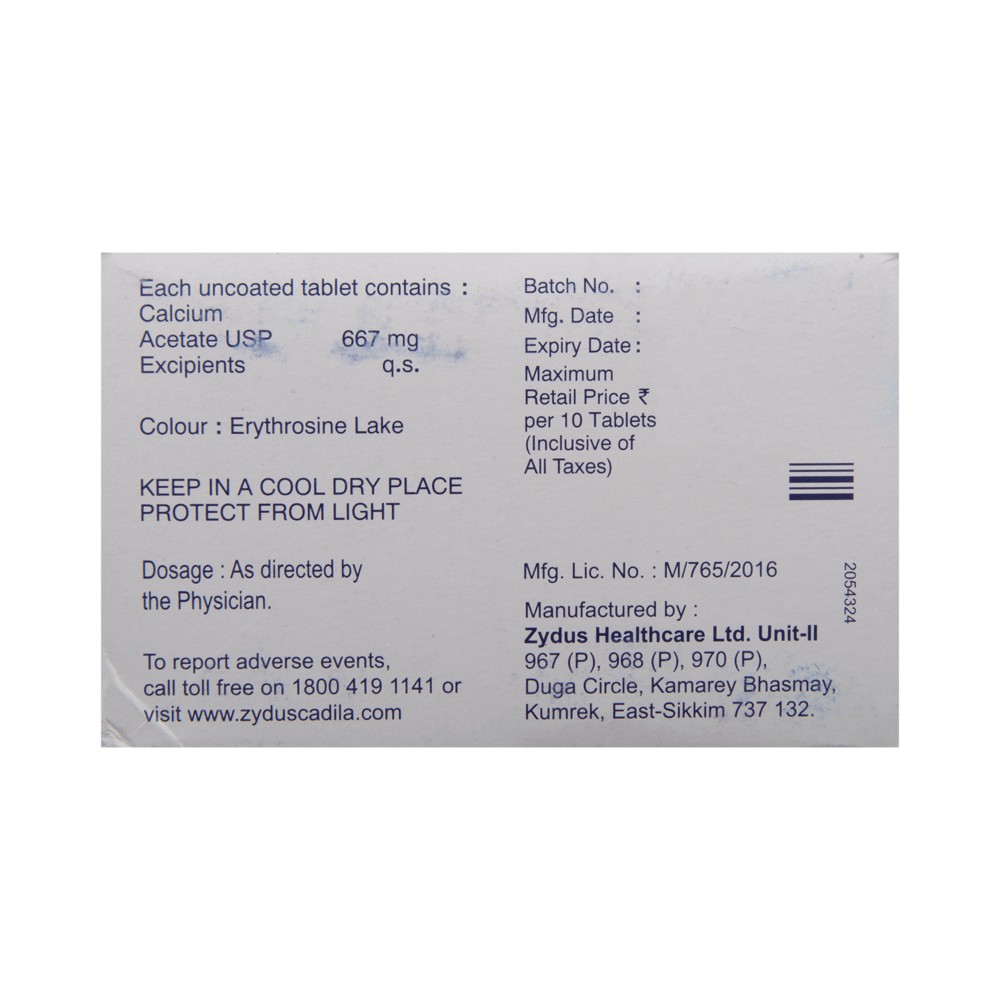
Images are for product identification. Refer to the selected batch for packaging and availability.
Phostat Tablet (10 Tab)
Drug Formula unavailable
YOUR PURCHASE PRICE
5 in stockInclusive of all taxes
Choose your batch
2 offersSign in to order for your pharmacy.
Product information
- Manufacturer
- Zydus Healthcare Limited
- Category
- Allopathy
- Composition
- Not provided
- Packaging
- 10 TABLET
- Box / case pack
- 1 / —
Description
PHOSTAT TABLET (10 TAB) by ZYDUS HEALTHCARE LIMITED
Name: Phostat Tablet (Brand name: Phostat)
Composition:
- Active Ingredient: Calcium Acetate (667 mg)
Uses: Phostat Tablet is a phosphate binder primarily prescribed for the management of hyperphosphatemia, a condition characterized by high phosphate levels in the blood. It is especially used in patients with chronic kidney disease (CKD) and end-stage renal disease (ESRD) who are undergoing dialysis. It works by binding to dietary phosphate in the gastrointestinal tract, thereby preventing its absorption into the bloodstream and helping to maintain healthier calcium and phosphorus levels. This action helps reduce the risk of complications such as bone issues and the calcification of soft tissues and blood vessels.
Dosage and Administration: Phostat Tablet should be taken orally with meals to minimize stomach upset. It is typically advised twice daily, or as directed by a healthcare professional. The tablet should be swallowed whole with water and not be crushed, chewed, or broken. Do not exceed the recommended dosage.
Side Effects: Common side effects may include nausea, vomiting, constipation, and diarrhea. An increase in blood calcium levels (hypercalcemia) is also a potential side effect. Serious, though less common, side effects can include hypercalcemia, calcium-based tissue deposition, and aluminum toxicity. Overdose symptoms may include nausea, vomiting, loss of appetite, confusion, and loss of consciousness.
Precautions: Inform your doctor about any known allergies to its ingredients, or if you are pregnant, planning to conceive, or breastfeeding, as calcium levels may need monitoring. Phostat Tablet is not recommended for individuals with reduced blood phosphate levels (hypophosphatemia) or elevated blood calcium levels (hypercalcemia). Caution is advised for patients with lactose intolerance, a history of kidney stones, or severe kidney/calcium metabolism impairment. It is generally not recommended for pediatric patients due to limited data. Discuss all other medications, including supplements and herbal products, with your doctor to avoid potential interactions. Regular monitoring of blood phosphate and calcium levels is crucial during treatment.
Storage: Store Phostat Tablet in a cool, dry place away from direct sunlight, heat, and moisture, at room temperature between 20°C to 25°C (or below 30°C). Do not freeze. Keep out of reach and sight of children and pets.
Frequently asked questions
What is Phostat Tablet used for?
Phostat Tablet is primarily used to manage hyperphosphatemia, a condition characterized by high levels of phosphate in the blood. This is especially relevant for patients with chronic kidney disease (CKD) and end-stage renal disease (ESRD) who are undergoing dialysis. The medication helps prevent complications associated with excessive phosphate accumulation, such as bone problems, soft tissue calcification, and cardiovascular issues.
How does Phostat Tablet work?
Phostat Tablet contains Calcium Acetate, which acts as a phosphate binder. When taken, it binds to dietary phosphorus in the digestive tract, forming insoluble calcium phosphate complexes. These complexes are not absorbed into the bloodstream and are instead excreted in the feces, thereby reducing the amount of phosphate in the blood.
What is the usual dosage for Phostat Tablet?
The dosage of Phostat Tablet is determined by your doctor and should be followed precisely. It is typically taken with meals, often twice daily. For adult dialysis patients, a common starting dose may be two tablets three times a day with meals, but your doctor may adjust this based on your blood phosphorus levels. The tablets should be swallowed whole with a glass of water and not crushed, chewed, or broken.
What are the possible side effects of Phostat Tablet?
Common side effects may include nausea, vomiting, constipation, diarrhea, abdominal pain, bloating, and gas. Other reported effects can include headache, dry mouth, loss of appetite, increased thirst, and confusion. In rare cases, more serious side effects like hypercalcemia (high calcium levels in the blood), calcium-based tissue deposition, or allergic reactions (e.g., difficulty breathing, hives, swelling) can occur. Most common side effects are temporary and resolve over time, but you should contact your doctor if they persist or worsen.
Is Phostat Tablet safe during pregnancy or breastfeeding?
Pregnancy: Phostat Tablet should generally not be used during pregnancy unless clearly necessary and only after a thorough discussion with your doctor regarding the potential benefits and risks. Close monitoring of maternal calcium levels is important. Breastfeeding: Similarly, Phostat Tablet should not be used by nursing mothers unless deemed absolutely necessary by a healthcare professional. Your doctor will assess the benefits and risks before prescribing it.
Can Phostat Tablet be taken with other medications?
It is crucial to inform your doctor about all prescription and over-the-counter medications, as well as any nutritional supplements or herbal products you are currently taking. Phostat Tablet may interact with certain antibiotics (such as tetracyclines), diuretics (like thiazides), and bisphosphonates, potentially affecting their effectiveness or increasing the risk of side effects. It can also interfere with the absorption of certain antacids and iron supplements. If you are taking thyroid medication, Phostat Tablet should be taken 4 hours before or 4 hours after the thyroid medicine. Alcohol consumption is generally not recommended while on this medication.
What precautions should be taken while using Phostat Tablet?
Before taking Phostat Tablet, inform your doctor if you have any allergies to its ingredients, or if you have existing medical conditions such as high calcium levels (hypercalcemia) or low phosphate levels (hypophosphatemia) in your blood. Caution is also advised for individuals with severe kidney impairment, impaired calcium metabolism, a history of kidney stones, certain heart rhythm disorders, or gastrointestinal blockages. Regular blood tests to monitor calcium and phosphate levels are important during treatment. Phostat Tablet is generally not recommended for children due to insufficient clinical data.
What happens if a dose of Phostat Tablet is missed?
If you miss a dose of Phostat Tablet, take it as soon as you remember. However, if it is almost time for your next scheduled dose, skip the missed dose and continue with your regular dosing schedule. Do not take a double dose to make up for a missed one.
How should Phostat Tablet be stored?
Phostat Tablet should be stored in a cool and dry place, away from direct sunlight, heat, and moisture. It should be kept at room temperature, typically between 20°C to 25°C or below 30°C, and should not be frozen. Always keep the medicine out of the reach and sight of children and pets.