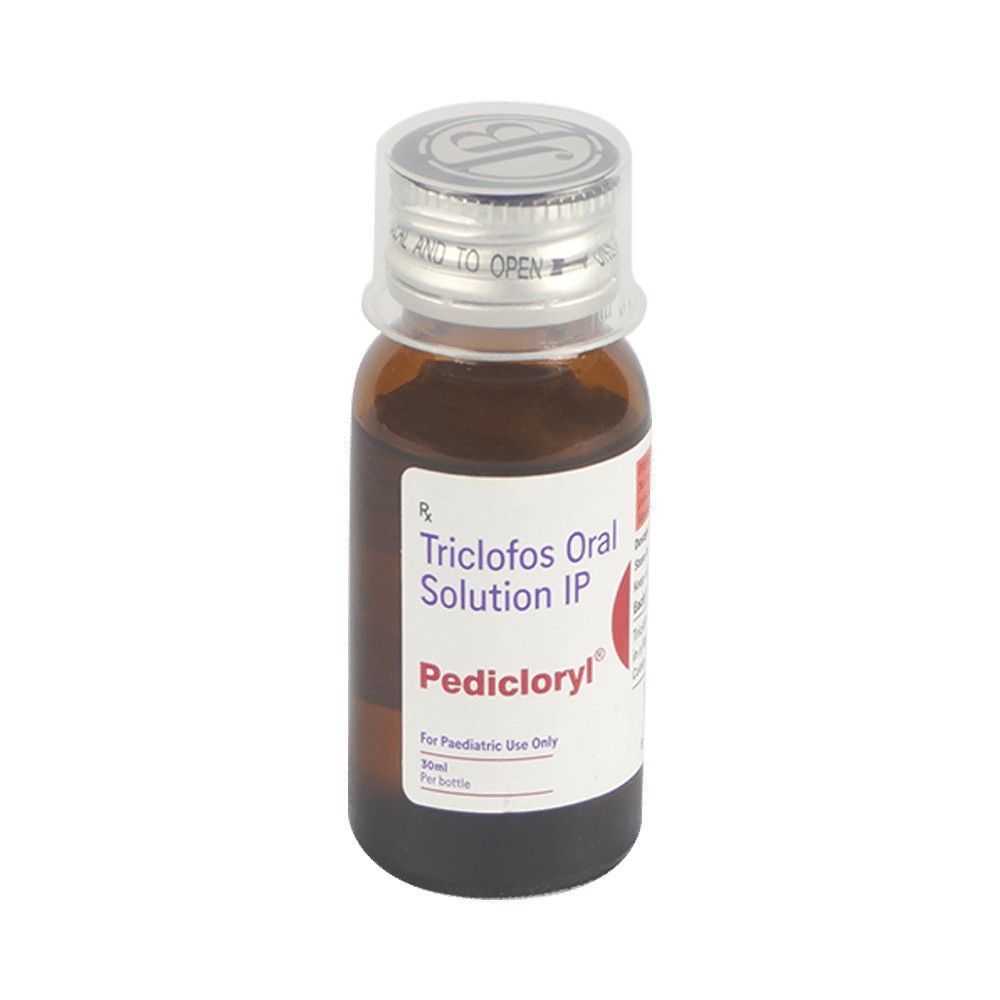
Images are for product identification. Refer to the selected batch for packaging and availability.
Pedicloryl Oral Solution
Drug Formula unavailable
YOUR PURCHASE PRICE
17 in stockInclusive of all taxes
Choose your batch
2 offersSign in to order for your pharmacy.
Product information
- Manufacturer
- J.b. Chemicals & Pharamceuticals Ltd.
- Category
- Allopathy
- Composition
- Not provided
- Packaging
- 30 ML
- Box / case pack
- 1 / —
Description
PEDICLORYL ORAL SOLUTION
PEDICLORYL ORAL SOLUTION is a sedative-hypnotic medication primarily used in children to induce sleep and reduce anxiety.
-
Name
- Brand Name: PEDICLORYL ORAL SOLUTION
- Common Name: Pedicloryl Syrup (often used interchangeably)
-
Composition
- Active Ingredient: Triclofos (500mg/5ml)
-
Uses PEDICLORYL ORAL SOLUTION is prescribed for the short-term treatment of insomnia in children, a sleep disorder characterized by difficulty falling or staying asleep. It is also used to relieve nervousness and induce sedation before medical, dental, or surgical procedures. Additionally, it may be used for recurrent colic with persistent crying, excitability, restlessness, and convulsions in children.
-
Dosage and Administration Administer PEDICLORYL ORAL SOLUTION orally as prescribed by a healthcare professional. Shake the bottle well before use and measure the dose accurately with a measuring cup or spoon. For insomnia, it is typically given preferably an hour before bedtime. It can be taken with or without food. Do not exceed the prescribed dose. The medicine usually takes 30-60 minutes to induce sleep. If a child vomits within 30 minutes of intake, another dose may be given once the child calms down, but avoid doubling the dose.
-
Side Effects
- Common Side Effects: Dizziness, drowsiness, nausea, vomiting, diarrhoea, headache, stomach pain, abdominal pain, skin rashes, irritability, confusion, impaired coordination, disorientation, flatulence, and nightmares. Most of these usually resolve over time, but a doctor should be consulted if they persist or worsen.
- Serious Side Effects: Rarely, serious adverse reactions can include respiratory depression, comatose conditions, cardiopulmonary arrest, allergic reactions, seizures, and medicine dependence.
-
Precautions PEDICLORYL ORAL SOLUTION is primarily for pediatric use and is not recommended for adults, pregnant, or breastfeeding women. It is contraindicated in children with a known allergy to Triclofos, severe hepatic (liver) or renal (kidney) impairment, severe cardiac disease, or porphyria. Abrupt discontinuation of the medicine should be avoided as it may lead to withdrawal symptoms. The effects of the solution may last until the next day, potentially causing drowsiness, so ensuring 7-8 hours of sleep after administration is advised. Do not self-medicate. During treatment, a doctor may monitor the child's respiration rate, heart rate, and oxygen saturation levels.
-
Storage Store PEDICLORYL ORAL SOLUTION in a cool and dry place, away from direct sunlight, heat, and humidity, and ideally below 30°C. Keep the medicine out of the sight and reach of children and pets. Do not freeze.
Frequently asked questions
What is Pedicloryl Oral Solution used for?
Pedicloryl Oral Solution is primarily used for the short-term treatment of insomnia (difficulty falling or staying asleep) in children. It is also administered to reduce pain and anxiety by inducing sleep before medical or diagnostic procedures, especially in pediatric patients.
How does Pedicloryl Oral Solution work?
Pedicloryl Oral Solution contains Triclofos, which is a hypnotic. Once ingested, it is converted in the body into an active compound called trichloroethanol. This active metabolite works in the brain by enhancing the activity of gamma-aminobutyric acid (GABA-A) receptors, which are responsible for inhibitory signaling in the central nervous system. This action helps to induce sleepiness, decrease the time it takes to fall asleep, and increase the duration of sleep.
What is the usual dosage for Pedicloryl Oral Solution?
The dosage of Pedicloryl Oral Solution is determined by a doctor based on the patient's clinical condition, age, body weight, and response to treatment. For children, the dosage is typically calculated based on body weight, often ranging from 20-50 mg per kilogram. For adults, a common dose can range from 500 mg to 1000 mg (5-10 ml of a 500mg/5ml solution) daily. It is usually administered orally, preferably about 15-60 minutes before bedtime.
What are the possible side effects of Pedicloryl Oral Solution?
Common side effects can include nausea, vomiting, drowsiness, impaired coordination, headache, stomach pain, dizziness, and mild confusion. More serious, though less common, side effects can include severe allergic reactions (rash, itching, swelling, difficulty breathing), cardiovascular effects (changes in blood pressure or heart rate), seizures, respiratory depression, and drug dependence with prolonged use.
Is Pedicloryl Oral Solution safe during pregnancy or breastfeeding?
Pedicloryl Oral Solution is generally not recommended for use during pregnancy unless absolutely necessary, and only after a thorough discussion of the potential risks and benefits with a doctor. It can pass into breast milk and may potentially harm a nursing baby, therefore, breastfeeding is generally not recommended while using this medicine.
Can Pedicloryl Oral Solution be taken with other medications?
Pedicloryl Oral Solution should be used with caution as it can interact with several medications. It is crucial to inform your doctor about all other medicines, including over-the-counter drugs and herbal supplements. Significant interactions can occur with:
- Central Nervous System (CNS) depressants: Alcohol, other sedatives, hypnotics, benzodiazepines, barbiturates, prescription pain medications, and certain antihistamines can increase the risk of profound sedation, respiratory depression, coma, and even death.
- Blood thinners (anticoagulants): Such as warfarin, as it may affect coagulation profiles and increase the risk of bleeding.
- Medicines for depression or nervous disorders: Concurrent use requires careful medical supervision.
What precautions should be taken while using Pedicloryl Oral Solution?
- Short-term Use: This medicine is intended for short-term use, typically not exceeding two weeks, as prolonged use can lead to dependence and tolerance.
- Medical Supervision: Never self-medicate, especially in children. Use only under a doctor's prescription and supervision.
- Contraindications: Avoid if there is a known allergy to Triclofos or chloral hydrate, or if the patient has severe liver, kidney, or heart problems, porphyria (a blood disorder), or severe stomach/esophagus issues.
- Drowsiness: This medicine can cause significant drowsiness. Patients, especially children, should avoid activities requiring mental alertness, such as riding a bicycle or playing near a road, driving, or operating machinery, until they know how the medicine affects them.
- Alcohol: Avoid consuming alcohol during treatment as it can intensify drowsiness and other CNS depressant effects.
- Administration: It may be taken with food or milk to help reduce stomach irritation. Do not stop the medication abruptly, especially after prolonged use, as it can lead to withdrawal symptoms.
What happens if a dose of Pedicloryl Oral Solution is missed?
If a dose is missed, administer it as soon as you remember. However, if it is almost time for the next scheduled dose, skip the missed dose and continue with the regular dosing schedule. Do not double the dose to compensate for a missed one. If the medicine is used as a sleep aid, it should only be taken at bedtime; do not give a missed dose during the daytime, as it can cause drowsiness, dizziness, and confusion during the day. If your child vomits within 30 minutes of taking the medicine, give another dose once they calm down, but do not double the dose.
How should Pedicloryl Oral Solution be stored?
Pedicloryl Oral Solution should be stored at room temperature, typically between 10°C and 30°C (or below 25°C), away from moisture, heat, and direct sunlight. It should not be frozen. Keep the bottle tightly closed when not in use and always keep it out of the reach and sight of children and pets. If the bottle has been opened, it should generally be discarded after 4 weeks.