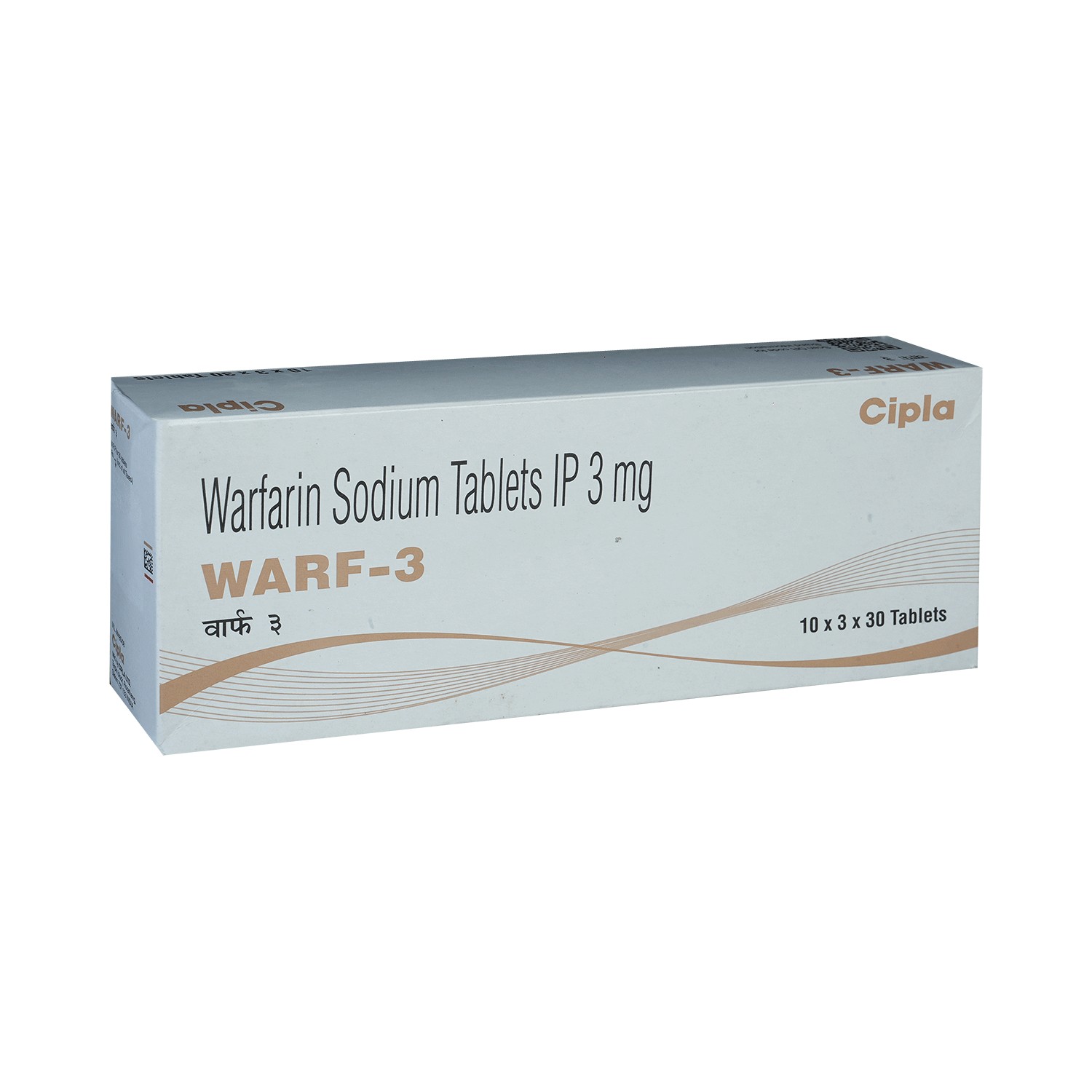
Images are for product identification. Refer to the selected batch for packaging and availability.
Warf 3 Tablet
Warfarin (3mg)
YOUR PURCHASE PRICE
20 in stockInclusive of all taxes
Choose your batch
2 offersSign in to order for your pharmacy.
Product information
- Manufacturer
- Cipla Health Ltd
- Category
- Allopathy
- Composition
- Warfarin (3mg)
- Packaging
- 30 TABLETS
- Box / case pack
- 1 / —
Description
WARF 3 TABLET
WARF 3 Tablet, manufactured by Cipla Health Ltd., is an oral anticoagulant prescribed to prevent and treat various thromboembolic conditions. It is a vital medication for individuals at risk of harmful blood clots.
-
Name:
- Common Name: Warfarin Sodium
- Brand Names: WARF 3 TABLET (by Cipla Health Ltd.), Coumadin (discontinued), Jantoven.
-
Composition:
- Active Ingredient: Each uncoated tablet contains Warfarin Sodium Clathrate IP equivalent to 3 mg of Warfarin Sodium (anhydrous).
-
Uses: WARF 3 Tablet is primarily used to reduce the formation of blood clots and is prescribed for:
- Prophylaxis and treatment of venous thrombosis and its extension (Deep Vein Thrombosis - DVT), typically affecting the legs.
- Prophylaxis and treatment of pulmonary embolism (PE), where blood clots block blood vessels in the lungs.
- Prophylaxis and treatment of thromboembolic complications associated with atrial fibrillation (AF) and/or cardiac valve replacement.
- Reduction in the risk of death, recurrent myocardial infarction (heart attack), and thromboembolic events such as stroke or systemic embolization after a myocardial infarction.
- Stroke prevention.
-
Dosage and Administration: WARF 3 Tablet is taken orally, usually once a day, at the same time each day, with or without food. The dosage is highly individualized and determined by regular blood tests measuring the International Normalized Ratio (INR), which assesses how long it takes for blood to clot.
- Adults: Typical starting doses range from 2 mg to 10 mg daily. The maintenance dose usually falls between 2 mg and 10 mg daily, adjusted to maintain a target INR, often between 2.0 and 3.0 for most conditions.
- Missed Dose: If a dose is missed and remembered within eight hours of the scheduled time, it should be taken. If more than eight hours have passed, the missed dose should be skipped, and the regular schedule resumed the next day. A double dose should never be taken to compensate for a missed one.
-
Side Effects: The most significant risk with warfarin is bleeding, which can be severe or fatal.
- Common (less serious) side effects include:
- Bleeding for a longer time than usual from cuts.
- Occasional nosebleeds (lasting less than 10 minutes).
- Bleeding gums when brushing teeth.
- Bruises that occur easily and take longer to fade.
- Serious side effects requiring immediate medical attention include:
- Any bleeding that is sudden, heavy, or does not stop.
- Pink, red, or brown urine, or black/tarry stools.
- Unusual bruising, especially if growing in size.
- Coughing up blood or vomiting material that looks like coffee grounds.
- Sudden headache, feeling very weak or dizzy.
- Blurred vision, slurred speech, numbness, confusion, or fits.
- Painful skin rash, which can be a sign of rare but serious conditions like calciphylaxis or tissue necrosis.
- Common (less serious) side effects include:
-
Precautions:
- Bleeding Risk: Warfarin carries a Black Box Warning due to the risk of major or fatal bleeding. Regular INR monitoring is crucial.
- Pregnancy: Warfarin is generally not recommended during pregnancy as it can cause birth defects, miscarriage, or fetal death, unless the patient has a mechanical heart valve. Effective birth control should be used during treatment and for at least one month after the last dose.
- Dietary Interactions: Foods rich in Vitamin K (e.g., leafy green vegetables, certain vegetable oils) can reduce warfarin's effectiveness. A consistent diet is important; significant dietary changes should be discussed with a doctor.
- Drug Interactions: Many medications and herbal products can interact with warfarin, increasing or decreasing its effects. It is crucial to inform all healthcare providers about all medicines, supplements, and herbal products being taken.
- Alcohol and Certain Juices: Avoid excessive alcohol consumption. Cranberry, grapefruit, noni, and pomegranate juices may interact with warfarin and should be avoided or consumed consistently with medical guidance.
- Surgery/Dental Procedures: Inform all healthcare professionals and dentists about warfarin use before any surgery or dental procedure, as the dose may need to be adjusted or stopped temporarily.
- Medical Conditions: Individuals with certain conditions like high blood pressure, liver or kidney disease, cancer, a history of gastrointestinal bleeding, or a history of stroke may have an increased risk of bleeding.
- Medical Alert: Patients should wear a medical alert tag or carry an ID card stating they are taking warfarin.
-
Storage:
- Store WARF 3 Tablet at room temperature, ideally between 68°F to 77°F (20°C to 25°C).
- Keep the medication in a tightly closed container, protected from light and moisture.
- Do not freeze warfarin.
- Keep out of reach of children.
Frequently asked questions
WARF 3 TABLET by CIPLA HEALTH LTD is an anticoagulant medication containing Warfarin (3mg) as its active ingredient. It is commonly used to prevent and treat blood clots.
What is WARF 3 TABLET used for?
WARF 3 TABLET is used to prevent and manage harmful blood clots in various parts of the body, including the legs (deep vein thrombosis), lungs (pulmonary embolism), brain (stroke prevention), and heart. It can also be prescribed for individuals with certain heart conditions, artificial heart valves, or after a heart attack to reduce the risk of clot-related complications.
How does WARF 3 TABLET work?
WARF 3 TABLET, containing Warfarin, works as an anticoagulant (blood thinner). It reduces the blood's ability to clot by blocking the synthesis of vitamin K-dependent clotting factors (specifically factors II, VII, IX, and X) in the liver. This inhibition leads to the production of clotting factors with reduced activity, thereby slowing down the blood clotting process.
What is the usual dosage for WARF 3 TABLET?
The dosage of WARF 3 TABLET is highly individualized and determined by your doctor based on your specific medical condition and regular blood tests, primarily the International Normalized Ratio (INR). For adults, an initial dose may range from 2 to 5 mg once daily, with a typical maintenance dose often between 2 mg and 10 mg once daily. It is crucial to take WARF 3 TABLET exactly as prescribed, usually once a day at the same time, with or without food.
What are the possible side effects of WARF 3 TABLET?
The most common and serious side effect of WARF 3 TABLET is bleeding, which can range from minor (e.g., bleeding gums, nosebleeds, easy bruising) to severe or life-threatening (e.g., blood in urine or stools, severe headache, coughing up blood, internal bleeding). Less common but serious side effects can include skin necrosis or "purple toes syndrome". Report any unusual bleeding or concerning symptoms to your doctor immediately.
Is WARF 3 TABLET safe during pregnancy or breastfeeding?
WARF 3 TABLET (Warfarin) is generally not recommended during pregnancy as it can harm the unborn baby and cause birth defects or bleeding problems. Women who are pregnant or planning to become pregnant should discuss alternative medications with their doctor.
During breastfeeding, current evidence suggests that taking warfarin is generally considered safe. Only trace amounts of warfarin pass into breast milk, and these amounts are usually too small to affect the baby's blood clotting. However, it's always best to inform your doctor or pediatrician if you are breastfeeding while taking WARF 3 TABLET.
Can it be taken with other medications?
WARF 3 TABLET can interact with a wide range of other medications, including over-the-counter drugs, herbal remedies, and supplements, which can either increase or decrease its anticoagulant effect. Some common medications that interact with warfarin include aspirin, NSAIDs (like ibuprofen), certain antibiotics, antifungals, and some seizure medications. It is crucial to inform your doctor and pharmacist about all medications, supplements, and herbal products you are taking before starting or making any changes to your WARF 3 TABLET regimen.
What precautions should be taken?
Regular blood tests (INR) are essential to monitor the effectiveness of WARF 3 TABLET and adjust the dosage to keep your blood clotting time within the target range. Avoid significant changes in your diet without consulting your doctor, especially regarding foods rich in Vitamin K (e.g., leafy green vegetables), as Vitamin K can affect how warfarin works. Maintain a consistent intake of Vitamin K-rich foods. Limit or avoid alcohol consumption, as it can increase the risk of bleeding. Inform any healthcare provider (doctor, dentist, or other specialists) that you are taking warfarin before any surgery, dental work, or medical procedures. You may need to temporarily stop taking WARF 3 TABLET. Be careful with activities that could lead to injury or bleeding, such as contact sports or using sharp objects. Consider carrying a medical alert card or tag.
What happens if a dose is missed?
If you miss a dose of WARF 3 TABLET, take it as soon as you remember on the same day. However, if it is almost time for your next scheduled dose (e.g., the next day), skip the missed dose and continue with your regular dosing schedule. Never take a double dose to make up for a missed one. If you miss multiple doses, contact your doctor for advice.
How should it be stored?
WARF 3 TABLET should be stored in a closed container at room temperature, away from heat, moisture, and direct light. Do not freeze the medicine. Keep it out of the reach of children.