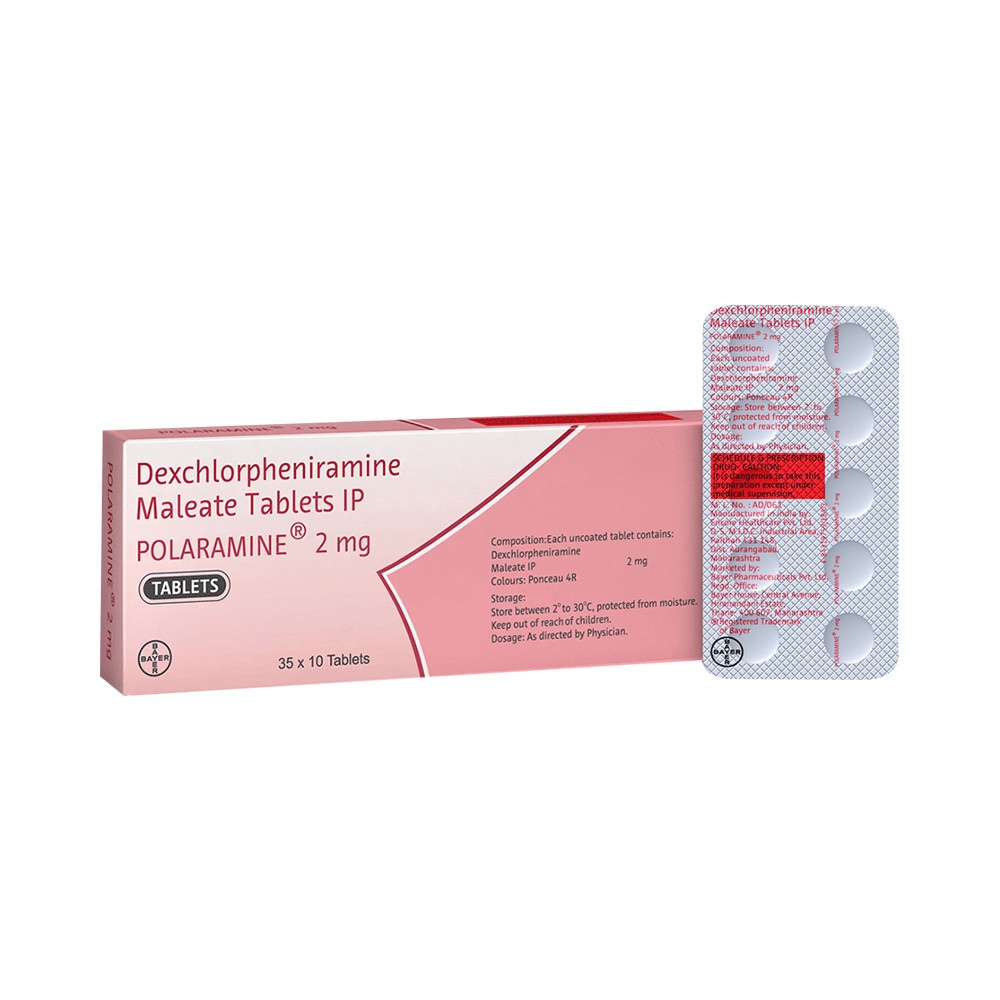
Images are for product identification. Refer to the selected batch for packaging and availability.
Polaramine 2mg Tablet
Dexchlorpheniramine (2mg)
YOUR PURCHASE PRICE
51 in stockInclusive of all taxes
Choose your batch
2 offersSign in to order for your pharmacy.
Product information
- Manufacturer
- Bayer Pharmaceuticals Pvt. Ltd.
- Category
- Allopathy
- Composition
- Dexchlorpheniramine (2mg)
- Packaging
- 10 TABLETS
- Box / case pack
- 1 / —
Description
POLARAMINE 2MG TABLET
Polaramine 2mg Tablet is an antihistamine primarily used for the symptomatic relief of various allergic conditions.
Name
- Brand Name: POLARAMINE 2MG TABLET
- Common Name: Dexchlorpheniramine maleate
Composition Each tablet contains 2mg of dexchlorpheniramine maleate as the active ingredient. Inactive ingredients typically include lactose, maize starch, and magnesium stearate.
Uses Polaramine 2mg Tablet is prescribed to alleviate symptoms associated with a range of allergic reactions, including:
- Allergic Rhinitis (Hayfever): Relieves sneezing, runny or itchy nose, and burning or itchy eyes.
- Hives (Chronic Urticaria): Reduces itching, redness, and lumps on the skin.
- Allergic Conjunctivitis.
- Other Allergic Skin Manifestations: Such as allergic eczema, pruritus, and insect bites.
- May also be used to treat drug reactions.
Dosage and Administration For adults and children over 12 years of age, the typical dosage is one tablet every 6 hours. After initial relief, the dosage may be reduced as required. The tablet should be swallowed whole with water and can be taken with or without food. Polaramine tablets are not recommended for children under 12 years of age.
Side Effects Common side effects include:
- Sleepiness or drowsiness.
- Upset stomach, loss of appetite.
- Dry mouth, nose, or throat.
- Thickening of mucus, stuffy nose, tight chest. Serious, though rare, side effects may include chest pain, sudden signs of allergy (rash, hives, swelling of face/lips/tongue), convulsions, or coma.
Precautions
- Drowsiness: Polaramine may cause drowsiness and dizziness, which can impair the ability to drive or operate machinery. Alcohol can worsen these effects and should be avoided.
- Drug Interactions: Do not take Polaramine with monoamine oxidase inhibitors (MAOIs) as this can lead to a severe drop in blood pressure.
- Medical Conditions: Use with caution in patients with narrow-angle glaucoma, prostatic hypertrophy, bladder neck obstruction, cardiovascular disease, hypertension, increased intraocular pressure, hyperthyroidism, renal or hepatic impairment, and seizures.
- Pregnancy and Breastfeeding: Consult a doctor before use if pregnant or breastfeeding. It should not be used in the third trimester of pregnancy due to potential severe reactions in infants.
- Photosensitivity: May cause increased skin sensitivity to the sun.
Storage Store tablets in their blister pack in a cool, dry place below 25°C or 30°C, away from direct sunlight, heat, and dampness. Keep out of reach of children.
Frequently asked questions
What is POLARAMINE 2MG TABLET used for?
POLARAMINE 2MG TABLET is primarily used to relieve symptoms associated with allergies. This includes allergic rhinitis (such as hay fever), characterized by sneezing, a runny or itchy nose, and burning or itchy eyes. It can also alleviate symptoms of hives (chronic urticaria), which involve itching, redness, and lumps on the skin, and may be used to treat drug reactions. It can also help with common cold symptoms like a runny nose, sneezing, watery eyes, itching, swelling, or congestion.
How does POLARAMINE 2MG TABLET work?
POLARAMINE 2MG TABLET contains dexchlorpheniramine maleate, which belongs to a class of medicines called antihistamines. It works by blocking the effects of histamine, a natural substance produced by the body during an allergic reaction. By preventing histamine's actions, the medicine helps reduce allergic symptoms like inflammation, swelling, itching, sneezing, and runny nose.
What is the usual dosage for POLARAMINE 2MG TABLET?
For adults and children over 12 years of age, the usual dosage is one 2mg tablet every 6 hours. For children aged 6 to 12 years, half a tablet can be taken every 6 hours, or 2 to 3 times a day. It is important to consult a doctor for specific dosage instructions, especially for children. POLARAMINE tablets are generally not recommended for children under 12 years, and syrup forms are often suggested for younger children. This medication is contraindicated in children under 2 years of age due to the risk of respiratory depression.
What are the possible side effects of POLARAMINE 2MG TABLET?
Common side effects include sleepiness or drowsiness, upset stomach, loss of appetite, thickening of mucus, stuffy nose, tight chest, dry mouth, nose, or throat, dizziness, constipation, and blurred vision. Serious side effects, though rare, can include chest pain, sudden signs of severe allergy (such as rash, hives, swelling of the face, lips, mouth, tongue, or throat causing difficulty in swallowing or breathing), convulsions, fits, seizures, coma, confusion, hallucinations, or tingling/numbness in the hands or feet. If you experience any severe side effects, seek immediate medical attention.
Is POLARAMINE 2MG TABLET safe during pregnancy or breastfeeding?
Pregnancy: Safety during pregnancy has not been definitively established. POLARAMINE should be used during the first two trimesters of pregnancy only if clearly needed and advised by a doctor. It is generally not recommended in the third trimester of pregnancy, as newborn babies may have severe reactions to antihistamines.
Breastfeeding: POLARAMINE may be transferred into breast milk. Caution is advised, and it is generally recommended to avoid using this medicine while breastfeeding unless specifically advised by your doctor, who will weigh the potential benefits against any risks to the baby.
Can POLARAMINE 2MG TABLET be taken with other medications?
It is crucial to inform your doctor or pharmacist about all other medications you are taking, including over-the-counter drugs and herbal supplements. POLARAMINE 2MG TABLET should not be taken with Monoamine Oxidase Inhibitors (MAOIs), which are certain antidepressants, as this combination can lead to a severe drop in blood pressure and exaggerated effects. Concomitant use with central nervous system (CNS) depressants like alcohol, sedatives, opioid analgesics, or hypnotics can increase sedative effects. Taking it with tricyclic antidepressants may also result in increased antimuscarinic activity. Avoid taking other cold or allergy medicines containing similar active ingredients without consulting your doctor to prevent increased side effects like sleepiness.
What precautions should be taken while using POLARAMINE 2MG TABLET?
This medication may cause drowsiness, dizziness, or blurred vision. You should avoid driving or operating heavy machinery until you know how this medicine affects you. Alcohol consumption should be avoided as it can increase drowsiness. Use with caution if you have certain medical conditions such as narrow-angle glaucoma, peptic ulcer, prostate problems, bladder neck obstruction, cardiovascular disease (including high blood pressure), increased eye pressure, an overactive thyroid gland, liver or kidney impairment, or seizures. Elderly patients may be more susceptible to side effects like dizziness and sedation.
What happens if a dose of POLARAMINE 2MG TABLET is missed?
If you miss a dose, take it as soon as you remember. However, if it is almost time for your next scheduled dose, skip the missed dose and continue with your regular dosing schedule. Do not take a double dose to make up for a missed one.
How should POLARAMINE 2MG TABLET be stored?
Keep POLARAMINE 2MG TABLET in its original blister pack until it is time to take it. Store the medicine in a cool, dry place where the temperature stays below 25°C (some sources suggest below 30°C). Protect it from direct sunlight, heat, and dampness. Always keep this and all other medicines out of the sight and reach of children.