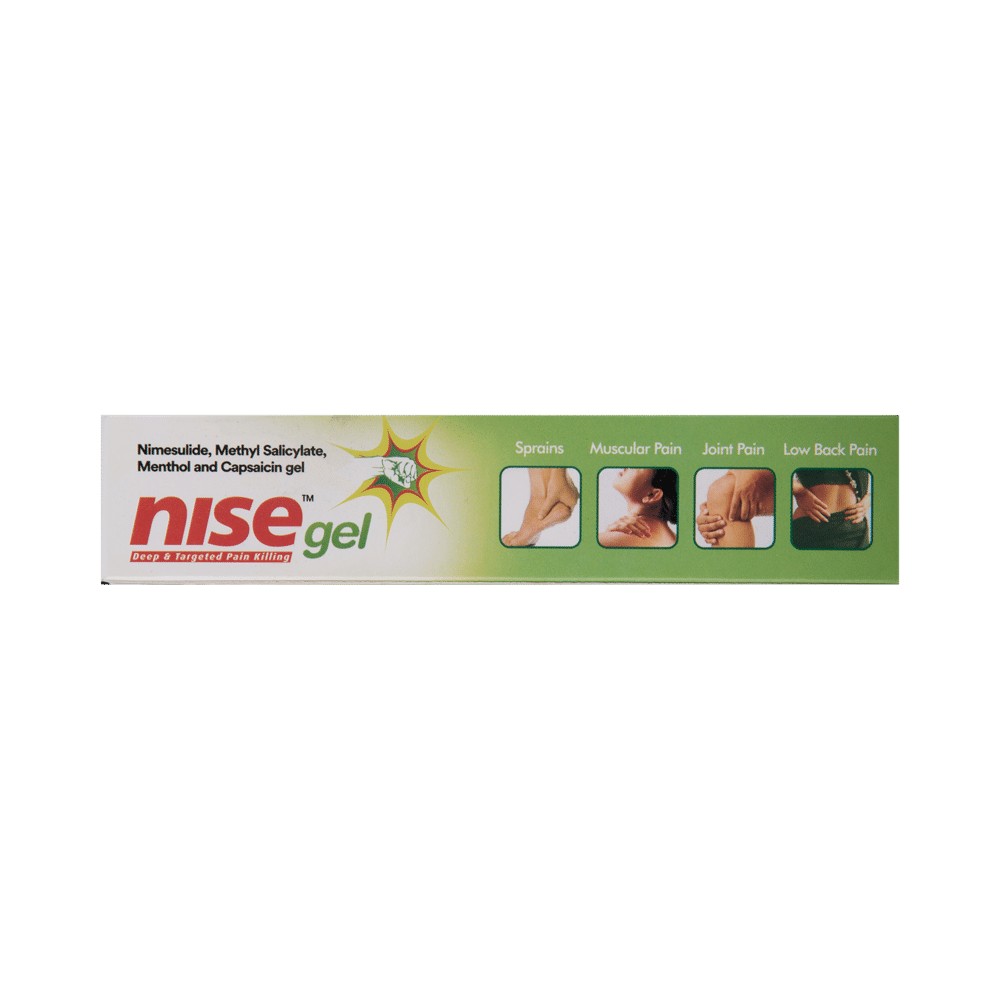
Images are for product identification. Refer to the selected batch for packaging and availability.
Nise Gel 30 Gm
Drug Formula unavailable
YOUR PURCHASE PRICE
Out of stockInclusive of all taxes
Choose your batch
0 offersNo batches are available at this hub. Choose another hub to check availability.
Sign in to order for your pharmacy.
Product information
- Manufacturer
- Dr Reddy S Laboratories Ltd
- Category
- Allopathy
- Composition
- Not provided
- Packaging
- 30 GM
- Box / case pack
- 1 / —
Description
NISE GEL 30 GM is a topical analgesic and anti-inflammatory medication manufactured by Dr. Reddy's Laboratories Ltd.. It is primarily used for targeted pain relief in various musculoskeletal conditions.
Name
- Brand Name: Nise Gel
- Common Name: Nizer Gel (sometimes referred to)
Composition Each gram of Nise Gel contains:
- Nimesulide BP 10mg: A non-steroidal anti-inflammatory drug (NSAID) that reduces pain and inflammation by blocking the release of certain chemical messengers (prostaglandins) in the body.
- Methyl Salicylate IP 100mg: An analgesic and anti-inflammatory agent that increases blood flow to the affected area, helping to reduce inflammation and pain.
- Menthol IP 50mg: Provides a cooling sensation followed by a warming effect, which distracts from pain and improves blood circulation.
- Capsaicin USP 0.25mg: An analgesic that affects neurotransmitters involved in transmitting pain signals, thereby reducing the perception of pain.
Uses Nise Gel is prescribed to alleviate pain, swelling, and inflammation associated with:
- Musculoskeletal pain
- Joint pain (including osteoarthritis and rheumatoid arthritis)
- Low back pain
- Muscle sprains and strains
- Sports injuries
- Tendonitis and bursitis
Dosage and Administration Nise Gel is for external use only.
- Adults: Apply approximately 3 cm (1 ¼ inches) of the gel as a thin layer to the clean, dry affected area 3-4 times a day, or as directed by a physician.
- Rub lightly, avoiding occlusive dressings.
- Wash hands thoroughly before and after application.
- Avoid contact with eyes, nose, mouth, ears, or any open skin lesions.
Side Effects Common side effects at the application site may include:
- Redness
- Itching
- Irritation
- Burning or stinging sensation
- Skin rash or peeling skin
Precautions
- Do not apply on cuts, wounds, damaged, or infected skin.
- Discontinue use if local irritation develops.
- Consult a doctor if pregnant or breastfeeding.
- Use with caution in elderly patients or those with pre-existing conditions like asthma, high blood pressure, diabetes, blood clots, stomach ulcers, oedema, or liver, kidney, or heart problems.
- Avoid concomitant use with other NSAIDs, blood thinners, and alcohol as it may increase the risk of stomach bleeding.
- The safety in children is unknown; consult a doctor.
- Do not apply heat or wrap the treated area with bandages unless advised by a doctor.
Storage
- Keep out of the sight and reach of children.
- Store in a cool place, away from light.
- Do not refrigerate.
- Do not store above 25°C and keep away from moisture and heat.
- Replace cap tightly after use.
Frequently asked questions
What is Nise Gel used for?
Nise Gel is a topical pain-relieving medication primarily used to alleviate pain, swelling, and inflammation associated with various musculoskeletal conditions. It is effective for joint pain, low back pain, muscle sprains, sports injuries, strains, tendinitis, bursitis, and conditions like osteoarthritis and rheumatoid arthritis.
How does Nise Gel work?
Nise Gel is a combination of active ingredients: Nimesulide, Methyl Salicylate, Menthol, and Capsaicin. Nimesulide and Methyl Salicylate are non-steroidal anti-inflammatory drugs (NSAIDs) that work by blocking the release of specific chemical messengers (prostaglandins) responsible for causing pain and inflammation. Capsaicin helps reduce the perception of pain by affecting neurotransmitters that transmit pain signals. Menthol provides a cooling sensation followed by a warming effect, which helps to distract from the pain and improve blood circulation in the affected area.
What is the usual dosage and how should it be applied?
For adults, apply a small amount of Nise Gel (approximately 3 cm or 1 ¼ inches from the tube) as a thin layer to the clean and dry affected area. Gently massage it into the skin until it is fully absorbed. The gel is typically applied 2 to 4 times a day, or as directed by a physician. It is crucial to wash your hands thoroughly before and after each application. Do not use the gel for more than 7-10 days without consulting a healthcare professional.
What are the possible side effects of Nise Gel?
Common side effects are generally mild and localized to the application site, including skin irritation, redness (erythema), itching (pruritus), rash, and a burning or stinging sensation. In rare cases, skin peeling (desquamation) may occur. If irritation develops or side effects persist or worsen, discontinue use and consult your doctor.
Is Nise Gel safe during pregnancy or breastfeeding?
Nise Gel is generally contraindicated during pregnancy and breastfeeding. Although it is applied topically, and systemic absorption is usually low, NSAIDs (like Nimesulide and Methyl Salicylate) are typically avoided during the third trimester of pregnancy due to potential risks to the fetus. It is recommended to consult a doctor before using Nise Gel if you are pregnant or breastfeeding.
Can Nise Gel be taken with other medications?
Nise Gel can have interactions with certain medications. You should avoid using other painkillers such as aspirin, ibuprofen, and naproxen simultaneously, as this may increase the chance of side effects. Blood thinners are also not recommended without consulting a doctor, especially if you have hypertension. There is also a potential for interaction with medications like digoxin, methotrexate, cyclosporine, lithium, insulin, sulfonylureas, and potassium-sparing diuretics. Always inform your doctor about all medications you are currently taking before using Nise Gel.
What precautions should be taken when using Nise Gel?
Do not apply Nise Gel on open wounds, cuts, burns, rashes, infected skin, or peeling skin. Avoid contact with the eyes, nose, mouth, and other mucosal surfaces. If accidental contact occurs, rinse thoroughly with water. Do not apply heat or cover the treated area with airtight bandages or wraps unless specifically instructed by your doctor. Use with caution if you have underlying conditions such as asthma, high blood pressure, diabetes, blood clots, gastrointestinal bleeding, stomach ulcers, edema, or liver, kidney, or heart problems. Avoid use if you have recently undergone bypass heart surgery.
What happens if a dose is missed?
If you miss a dose of Nise Gel, apply it as soon as you remember. However, do not apply a double dose to make up for the missed one.
How should Nise Gel be stored?
Nise Gel should be stored in a cool place, away from direct light, and should not be refrigerated. Ensure the cap is tightly replaced after each use. Keep this medicine out of the sight and reach of children. Do not use the gel after the expiry date or if there are visible signs of deterioration.