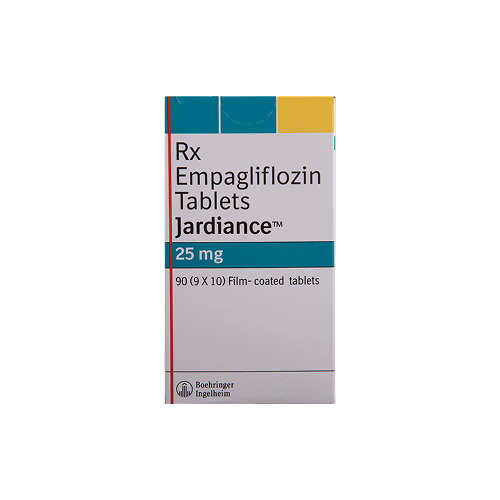
Images are for product identification. Refer to the selected batch for packaging and availability.
Jardiance 25 Mg (10 Tab)
Empagliflozin (25mg)
YOUR PURCHASE PRICE
51 in stockInclusive of all taxes
Available batch
1 offerSign in to order for your pharmacy.
Product information
- Manufacturer
- Boehringer Ingelheim
- Category
- Allopathy
- Composition
- Empagliflozin (25mg)
- Packaging
- 10 TABLETS
- Box / case pack
- 1 / —
Description
JARDIANCE 25 MG (10 TAB) by BOEHRINGER INGELHEIM
Name
- Brand Name: JARDIANCE
- Common Name: Empagliflozin
Composition
- Active Ingredient: Empagliflozin 25 mg
- Inactive Ingredients: Lactose monohydrate, microcrystalline cellulose, hydroxypropyl cellulose, croscarmellose sodium, colloidal silicon dioxide, magnesium stearate. The film coating contains hypromellose, titanium dioxide, talc, polyethylene glycol, and yellow ferric oxide.
Uses
JARDIANCE (empagliflozin) is an FDA-approved tablet primarily used to improve glycemic control in various conditions. It belongs to a class of medicines called SGLT2 inhibitors, which work by blocking a protein in the kidneys (SGLT2), leading to the removal of excess glucose from the blood through urine. It also helps reduce excess strain on the heart by reducing salt reabsorption.
- Type 2 Diabetes Mellitus: Used as an adjunct to diet and exercise to lower blood sugar levels in adults and children aged 10 years and older.
- Heart Failure: To reduce the risk of cardiovascular death and hospitalization in adults with heart failure.
- Cardiovascular Risk Reduction: To reduce the risk of cardiovascular death in adults with type 2 diabetes mellitus and established cardiovascular disease.
- Chronic Kidney Disease (CKD): To reduce the risk of sustained decline in eGFR, end-stage kidney disease, cardiovascular death, and hospitalization in adults with chronic kidney disease at risk of progression.
Dosage and Administration
JARDIANCE 25 mg is taken orally, once daily in the morning, with or without food.
- Typical Starting Dose: For adults and children aged 10 and older with Type 2 Diabetes, the usual starting dose is 10 mg once daily.
- Dose Increase: For patients with Type 2 Diabetes tolerating therapy and requiring additional glycemic control, the dose may be increased to 25 mg once daily.
- Maximum Dose: The maximum recommended dose for Type 2 Diabetes is 25 mg per day. For cardiovascular risk reduction, heart failure, or CKD, the maximum dosage is 10 mg once daily.
- Administration: Swallow the tablet whole with a full glass of water.
Side Effects
Common Side Effects:
- Urinary tract infections (UTIs)
- Genital yeast infections (vaginal yeast infection in females, male genital yeast infection)
- Increased urination frequency or volume
- Increased thirst
- Nausea
- Joint pain
- Increased cholesterol levels
- Upper respiratory tract infections
Serious Side Effects:
- Diabetic Ketoacidosis (DKA), a serious condition with increased ketones in blood or urine, potentially life-threatening. This can occur even if blood sugar levels are less than 250 mg/dL.
- Dehydration, leading to dizziness, faintness, light-headedness, or weakness, especially when standing.
- Serious urinary tract infections (e.g., urosepsis, pyelonephritis), which may require hospitalization.
- Necrotizing Fasciitis of the Perineum (Fournier's Gangrene), a serious genital infection.
- Low Blood Sugar (Hypoglycemia), especially when used with insulin or sulfonylureas.
- Kidney problems or sudden worsening of kidney function.
- Serious allergic reactions (skin rash, itching, hives, swelling of the face, lips, tongue, or throat).
- Lower limb amputations (rare, increased risk in patients with a history of amputation, blocked blood vessels, or diabetic foot infections).
Precautions
- Kidney Function: Not recommended for improving glycemic control in patients with Type 2 Diabetes with an eGFR <30 mL/min/1.73 m². Assessment of renal function is advised before initiation.
- Dehydration/Volume Depletion: Assess volume status before initiating JARDIANCE, especially in elderly patients or those on loop diuretics. Correct volume depletion prior to use.
- Diabetic Ketoacidosis: Patients should be monitored for signs of ketoacidosis regardless of blood glucose levels. Discontinue JARDIANCE if suspected.
- Interactions:
- Diuretics: Coadministration can increase urine volume and frequency, enhancing the potential for volume depletion and low blood pressure.
- Insulin and Insulin Secretagogues (e.g., Sulfonylureas): May increase the risk of hypoglycemia. A lower dose of insulin or sulfonylurea may be considered.
- Lithium: JARDIANCE may decrease lithium levels; monitor closely.
- Allergies: Do not use if allergic to empagliflozin or any other ingredients.
- Elderly Patients: Elderly patients (over 65) may be at higher risk for dehydration, kidney problems, or urinary tract infections. Not recommended for Type 2 Diabetes in patients over 85 years of age.
- Surgery: Temporarily stopping Jardiance for at least 3 days before surgeries or procedures that require fasting may be recommended.
Storage
Store at room temperature between 20°C to 25°C (68°F to 77°F). Excursions are permitted to 15°-30°C (59°-86°F). Keep JARDIANCE in its original packaging until it is time to take it. Keep out of reach of children and pets. Do not store in the bathroom.
Frequently asked questions
Here are some frequently asked questions about JARDIANCE 25 mg:
What is JARDIANCE used for?
JARDIANCE (empagliflozin) is a prescription medicine used in adults to:
- Help manage blood sugar levels, along with diet and exercise, in adults and children aged 10 years and older with type 2 diabetes.
- Reduce the risk of cardiovascular death and hospitalization for heart failure in adults with heart failure.
- Reduce the risk of cardiovascular death in adults with type 2 diabetes and established cardiovascular disease.
- Reduce the risk of sustained decline in kidney function, end-stage kidney disease, cardiovascular death, and hospitalization in adults with chronic kidney disease at risk of progression.
How does JARDIANCE work?
JARDIANCE is a sodium-glucose cotransporter-2 (SGLT2) inhibitor. It works by blocking SGLT2 proteins in the kidneys. These proteins are responsible for reabsorbing glucose (sugar) back into the bloodstream. By blocking them, JARDIANCE helps your body remove excess glucose through your urine, which lowers blood sugar levels. This mechanism also helps reduce sodium reabsorption and increase its delivery to the distal tubule, contributing to its effects on heart failure and kidney disease.
What is the usual dosage of JARDIANCE 25 mg?
For adults and children 10 years and older with type 2 diabetes, the typical starting dose is 10 mg once daily in the morning, with or without food. If additional blood sugar control is needed and the 10 mg dose is tolerated, your doctor may increase the dose to 25 mg once daily. For adults with heart failure or chronic kidney disease, the recommended dose is typically 10 mg once daily.
What are the possible side effects of JARDIANCE?
Common side effects include urinary tract infections (UTIs), genital fungal infections (yeast infections of the vagina or penis), increased urination, upper respiratory tract infection, increased cholesterol levels, nausea, and joint pain.
Serious side effects can occur, though they are less common, and may include:
- Ketoacidosis: A serious condition where there is too much acid in your blood, which can be life-threatening. This can occur even with normal blood sugar levels.
- Dehydration: JARDIANCE can cause a loss of body water and salt, leading to dizziness, lightheadedness, faintness, or weakness.
- Serious urinary tract infections (including urosepsis or pyelonephritis)
- Low blood sugar (hypoglycemia): Especially when taken with insulin or other medications that lower blood sugar (like sulfonylureas).
- Fournier's gangrene: A rare but serious bacterial infection of the area between the genitals and the rectum.
- Allergic reactions: Hives, difficulty breathing, swelling of your face, lips, tongue, or throat.
- Kidney problems
Is JARDIANCE safe during pregnancy or breastfeeding?
JARDIANCE is generally not recommended during pregnancy, particularly during the second and third trimesters, as animal studies have shown potential adverse renal effects on the unborn baby.
It is also not recommended while breastfeeding. It is not known if JARDIANCE passes into human breast milk, but if it does, it could potentially harm the baby or lead to kidney development issues. Your doctor may recommend stopping breastfeeding or choosing an alternative medication.
Can JARDIANCE be taken with other medications?
JARDIANCE can interact with several other medications, which may increase the risk of certain side effects. It's important to inform your doctor about all medicines, vitamins, and herbal supplements you are taking.
- Diuretics ("water pills"): Taking JARDIANCE with diuretics can increase the risk of dehydration and low blood pressure.
- Insulin or insulin secretagogues (e.g., sulfonylureas like glipizide, glimepiride, glyburide): When taken with JARDIANCE, the risk of low blood sugar (hypoglycemia) is increased, and your doctor may need to adjust the dose of these medications.
- Lithium: JARDIANCE may interfere with lithium levels.
- Alcohol: Excessive alcohol intake while on JARDIANCE can worsen dehydration and increase the risk of ketoacidosis.
- Certain herbal supplements: Some, like garlic, may lower blood sugar and could increase the risk of hypoglycemia when taken with JARDIANCE.
What precautions should be taken while on JARDIANCE?
- Dehydration: Be aware of symptoms like dizziness, lightheadedness, or weakness, especially if you have kidney problems, low blood pressure, are on diuretics, or are 65 years or older. Drink plenty of fluids.
- Ketoacidosis: Monitor for symptoms such as nausea, vomiting, abdominal pain, tiredness, or trouble breathing, even if blood sugar levels are normal. Seek immediate medical attention if these occur.
- Kidney or liver problems: Inform your doctor about any history of kidney or liver issues, as this may affect the use of JARDIANCE.
- Urinary tract and genital yeast infections: JARDIANCE can increase the risk of these infections. Seek medical advice if symptoms appear.
- Surgery: If you are scheduled for surgery, your doctor may advise you to temporarily stop taking JARDIANCE for at least 3 days beforehand.
- Type 1 Diabetes: JARDIANCE is not for people with type 1 diabetes as it can increase the risk of diabetic ketoacidosis.
What happens if a dose of JARDIANCE is missed?
If you miss a dose of JARDIANCE, take it as soon as you remember. However, if it is almost time for your next scheduled dose, skip the missed dose and continue with your regular dosing schedule. Do not take two doses at the same time to make up for a missed dose, as this could increase the risk of side effects.
How should JARDIANCE be stored?
Store JARDIANCE tablets at room temperature, between 68°F to 77°F (20°C to 25°C). Keep the medication in a closed container, away from heat, moisture, and direct light. Always keep JARDIANCE and all other medicines out of the reach of children.