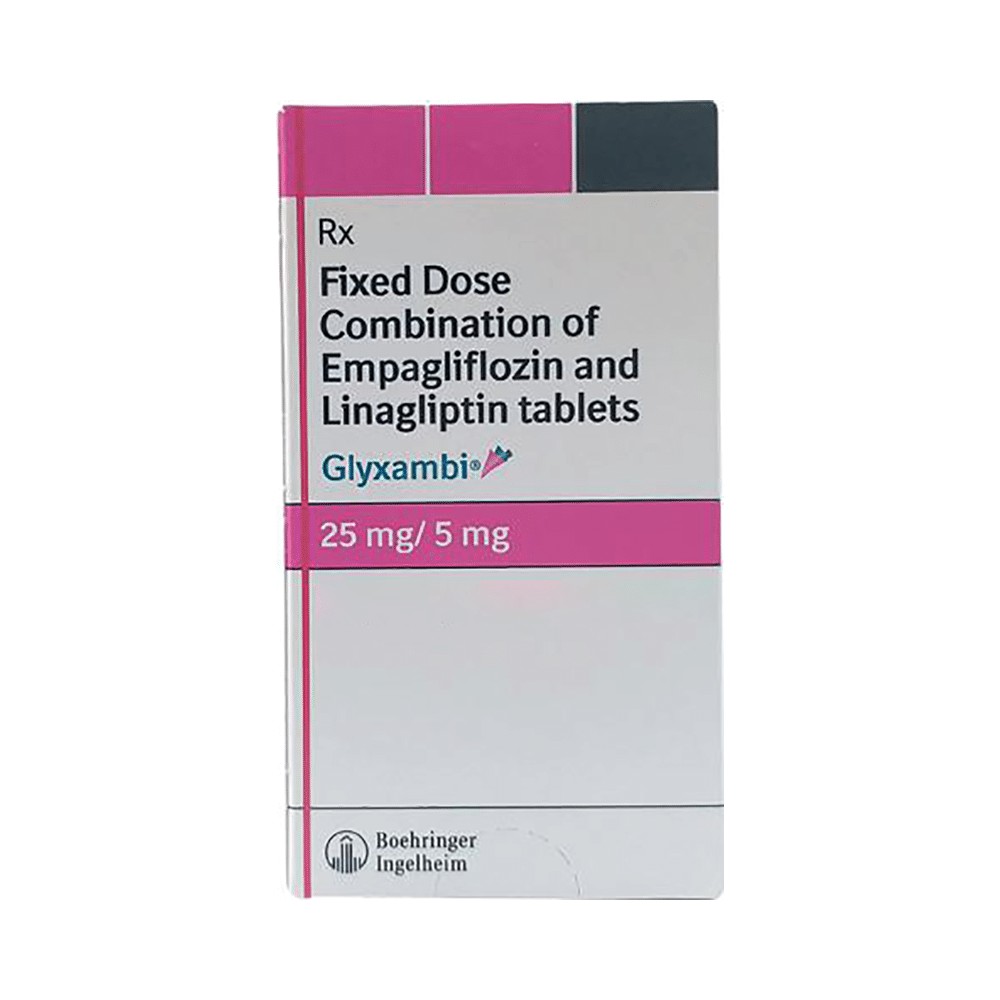
Images are for product identification. Refer to the selected batch for packaging and availability.
Glyxambi 25/5 Mg Tablet
Empagliflozin (25mg) + Linagliptin (5mg)
YOUR PURCHASE PRICE
36 in stockInclusive of all taxes
Available batch
1 offerSign in to order for your pharmacy.
Product information
- Manufacturer
- Boehringer Ingelheim
- Category
- Allopathy
- Composition
- Empagliflozin (25mg) + Linagliptin (5mg)
- Packaging
- 10 TABLETS
- Box / case pack
- 1 / —
Description
GLYXAMBI 25/5 MG TABLET by BOEHRINGER INGELHEIM
Name
- Brand Name: GLYXAMBI 25/5 MG TABLET
- Common Name: Empagliflozin/Linagliptin
Composition
Each film-coated tablet contains:
- Active Ingredients: Empagliflozin 25 mg and Linagliptin 5 mg.
- Inactive Ingredients: Mannitol, pregelatinized maize starch, maize starch, copovidone, crospovidone, purified talc, magnesium stearate, hypromellose, titanium dioxide, macrogol, and iron oxide red.
Uses
GLYXAMBI 25/5 MG TABLET is prescribed as an adjunct to diet and exercise for adults with type 2 diabetes mellitus to:
- Improve glycemic control (blood sugar levels).
- Reduce the risk of cardiovascular death in adults with type 2 diabetes and established cardiovascular disease (due to its empagliflozin component).
- Help prevent diabetic complications such as eyesight problems (retinopathy), kidney problems (nephropathy), nerve damage (neuropathy), diabetic foot ulcer, and delayed wound healing.
- Treat chronic kidney disease in adults with reduced kidney function.
It can be used alone or in combination with other anti-diabetic medications, such as metformin or sulfonylureas.
Dosage and Administration
- The recommended dose is one tablet once daily in the morning, taken with or without food.
- Your doctor may initially prescribe GLYXAMBI 10 mg/5 mg and may increase the dose to GLYXAMBI 25 mg/5 mg once daily for additional glycemic control.
- Swallow the tablet whole with a glass of water; do not crush, chew, or break it.
- Take the medicine at the same time each day to help with adherence.
- Do not stop taking GLYXAMBI without consulting your doctor, as abrupt cessation can increase blood sugar levels and the risk of complications.
- If a dose is missed, take it as soon as you remember, unless it is almost time for the next dose. Do not take a double dose to make up for a forgotten one.
Side Effects
Common Side Effects:
- Urinary tract infections (UTIs)
- Nasopharyngitis (stuffy or runny nose and sore throat)
- Upper respiratory tract infections
- Genital fungal infections
- Frequent urination
- Dizziness or lightheadedness
- Cough, constipation, nausea
- Mild joint pain
- Increased thirst
Serious Side Effects:
- Diabetic Ketoacidosis: Increased ketones in blood or urine, which can be life-threatening. Symptoms include nausea, vomiting, stomach-area pain, tiredness, trouble breathing, fruity-smelling breath, confusion, increased thirst, and frequent urination. This can occur even if blood sugar is below 250 mg/dL.
- Serious Urinary Tract Infections: May require hospitalization. Symptoms include a burning feeling when passing urine, frequent or urgent need to urinate, pain in the lower stomach or pelvis, or blood in the urine. Fever, back pain, nausea, or vomiting may also occur.
- Hypoglycemia (Low Blood Sugar): Particularly when used with insulin or sulfonylureas. Symptoms include headache, hunger, sweating, irritability, dizziness, fast heart rate, anxiousness, shakiness, weakness, vision disorders, or difficulty concentrating.
- Dehydration (Volume Depletion): Symptoms include dizziness, confusion, feeling very thirsty, decreased urination, fast heart rate, and muscle cramps.
- Fournier's Gangrene: A rare but serious infection of the genital area. Symptoms include red or discolored, painful, tender, or swollen skin in or around the anus or genitals, fatigue, weakness, and fever.
- Pancreatitis (Inflammation of the Pancreas): Symptoms include severe pain in your upper stomach spreading to your back, vomiting, and a fast heart rate.
- Allergic Reactions: Hives, itching, flaking or peeling skin, trouble swallowing, difficult breathing, swelling of your face, lips, tongue, or throat.
Precautions
- Not for Type 1 Diabetes: GLYXAMBI is not for use in patients with type 1 diabetes or diabetic ketoacidosis.
- Kidney and Liver Conditions: Not recommended for patients with severe kidney disease (eGFR less than 30 mL/min/1.73 m2 or on dialysis) or severe liver disease. Renal function should be assessed before starting treatment and periodically thereafter.
- Dehydration: Correct any volume depletion (dehydration) before initiating GLYXAMBI.
- Pregnancy and Breastfeeding: Generally not advised during pregnancy (especially the second and third trimesters) or while breastfeeding. Consult a doctor if pregnant, planning pregnancy, or breastfeeding.
- Alcohol Consumption: Avoid alcohol as it can increase the risk of low blood sugar or dehydration.
- Driving and Machinery: May cause dizziness; exercise caution when driving or operating machinery until you know how the medicine affects you.
- Drug Interactions: Inform your doctor about all other medications, supplements, or herbal products you are taking, especially insulin or sulfonylureas, as their dosages may need adjustment to reduce the risk of hypoglycemia.
- Surgery: Withhold GLYXAMBI for at least 3 days, if possible, prior to major surgery or procedures associated with prolonged fasting.
Storage
- Store in a cool and dry place, away from direct sunlight.
- Keep out of the sight and reach of children.
- Store in the original package to protect from moisture.
- Store below 25°C or below 30°C. Do not refrigerate.
- Do not use this medicine after the expiry date printed on the packaging.
Frequently asked questions
GLYXAMBI 25/5 MG TABLET by BOEHRINGER INGELHEIM is a combination medication used to manage type 2 diabetes. Here are some frequently asked questions about this medicine:
What is GLYXAMBI used for?
GLYXAMBI 25/5 MG TABLET is prescribed, along with diet and exercise, to improve blood sugar control in adults with type 2 diabetes mellitus. It is also indicated to reduce the risk of cardiovascular death in adults with type 2 diabetes and established cardiovascular disease.
How does GLYXAMBI work?
GLYXAMBI combines two active ingredients: empagliflozin and linagliptin. Empagliflozin (an SGLT2 inhibitor) works by increasing the amount of glucose (sugar) removed from the body through urine by blocking its reabsorption in the kidneys. Linagliptin (a DPP-4 inhibitor) increases natural substances called incretins, which stimulate the pancreas to produce more insulin and reduce the amount of sugar the liver makes. Together, these mechanisms help lower blood sugar levels.
What is the usual dosage of GLYXAMBI?
The recommended starting dose for GLYXAMBI is typically 10 mg empagliflozin/5 mg linagliptin once daily, taken in the morning, with or without food. Your doctor may increase the dose to GLYXAMBI 25 mg empagliflozin/5 mg linagliptin once daily for additional blood sugar control.
What are the possible side effects of GLYXAMBI?
Common side effects include urinary tract infections (UTIs), genital fungal infections, stuffy or runny nose, sore throat, cough, and constipation. More serious but less common side effects can include low blood sugar (especially when used with insulin or sulfonylureas), dehydration, diabetic ketoacidosis, serious UTIs (e.g., urosepsis or pyelonephritis), allergic reactions, Fournier's gangrene, and pancreatitis.
Is GLYXAMBI safe during pregnancy or breastfeeding?
GLYXAMBI is generally not recommended during the second and third trimesters of pregnancy. It is also not recommended while breastfeeding, as it is unknown if the active ingredients pass into human breast milk and could potentially affect the baby. Discuss alternatives with your doctor if you are pregnant, planning to become pregnant, or breastfeeding.
Can GLYXAMBI be taken with other medications?
GLYXAMBI can interact with other medications. Taking it with diuretics (water pills) may increase the risk of dehydration and low blood pressure. If taken with insulin or sulfonylureas, the risk of low blood sugar (hypoglycemia) can increase, and a lower dose of these medications may be required. Certain medications like rifampicin, carbamazepine, phenobarbital, and phenytoin may reduce the efficacy of linagliptin. Always inform your doctor or pharmacist about all medicines, vitamins, and supplements you are taking.
What precautions should be taken with GLYXAMBI?
Do not take GLYXAMBI if you have type 1 diabetes or diabetic ketoacidosis. It is also contraindicated in patients with severe kidney disease or those on dialysis. Your doctor will assess your kidney function before and during treatment. Be cautious if you have a history of pancreatitis or recurrent genital/urinary tract infections. Maintain good hydration, especially during illness or heavy sweating. Alcohol consumption can increase the risk of low blood sugar and dehydration.
What happens if a dose is missed?
If you miss a dose of GLYXAMBI, take it as soon as you remember. However, if it is almost time for your next dose (less than 12 hours), skip the missed dose and continue with your regular schedule. Do not take a double dose to make up for a missed one, as this may increase the chance of side effects.
How should GLYXAMBI be stored?
Store GLYXAMBI tablets in a cool, dry place where the temperature stays below 30°C. Keep them in the original package to protect from moisture and out of the sight and reach of children. Do not refrigerate.