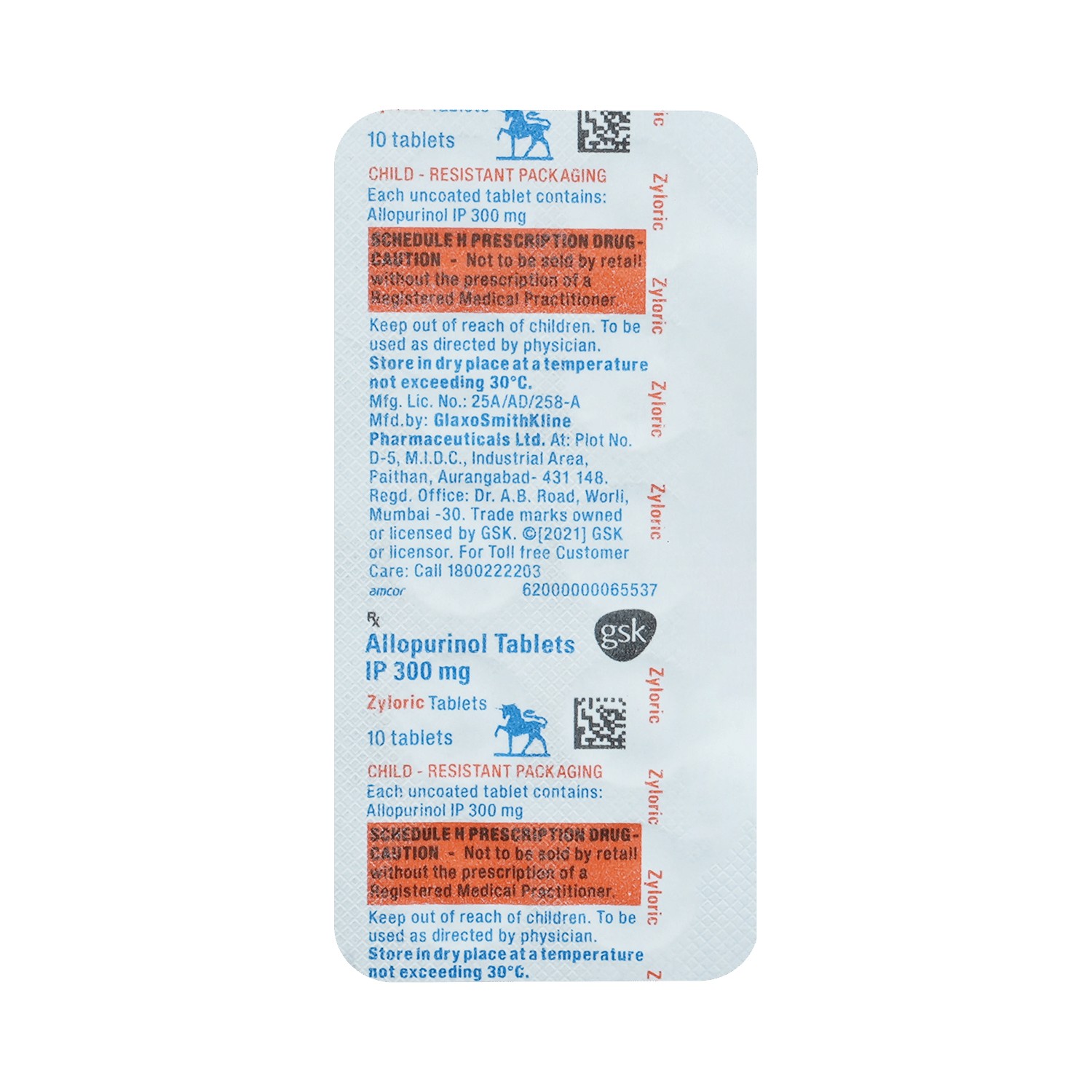
Images are for product identification. Refer to the selected batch for packaging and availability.
Zyloric 300 Mg Tablet (10 Tab)
Allopurinol (300mg)
YOUR PURCHASE PRICE
25 in stockInclusive of all taxes
Available batch
1 offerSign in to order for your pharmacy.
Product information
- Manufacturer
- Glaxo Smithkline Pharmaceuticals Ltd
- Category
- Allopathy
- Composition
- Allopurinol (300mg)
- Packaging
- 10 TABLET
- Box / case pack
- 1 / —
Description
ZYLORIC 300 MG TABLET
ZYLORIC 300 MG TABLET is a medication manufactured by GLAXO SMITHKLINE PHARMACEUTICALS LIMITED, commonly known by its active ingredient, allopurinol.
-
Name:
- Common Name: Allopurinol
- Brand Name: Zyloric (other brand names include Zyloprim)
-
Composition:
- Active Ingredient: Each tablet contains 300 mg of Allopurinol.
- Other Ingredients: Lactose monohydrate, maize starch, povidone, magnesium stearate, and purified water.
-
Uses: Zyloric is prescribed to reduce uric acid formation in the body. It is used for conditions where uric acid deposition has occurred or is a predictable risk, including:
- Gout (gouty arthritis, skin tophi, uric acid lithiasis)
- Certain types of kidney disease and kidney stones (e.g., recurrent mixed calcium oxalate renal stones, acute uric acid nephropathy)
- Elevated uric acid levels associated with cancer therapy (e.g., neoplastic disease, myeloproliferative disease with high cell turnover rates) and certain enzyme disorders (e.g., Lesch-Nyhan syndrome).
-
Dosage and Administration: Zyloric tablets are typically taken orally once a day after food, swallowed with a glass of water. The usual starting dose for adults ranges from 100 to 300 mg daily, which may be increased up to 900 mg daily depending on the condition's severity. Doses exceeding 300 mg should be administered in divided doses. Lower doses are advised for the elderly or those with impaired liver or kidney function. Adequate hydration (2-3 liters of water daily) is important during treatment.
-
Side Effects:
- Common: Skin rash, nausea, vomiting, diarrhea, drowsiness, dizziness, elevated liver enzymes, and increased thyroid stimulating hormone (TSH) levels in the blood.
- Serious: Severe skin reactions (e.g., Stevens-Johnson syndrome, toxic epidermal necrolysis), which may begin with flu-like symptoms and progress to widespread blistering, peeling skin, and ulcers in the mouth, throat, nose, genitals, and eyes. Blood dyscrasias (unexplained bruising, bleeding, sore throat, signs of infection) can also occur.
-
Precautions: Patients with known allergies to allopurinol or its ingredients should not take Zyloric. Caution is advised for individuals with liver or kidney disease, requiring potential dose adjustments and regular monitoring. Zyloric is generally not recommended during pregnancy or breastfeeding. Due to potential drowsiness or dizziness, patients should avoid driving or operating machinery until they understand how the medicine affects them. Interactions can occur with medicines like azathioprine, 6-mercaptopurine, warfarin, theophylline, and certain antibiotics, necessitating careful monitoring or dose adjustments.
-
Storage: Store Zyloric 300 MG TABLET at room temperature, below 25°C, away from heat and moisture, in its original packaging. Keep out of reach of children and pets.
Frequently asked questions
ZYLORIC 300 MG TABLET contains allopurinol, which is an enzyme inhibitor. It works by reducing the production of uric acid in the body.
What is Zyloric 300 MG Tablet used for?
Zyloric 300 MG Tablet is primarily used to treat conditions where the body produces too much uric acid. This includes managing and preventing gout, certain types of kidney stones, and high uric acid levels that can occur during cancer treatment (e.g., leukemia, lymphoma, and solid tumor malignancies undergoing chemotherapy). It helps prevent the formation of uric acid crystals in joints and kidneys, which are responsible for pain and inflammation.
How does Zyloric 300 MG Tablet work?
Zyloric 300 MG Tablet contains allopurinol, which functions as a xanthine oxidase inhibitor. Xanthine oxidase is an enzyme in the body responsible for converting purines into uric acid. By inhibiting this enzyme, allopurinol effectively reduces the production of uric acid, thereby lowering its levels in the blood and urine.
What is the usual dosage of Zyloric 300 MG Tablet?
The doctor determines the appropriate dose based on your condition. The usual starting dose for adults is generally between 100 to 300 mg daily, often taken as a single dose after a meal. Depending on the severity of the condition, the dose may be increased up to 900 mg daily. Doses higher than 300 mg should be taken in divided doses. For children under 15, the usual dose ranges from 100-400 mg daily. Lower doses may be prescribed for older individuals or those with reduced liver or kidney function. It is best to take it after meals with a glass of water.
What are the possible side effects?
Common side effects of Zyloric 300 MG Tablet can include skin rash, nausea, diarrhea, and drowsiness. In rare cases, more serious side effects like severe skin reactions (e.g., Stevens-Johnson syndrome), liver problems (indicated by yellowing of skin/eyes), allergic reactions (swelling, difficulty breathing), or blood disorders may occur. If you experience a severe rash, fever, or flu-like symptoms, seek immediate medical attention.
Is it safe during pregnancy or breastfeeding?
Zyloric is generally not recommended during pregnancy due to inadequate evidence of its safety. It should only be used if there is no safer alternative and if the disease itself poses risks to the mother or unborn child. Allopurinol and its active metabolite are excreted in human breast milk. Therefore, it is generally not recommended during breastfeeding, although some limited information suggests that with careful monitoring of the infant, it might be considered if essential. Always consult your doctor before taking this medicine if you are pregnant, planning to become pregnant, or breastfeeding.
Can it be taken with other medications?
Zyloric can interact with several medications. For instance, it may affect the way some antibiotics (like ampicillin or amoxicillin), medicines for fits (phenytoin), theophylline (for breathing problems), warfarin (a blood thinner), certain cancer drugs (cytostatics), and some heart or high blood pressure medications (ACE inhibitors, diuretics) work. If taking aluminum hydroxide, there should be an interval of at least 3 hours between doses of both medicines. Close monitoring of blood counts is recommended if taken with cytostatics like cyclophosphamide, doxorubicin, or azathioprine/mercaptopurine, as this can increase the risk of blood disorders. Inform your doctor about all medications, including over-the-counter and herbal supplements, you are currently taking.
What precautions should be taken?
Before taking Zyloric, inform your doctor if you have liver or kidney disease, heart problems, high blood pressure, or thyroid problems. You should also inform your doctor if you are of Han Chinese, Thai, or Korean origin, as these populations may have an increased risk of serious skin reactions. Adequate fluid intake (2-3 liters of water daily) is recommended to help dilute urine and prevent kidney stones. Zyloric may cause drowsiness or problems with coordination, so avoid driving or operating machinery until you know how it affects you. Do not stop taking Zyloric without consulting your doctor, even if you feel better, as this can worsen gout attacks.
What happens if a dose is missed?
If you forget to take a dose, take it as soon as you remember. However, if it is almost time for your next dose, skip the missed dose and continue with your regular dosing schedule. Do not take a double dose to make up for a forgotten one.
How should it be stored?
Zyloric tablets should be stored at room temperature, below 25°C, away from heat and moisture. Keep them in their original packaging and out of the sight and reach of children and pets. Do not use the medicine after the expiry date.