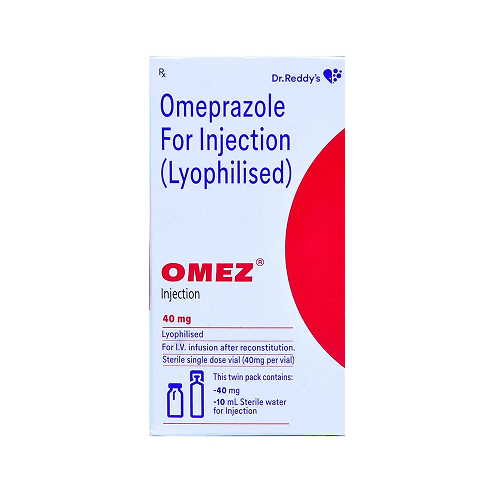
Images are for product identification. Refer to the selected batch for packaging and availability.
Omez 40 Inj
Drug Formula unavailable
YOUR PURCHASE PRICE
7 in stockInclusive of all taxes
Available batch
1 offerSign in to order for your pharmacy.
Product information
- Manufacturer
- Dr Reddy S Laboratories Ltd
- Category
- Allopathy
- Composition
- Not provided
- Packaging
- 1 VAIL
- Box / case pack
- 1 / —
Description
OMEZ 40 INJ
OMEZ 40 INJ is an injectable medicine manufactured by Dr. Reddy's Laboratories Ltd., primarily used to reduce the amount of acid produced in the stomach. It is a proton pump inhibitor (PPI) and serves as an alternative to oral therapy when oral medication is inappropriate.
-
Name:
- Brand Name: OMEZ 40 INJ
- Common Name: Omeprazole (as Omeprazole sodium)
-
Composition: Each vial contains omeprazole sodium equivalent to 40 mg omeprazole, presented as a white to off-white lyophilized powder for solution for infusion.
-
Uses: OMEZ 40 INJ is indicated for treating conditions involving excessive stomach acid. These include:
- Zollinger-Ellison Syndrome (a condition with overproduction of acid due to pancreatic tumors).
- Gastric ulcers.
- Duodenal ulcers.
- Gastroesophageal Reflux Disease (GERD) and reflux oesophagitis.
- Prevention of stress ulcers in critically ill patients.
- Aspiration-related complications before anesthetic medication.
-
Dosage and Administration: OMEZ 40 INJ is administered intravenously by a healthcare professional.
- For duodenal ulcer, gastric ulcer, or reflux oesophagitis where oral medication is unsuitable, 40 mg once daily is recommended.
- For Zollinger-Ellison Syndrome, the initial recommended dose is 60 mg daily, which may be adjusted individually. Doses exceeding 60 mg daily should be divided and given twice daily.
- The powder is reconstituted with the provided solvent and given as a slow intravenous injection or infusion over 20-30 minutes.
- Dose adjustment is generally not needed for impaired renal function or in the elderly. In patients with impaired hepatic function, a daily dose of 10-20 mg may be sufficient.
-
Side Effects:
- Common: Headache, diarrhoea, constipation, abdominal pain, flatulence, nausea, vomiting, and injection site reactions (pain, swelling, redness).
- Serious: Severe hypomagnesaemia (fatigue, tetany, delirium, convulsions, dizziness, ventricular arrhythmia), bone fractures with long-term use, kidney problems (decreased urination, rash, nausea, joint pain), Clostridium difficile associated diarrhoea, and potential vitamin B12 deficiency with prolonged use.
-
Precautions:
- Hypersensitivity to omeprazole or substituted benzimidazoles.
- Concomitant use with nelfinavir is contraindicated.
- Malignancy should be excluded in the presence of alarm symptoms (e.g., significant unintentional weight loss, recurrent vomiting, dysphagia, haematemesis, or melena) as omeprazole may mask symptoms.
- Caution is advised in patients with severe hepatic impairment.
- Long-term use may increase the risk of gastrointestinal infections and may require monitoring of magnesium levels.
- Concomitant use with clopidogrel should be discouraged as a precaution.
- Omeprazole can cause kidney problems; report decreased urination or blood in urine.
-
Storage: Store the powder for solution for infusion below 25°C and keep vials in the outer carton to protect from light. The reconstituted solution should be used within 4 hours.
Frequently asked questions
What is OMEZ 40 INJ used for?
OMEZ 40 INJ is a proton pump inhibitor (PPI) primarily used to treat conditions caused by excessive stomach acid production. These conditions include Zollinger-Ellison Syndrome, gastric ulcers, duodenal ulcers, and Gastroesophageal Reflux Disease (GERD), which causes symptoms like heartburn and acid reflux. It may also be used to prevent stress ulcers in critically ill patients and to reduce aspiration risks before anesthesia.
How does OMEZ 40 INJ work?
OMEZ 40 INJ contains omeprazole, which acts by blocking the "proton pump" (H+/K+-ATPase enzyme system) located in the stomach's parietal cells. This enzyme is crucial for the final step of gastric acid secretion. By inhibiting this pump, omeprazole significantly reduces the amount of acid produced in the stomach, thereby alleviating symptoms and promoting healing of acid-related conditions.
What is the usual dosage for OMEZ 40 INJ?
For conditions like duodenal ulcer, gastric ulcer, or reflux esophagitis where oral medication is not suitable, the typical recommendation is 40 mg once daily. In patients with Zollinger-Ellison Syndrome, the initial recommended intravenous dose is 60 mg daily. Higher daily doses might be necessary and should be adjusted individually by a healthcare professional; if doses exceed 60 mg daily, they are usually divided and given twice a day. OMEZ 40 INJ is administered as a slow intravenous injection over approximately 2.5 to 5 minutes or as an intravenous infusion over 20-30 minutes.
What are the possible side effects of OMEZ 40 INJ?
Common side effects can include headache, diarrhea, constipation, abdominal pain, flatulence, nausea, vomiting, and reactions at the injection site such as pain, itching, swelling, or redness. More serious or long-term side effects, particularly with prolonged use, may include low magnesium levels (hypomagnesemia), an increased risk of bone fractures (especially in the hip, wrist, or spine), and vitamin B12 deficiency. Rarely, kidney injury or certain skin rashes (like a form of lupus) can occur.
Is OMEZ 40 INJ safe during pregnancy or breastfeeding?
OMEZ 40 INJ is generally considered safe for use during pregnancy when prescribed by a doctor, as studies have indicated a low or no risk to the developing baby. While omeprazole is excreted in breast milk, therapeutic doses are unlikely to cause significant harm to the nursing infant. However, it is always recommended to consult your doctor before using this medication if you are pregnant or breastfeeding.
Can OMEZ 40 INJ be taken with other medications?
Omeprazole can interact with various medications. It should not be used concurrently with certain anti-HIV drugs, such as nelfinavir, atazanavir, and rilpivirine. Interactions may also occur with medicines like warfarin (a blood thinner), clopidogrel, digoxin, methotrexate, some antifungals (e.g., itraconazole, ketoconazole, voriconazole), diazepam, and herbal remedies like St. John's wort, potentially affecting their efficacy or increasing side effects. It is essential to inform your doctor about all other medications you are currently taking to avoid potential drug interactions.
What precautions should be taken while on OMEZ 40 INJ?
OMEZ 40 INJ must be administered by a healthcare professional; self-administration is not advised. Inform your doctor about any known allergies to omeprazole or other PPIs, and disclose any history of liver problems, pseudomembranous colitis, diarrhea, osteoporosis, or magnesium imbalance. Long-term use may increase the risk of bone fractures, low magnesium, and vitamin B12 deficiency. Avoid consuming alcohol, as it can worsen acid-related symptoms. If you experience concerning symptoms such as unexplained weight loss, recurrent vomiting, difficulty swallowing, or black/bloody stools, seek medical attention immediately, as omeprazole can mask symptoms of serious underlying conditions like stomach cancer.
What happens if a dose of OMEZ 40 INJ is missed?
Since OMEZ 40 INJ is administered in a hospital or clinical setting by a healthcare professional, the chances of missing a dose are very low. If a dose is missed, your doctor or nurse will typically administer it as soon as remembered. However, double or extra doses should not be taken to make up for a missed one.
How should OMEZ 40 INJ be stored?
OMEZ 40 INJ should be stored in a cool and dry place, protected from direct sunlight, typically at temperatures not exceeding 25°C or 30°C. It is important to keep this medicine out of the sight and reach of children. After the powder for injection is reconstituted with the provided solvent, the solution should be used immediately or within a specific timeframe (e.g., 4 to 12 hours), depending on the reconstitution instructions and storage conditions to maintain its effectiveness.