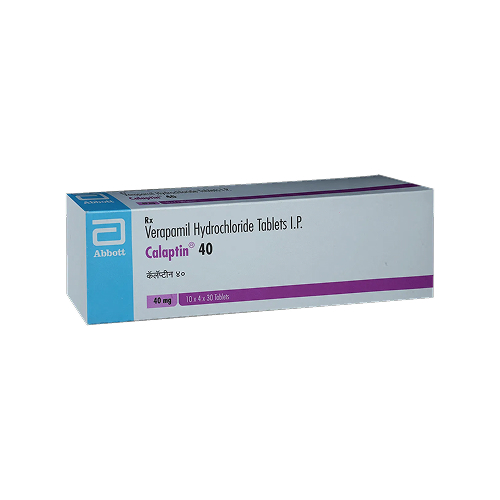
Images are for product identification. Refer to the selected batch for packaging and availability.
Calaptin 40 Mg Tablet (30 Tab)
Verapamil (40mg)
YOUR PURCHASE PRICE
59 in stockInclusive of all taxes
Choose your batch
2 offersSign in to order for your pharmacy.
Product information
- Manufacturer
- Abbott Healthcare Pvt. Ltd.
- Category
- Allopathy
- Composition
- Verapamil (40mg)
- Packaging
- 30 TABLET
- Box / case pack
- 1 / —
Description
CALAPTIN 40 MG TABLET
Calaptin 40 mg Tablet, manufactured by Abbott Healthcare Pvt. Ltd., is a medication used to manage various cardiovascular conditions. It contains the active ingredient Verapamil, a calcium channel blocker that works by relaxing blood vessels and reducing the heart's workload.
Name
- Common Name: Calaptin 40 Tablet
- Brand Name: Calaptin
- Generic Name: Verapamil
Composition
Each tablet contains Verapamil 40 mg. Verapamil is classified as a non-dihydropyridine calcium channel blocker. It functions by blocking the entry of calcium into the heart muscles and blood vessel walls, which leads to relaxation of blood vessels, decreased heart rate, and reduced blood pressure.
Uses
Calaptin 40 mg Tablet is primarily prescribed for the treatment and management of:
- Hypertension (High Blood Pressure): It helps lower blood pressure, reducing the risk of strokes, heart attacks, and kidney problems.
- Angina Pectoris (Chest Pain): It treats and helps prevent various forms of angina, including chronic stable, vasospastic (Prinzmetal's), and unstable angina, by improving blood flow and oxygen supply to the heart.
- Arrhythmias (Irregular Heartbeats): It helps control heart rate in conditions such as supraventricular tachycardia, atrial fibrillation, and atrial flutter.
- It may also be used off-label for the prophylaxis of cluster headaches and certain other heart conditions like hypertrophic cardiomyopathy.
Dosage and Administration
Calaptin 40 mg Tablet should be taken orally as directed by a healthcare professional.
- Typical Guidance: It can be taken with or without food.
- Frequency: For high blood pressure, adult dosage often starts with 80 mg to 120 mg three times a day, though for a 40 mg tablet, it might be prescribed three times daily.
- Administration: Swallow the tablet whole with a glass of water. Do not chew, crush, or break the tablet.
- Consistency: Take the medicine at a fixed time each day for best results. Do not stop taking it suddenly, as this can worsen your condition.
Side Effects
Common Side Effects (usually mild and resolve over time):
- Nausea
- Constipation
- Headache
- Dizziness or lightheadedness
- Low blood pressure (hypotension)
- Fatigue or unusual weakness
- Flushing (temporary skin redness)
- Swelling of the limbs (edema)
- Slow heartbeat
Serious Side Effects (require immediate medical attention):
- Severe allergic reactions (skin rash, itching, hives, swelling of the face, lips, tongue, or throat)
- Signs of heart failure (shortness of breath, swelling of ankles/feet/hands, sudden weight gain)
- Very slow heartbeat or fainting
- Liver injury (right upper belly pain, loss of appetite, nausea, dark urine, yellowing of skin or eyes)
- Unusual bleeding or bruising
- Increase in frequency or severity of chest pain (angina)
Precautions
- Contraindications: Do not take Calaptin 40 mg Tablet if you are allergic to Verapamil or its components, have severe heart failure, certain severe heart rhythm issues (e.g., second- or third-degree atrioventricular block or sick sinus syndrome unless you have a pacemaker), recent heart attack, slow heart rate (bradycardia), or very low blood pressure (hypotension). It is also not recommended for use with beta-blockers due to increased risk of heart block and slow heart rate.
- Specific Conditions: Use with caution in patients with heart attacks, problems with heart impulses (first-degree AV block), liver disease, kidney disease, or cardiomyopathy.
- Pregnancy and Breastfeeding: Calaptin 40 mg Tablet should be used with caution during pregnancy and is generally not recommended unless clearly necessary. It is also not recommended for use in breastfeeding mothers. Consult your doctor.
- Alcohol Interaction: Avoid alcohol consumption as it may increase the effects of the medicine, leading to worsened side effects like dizziness and drowsiness.
- Grapefruit Interaction: Avoid consuming grapefruit or grapefruit juice, as it can increase the blood levels of Verapamil and potentially lead to adverse effects.
- Driving and Machinery: Calaptin 40 mg Tablet may cause dizziness, sleepiness, or affect vision. Do not drive or operate heavy machinery if you experience these effects.
- Postural Hypotension: Rise slowly from a sitting or lying position to reduce the risk of dizziness or fainting due to low blood pressure.
- Drug Interactions: Inform your doctor about all other medications, vitamins, and supplements you are taking, as Verapamil can interact with various drugs including, but not limited to, certain antibiotics (e.g., erythromycin, rifampicin), antivirals (e.g., ritonavir, nelfinavir), antifungals (e.g., ketoconazole), other heart medications (e.g., digoxin, quinidine, flecainide, diltiazem), statins, and colchicine.
- Pediatric and Geriatric Use: Use with caution in children and elderly patients.
Storage
Store Calaptin 40 mg Tablet at room temperature (15-25ºC). Protect it from moisture, heat, and light. Keep this medicine out of the sight and reach of children and pets. Dispose of expired or unused medication appropriately.
Frequently asked questions
What is Calaptin 40 MG Tablet used for?
Calaptin 40 MG Tablet is primarily used to manage high blood pressure (hypertension), prevent angina attacks (chest pain or discomfort caused by heart disease), and treat certain types of irregular heartbeats (arrhythmias). By lowering blood pressure, it helps reduce the risk of heart attacks, strokes, and other associated complications.
How does Calaptin 40 MG Tablet work?
Calaptin 40 MG Tablet contains Verapamil, which belongs to a class of medicines known as calcium channel blockers. It works by blocking the entry of calcium into the cells of the heart muscles and blood vessels. This action relaxes and widens the blood vessels, which in turn reduces blood pressure and the heart's workload. It also helps in regulating the heart's electrical impulses, thereby controlling heart rate and rhythm.
What is the usual dosage for Calaptin 40 MG Tablet?
The dosage of Calaptin 40 MG Tablet is determined by your doctor based on your individual condition and response to treatment. For adults with high blood pressure, a typical starting dosage might be 80 mg to 120 mg taken orally three times a day. It is important to take the tablet exactly as directed by your doctor, swallowing it whole with food or milk, and at a fixed time each day to ensure optimal benefits.
What are the possible side effects of Calaptin 40 MG Tablet?
Common side effects of Calaptin 40 MG Tablet may include constipation, dizziness, nausea, headache, low blood pressure (hypotension), and swelling of the limbs (edema). These effects are usually mild and temporary, often resolving as your body adjusts to the medication. If side effects persist or worsen, you should consult your doctor.
Is Calaptin 40 MG Tablet safe during pregnancy or breastfeeding?
Calaptin 40 MG Tablet is generally not recommended for use during pregnancy unless it is considered clearly necessary by a doctor, as it may be unsafe for the unborn baby. For breastfeeding women, it is usually not recommended as the medicine may pass into breast milk. However, some studies suggest that it might not be harmful to the baby if prescribed by an expert, as the amount passing into breast milk may not be significant. Always consult your doctor before using this medication if you are pregnant or breastfeeding.
Can Calaptin 40 MG Tablet be taken with other medications?
Calaptin 40 MG Tablet can interact with various other medications. For example, concomitant use with alpha or beta-blockers can lead to severe low blood pressure and a slowed heart rate. Taking it with aspirin may increase the risk of bleeding. It is not recommended to use with Colchicine. Other medicines like erythromycin, ritonavir, ketoconazole, rifampicin, quinidine, flecainide, and certain cholesterol-lowering drugs (e.g., atorvastatin, simvastatin) may also interact. Always inform your doctor about all medicines, herbal preparations, and supplements you are currently taking to avoid potential interactions.
What precautions should be taken with Calaptin 40 MG Tablet?
Several precautions should be observed when taking Calaptin 40 MG Tablet. Alcohol consumption should be avoided as it can enhance the side effects like dizziness and drowsiness and potentially worsen your condition. Grapefruit juice can also interact with this medication, increasing its blood levels and potential adverse effects. Do not stop taking Calaptin 40 MG Tablet suddenly, even if you feel well, as it could worsen your condition or cause a sudden increase in blood pressure. Caution is advised for individuals with liver or kidney issues, low blood pressure, heart failure, severe heart rhythm problems, or a recent history of a heart attack. If you experience dizziness or weakness, avoid driving or operating heavy machinery.
What happens if a dose of Calaptin 40 MG Tablet is missed?
If you miss a dose of Calaptin 40 MG Tablet, take it as soon as you remember. However, if it is almost time for your next scheduled dose, it is best to skip the missed dose and resume your regular dosing schedule. Do not take a double dose to make up for a missed one.
How should Calaptin 40 MG Tablet be stored?
Calaptin 40 MG Tablet should be stored at room temperature, typically between 15-25ºC. It should be protected from moisture and light. Keep the medication out of the reach and sight of children and pets. Do not use the tablets after their expiry date.