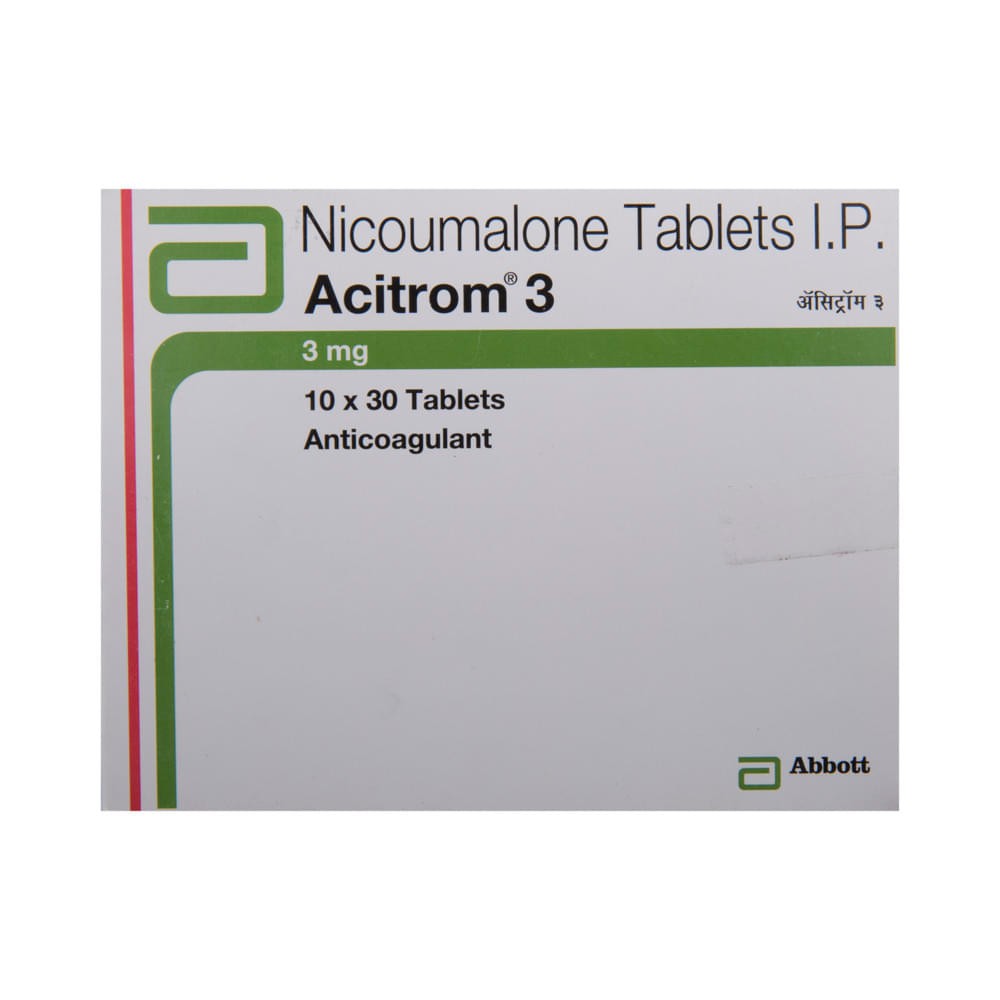
Images are for product identification. Refer to the selected batch for packaging and availability.
Acitrom 3 Tablet
Acenocoumarol (3mg)
YOUR PURCHASE PRICE
6 in stockInclusive of all taxes
Available batch
1 offerSign in to order for your pharmacy.
Product information
- Manufacturer
- Abbott
- Category
- Allopathy
- Composition
- Acenocoumarol (3mg)
- Packaging
- 30 TABLET
- Box / case pack
- 1 / —
Description
ACITROM 3 TABLET
Acitrom 3 Tablet is an oral anticoagulant, commonly known as a blood thinner, manufactured by Abbott.
Composition Each tablet contains Acenocoumarol 3 mg as its active ingredient.
Uses Acitrom 3 Tablet is prescribed to prevent and treat harmful blood clots. It is used for conditions such as deep vein thrombosis (DVT), pulmonary embolism, and to reduce the risk of stroke in patients with heart rhythm disorders (atrial fibrillation) or those with mechanical heart valves. This medicine works by blocking the action of vitamin K, which is essential for the formation of clotting proteins in the liver, thereby slowing the blood clotting process. It does not dissolve existing clots but helps prevent them from becoming larger.
Dosage and Administration Take Acitrom 3 Tablet exactly as advised by your doctor, preferably at a fixed time each day. It can be taken with or without food. Swallow the tablet whole; do not crush, chew, or break it. Regular monitoring of your blood clotting time (INR) is crucial during treatment. Do not stop taking this medicine abruptly without consulting your doctor.
Side Effects Common side effects may include prolonged bleeding, nosebleeds, easy bruising, blood in urine or stool, heavy menstrual bleeding, hair loss, nausea, vomiting, or diarrhea. Serious side effects, though rare, warrant immediate medical attention and include signs of bleeding in the stomach (abdominal pain, vomiting blood, bloody or black tarry stools), urinary tract (backache, blood in urine), brain (dizziness, severe headache, weakness in an arm or leg), eyes (eye redness), or severe allergic reactions like skin rash with fever.
Precautions Acitrom 3 Tablet is generally contraindicated during pregnancy, particularly in the first and third trimesters, and its use during breastfeeding is not recommended unless deemed necessary by a physician. Avoid consuming alcohol and cranberry juice while on this medication, as they may increase the risk of bleeding. Exercise caution if you have liver or kidney impairment, uncontrolled high blood pressure, or are an elderly patient. Inform your doctor about any upcoming surgeries or dental procedures, as you may need to temporarily stop the medication. Interactions can occur with other anticoagulants, NSAIDs, certain antibiotics, anti-cancer medicines, anti-epileptic medicines, St. John's Wort, oral contraceptives, and diuretics. Avoid sudden major changes in your diet, especially foods rich in Vitamin K (e.g., spinach, broccoli). Be cautious when using sharp objects to minimize cuts.
Storage Store Acitrom 3 Tablet at room temperature, ideally between 15 and 30°C. Keep it in a dry place, protected from light and moisture, and in its original packaging. Always keep this medicine out of the reach of children.
Frequently asked questions
What is Acitrom 3 Tablet used for?
Acitrom 3 Tablet is primarily used to prevent and treat harmful blood clots in the body. It is prescribed for conditions such as deep vein thrombosis (DVT), pulmonary embolism, and to prevent strokes in patients with heart rhythm disorders like atrial fibrillation or those with mechanical heart valves. This medication helps to stop existing blood clots from growing larger and causing more serious problems.
How does Acitrom 3 Tablet work?
Acitrom 3 Tablet contains Nicoumalone (also known as Acenocoumarol), which is an anticoagulant, commonly referred to as a "blood thinner." It works by blocking the action of vitamin K, an essential factor for the production of certain clotting proteins (factors II, VII, IX, and X) in the liver. By reducing these clotting proteins, Nicoumalone increases the time it takes for blood to clot, thereby reducing the risk of unwanted blood clot formation.
What is the usual dosage of Acitrom 3 Tablet?
The dosage of Acitrom 3 Tablet is highly individualized and determined by your doctor based on your medical condition and response to treatment. It should be taken exactly as prescribed, typically once daily, with or without food, but preferably at a fixed time each day. The tablet should be swallowed whole with a glass of water and not crushed, chewed, or broken. Regular monitoring of your blood's clotting time through INR (International Normalized Ratio) or prothrombin time tests is crucial to ensure the correct dosage.
What are the possible side effects of Acitrom 3 Tablet?
The most common side effect of Acitrom 3 Tablet is bleeding. This can manifest as prolonged bleeding from cuts, nosebleeds, easy bruising, blood in urine or stool, or heavy menstrual bleeding. Other possible side effects include hair loss, nausea, vomiting, diarrhea, abdominal pain, backache, dizziness, severe headache, weakness in an arm or leg, blurred vision, and skin rash. If you experience severe bleeding symptoms like vomiting blood, black tarry stools, or signs of bleeding in the brain (e.g., severe headache, weakness), seek immediate medical attention.
Is Acitrom 3 Tablet safe during pregnancy or breastfeeding?
Pregnancy: Acitrom 3 Tablet is considered highly unsafe and is contraindicated during pregnancy, particularly in the first and third trimesters, as it can cause significant harm to the developing baby. Women of childbearing age are advised to use effective contraceptive measures while taking this medication.
Breastfeeding: The use of Acitrom 3 Tablet is generally not recommended during breastfeeding, as its active ingredient, acenocoumarol, may pass into breast milk in small amounts. Your doctor will assess the potential risks and benefits or may suggest a safer alternative, or advise close monitoring of the infant.
Can Acitrom 3 Tablet be taken with other medications?
Acitrom 3 Tablet can interact with many other medications, potentially increasing the risk of bleeding or affecting its effectiveness.
- Increased bleeding risk: Concomitant use with other anticoagulants (e.g., heparin, aspirin, clopidogrel), NSAIDs (e.g., ibuprofen), certain antibiotics (e.g., erythromycin, ciprofloxacin), and proton pump inhibitors (e.g., omeprazole) can increase the risk of bleeding.
- Diminished anticoagulant effect: Certain medications like anti-cancer drugs, anti-epileptic drugs (e.g., phenobarbital, carbamazepine), St. John's Wort, oral contraceptives, and immunosuppressants can reduce the blood-thinning effect of Acitrom 3 Tablet. Always inform your doctor about all prescription, over-the-counter, herbal medicines, and dietary supplements you are taking to avoid potential interactions.
What precautions should be taken while on Acitrom 3 Tablet?
It is crucial to follow your doctor's instructions diligently. Regular monitoring of your INR is essential. Avoid consuming alcohol and cranberry juice or products, as they can interfere with the medication and increase bleeding risk. Be cautious when performing activities that might cause injury, such as shaving or using sharp objects, to minimize bleeding. Inform your doctor or dentist about your medication before any surgery, including dental procedures, as you may need to temporarily stop taking Acitrom 3 Tablet, usually about 5 days beforehand. Do not stop taking this medication abruptly without consulting your doctor, as this can increase your risk of blood clots. Caution is advised for patients with liver or kidney disease, uncontrolled high blood pressure, and for older patients or children, due to increased risk of side effects.
What happens if a dose of Acitrom 3 Tablet is missed?
If you miss a dose of Acitrom 3 Tablet, take it as soon as you remember. However, if it is almost time for your next scheduled dose, skip the missed dose and continue with your regular dosing schedule. Do not take a double dose to make up for a missed one. If you are unsure, consult your doctor or pharmacist for guidance.
How should Acitrom 3 Tablet be stored?
Store Acitrom 3 Tablet at room temperature, ideally between 15 and 30°C. Keep the medicine in its original packaging in a dry place, protected from light and moisture. Always ensure it is kept out of the sight and reach of children.