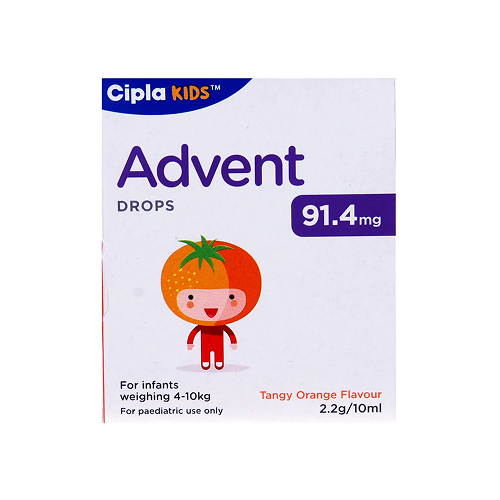
Images are for product identification. Refer to the selected batch for packaging and availability.
Advent Drops 91.4 Mg 10 Ml
Amoxycillin undefined (80mg) + undefined Clavulanic Acid (11.4mg)
YOUR PURCHASE PRICE
8 in stockInclusive of all taxes
Available batch
1 offerSign in to order for your pharmacy.
Product information
- Manufacturer
- Cipla Health Ltd
- Category
- Allopathy
- Composition
- Amoxycillin undefined (80mg) + undefined Clavulanic Acid (11.4mg)
- Packaging
- 10 ML
- Box / case pack
- 1 / —
Description
ADVENT DROPS 91.4 MG 10 ML
Name:
- Brand Name: Advent 91.4mg Drops, Advent 91.4mg Tangy Orange Flavour Oral Drops
Composition: ADVENT DROPS contain two active ingredients: Amoxicillin (80mg) and Clavulanic Acid (11.4mg). Amoxicillin is a penicillin-type antibiotic that works by preventing bacteria from building essential cell walls, leading to their death. Clavulanic Acid is a beta-lactamase inhibitor that prevents certain bacteria from inactivating Amoxicillin, thus enhancing its effectiveness against a wider range of bacteria.
Uses: ADVENT DROPS are a powerful antibiotic formulation specifically designed for infants and young children to treat a variety of bacterial infections. These include:
- Respiratory tract infections (e.g., pneumonia, bronchitis, sinusitis)
- Ear infections (otitis media)
- Urinary tract infections (UTIs)
- Skin and soft tissue infections
- Dental infections
- Resistant tuberculosis It is important to note that ADVENT DROPS are not effective against viral infections like the common cold or flu.
Dosage and Administration: The dosage of ADVENT DROPS is determined by a healthcare professional based on the child's weight, age, the severity of the infection, and kidney function.
- Shake the bottle well before each use to ensure even distribution of the medicine.
- Use the provided calibrated dropper to measure the precise dose.
- The drops can be given directly into the child's mouth or mixed with a small amount of milk or juice to improve palatability.
- It can be taken with or without food, but administering it with food is recommended to improve absorption and reduce the risk of stomach upset.
- It is crucial to complete the full course of treatment as prescribed, even if the child starts to feel better, to prevent the development of antibiotic resistance and recurrence of infection.
- If a dose is missed, administer it as soon as remembered. Do not double dose if it's almost time for the next dose. If the child vomits within 30 minutes of intake, let the child calm down and repeat the dose.
Side Effects: Common side effects may include:
- Diarrhea
- Nausea and vomiting
- Stomach pain
- Skin rash or hives
- Diaper rash
- Thrush (candida fungal infection) In case of any severe or persistent side effects, such as a severe allergic reaction (scratchy rash, facial swelling, difficulty breathing), consult a doctor immediately.
Precautions:
- Inform the doctor about any pre-existing medical conditions, especially allergies to penicillin or cephalosporin antibiotics, kidney or liver problems, or mononucleosis.
- ADVENT DROPS are not recommended for children with severe kidney impairment or a history of liver problems or jaundice after taking penicillin antibiotics.
- Do not administer this medicine for viral infections like colds and flu.
- Always check the expiry date before administering the medicine.
- Do not share this medicine with others, even if they have similar symptoms.
- Caution should be exercised in neonates and infants less than 12 weeks of age.
Storage:
- Store at or below 25°C or below 30°C in the original packaging.
- Protect from direct sunlight, heat, and moisture.
- Keep out of the sight and reach of children and pets.
Frequently asked questions
1. What is Advent Drops 91.4 mg used for?
Advent Drops 91.4 mg is an antibiotic primarily used to treat various bacterial infections in children. These infections can affect the respiratory tract (such as pneumonia, bronchitis, and sinusitis), ears (like acute otitis media), urinary tract, skin and soft tissues, bones, joints, and teeth. It is important to note that this medicine is not effective against viral infections, including the common cold or flu.
2. How does Advent Drops 91.4 mg work?
Advent Drops 91.4 mg contains two active components: Amoxicillin and Clavulanic Acid. Amoxicillin is an antibiotic belonging to the penicillin group, and it works by preventing bacteria from building their cell walls, which is essential for their survival, thereby killing them. Clavulanic Acid acts as a beta-lactamase inhibitor. Some bacteria produce an enzyme called beta-lactamase that can destroy Amoxicillin, making it ineffective. Clavulanic Acid blocks this enzyme, allowing Amoxicillin to work effectively against a broader range of bacteria and overcome antibiotic resistance.
3. What is the usual dosage of Advent Drops 91.4 mg?
The dosage of Advent Drops 91.4 mg is determined by a doctor, taking into account the child's weight, age, the severity and type of infection, and kidney function. It is crucial to follow the prescribed dosage and duration strictly. Use the provided calibrated dropper to measure the exact quantity. The medicine can be administered with or without food, though taking it with food may help improve absorption and reduce the risk of stomach upset.
4. What are the possible side effects of Advent Drops 91.4 mg?
Common side effects of Advent Drops 91.4 mg can include diarrhea, nausea, vomiting, abdominal pain, and skin rash or hives. Diaper rash may also occur in infants. If any of these side effects persist, worsen, or if your child experiences severe allergic reactions such as redness of the skin followed by eruptions, facial swelling, or breathing difficulties, seek immediate medical attention.
5. Is Advent Drops 91.4 mg safe during pregnancy or breastfeeding?
Advent Drops 91.4 mg is primarily formulated for pediatric use. While some information suggests it is generally considered safe during pregnancy and breastfeeding, it should only be used if specifically prescribed by a doctor who has assessed the potential benefits against any risks. The medication can pass into breast milk, and any signs of rash or diarrhea in the infant should be promptly reported to a healthcare professional.
6. Can Advent Drops 91.4 mg be taken with other medications?
Yes, Advent Drops 91.4 mg can interact with other medications. It is essential to inform your doctor about all other medicines, supplements, or herbal remedies your child is currently taking or planning to take to avoid potential interactions. For instance, co-administration with blood thinners like warfarin or acenocoumarol can increase the risk of bleeding. It may also interact with probenecid and methotrexate.
7. What precautions should be taken when using Advent Drops 91.4 mg?
Do not administer Advent Drops if your child is allergic to amoxicillin, clavulanic acid, or any other penicillin or cephalosporin class of antibiotics. Exercise caution and inform your doctor if your child has a history of liver problems, jaundice, severe kidney impairment, or glandular fever (mononucleosis). Consult your doctor if your child develops a new infection, persistent diarrhea, or stomach pain during or after treatment. Always complete the entire prescribed course of antibiotics, even if symptoms improve, to prevent the development of antibiotic resistance and ensure the infection is fully cleared.
8. What happens if a dose of Advent Drops 91.4 mg is missed?
If a dose of Advent Drops 91.4 mg is missed, give it as soon as you remember. However, if it is already close to the time for the next scheduled dose, skip the missed dose and continue with the regular dosing schedule. Do not administer a double dose to make up for a missed one.
9. How should Advent Drops 91.4 mg be stored?
Advent Drops 91.4 mg should be stored in a cool, dry place, protected from direct sunlight and moisture, and kept out of the reach of children. If the medication is provided as a dry powder requiring reconstitution (mixing with water), the prepared suspension generally needs to be refrigerated and used within 7 days. Any unused portion after this period should be discarded. Always check the expiry date before using the medicine.