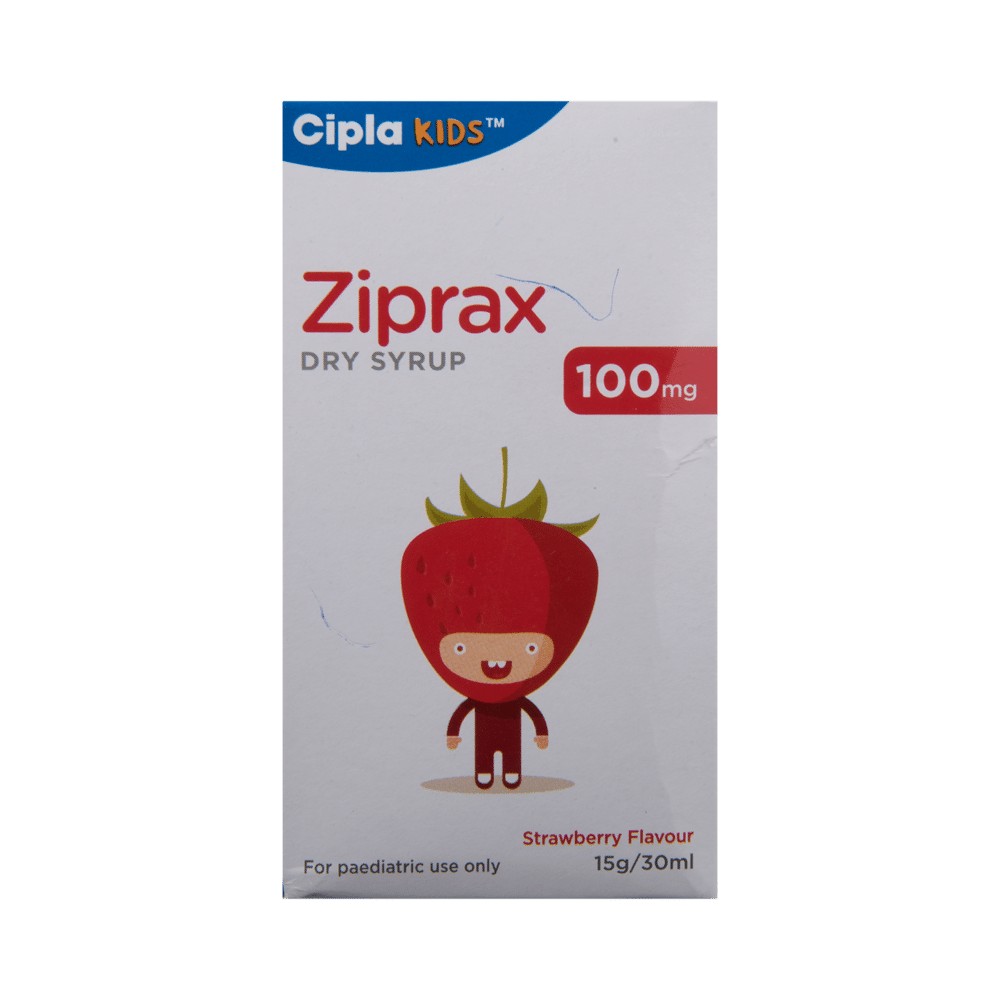
Images are for product identification. Refer to the selected batch for packaging and availability.
Ziprax 100 Syrup 30 Ml
Cefixime (100mg/5ml)
YOUR PURCHASE PRICE
71 in stockInclusive of all taxes
Choose your batch
2 offersSign in to order for your pharmacy.
Product information
- Manufacturer
- Cipla Ltd
- Category
- Allopathy
- Composition
- Cefixime (100mg/5ml)
- Packaging
- 30 ML
- Box / case pack
- 1 / —
Description
Here is a detailed product description for ZIPRAX 100 SYRUP 30 ML.
Name
- Brand Name: ZIPRAX 100 SYRUP
- Common Name: Cefixime Oral Suspension
Composition
- Active Ingredient: Cefixime (100 mg per 5 ml)
- Ziprax 100 Syrup is an antibiotic belonging to the cephalosporin class of medicines.
Uses ZIPRAX 100 SYRUP is prescribed for the treatment of various bacterial infections in children aged 6 months and older. It is effective against susceptible organisms causing:
- Ear infections (Otitis Media)
- Throat infections (Tonsillitis, Pharyngitis)
- Respiratory tract infections (Bronchitis, Pneumonia, Sinusitis)
- Urinary tract infections (Cystitis, Kidney infections)
- Skin and soft tissue infections
- Typhoid fever It works by inhibiting the formation of the bacterial cell wall, leading to the death of the bacteria.
Dosage and Administration
- ZIPRAX 100 SYRUP is designed for oral administration, primarily for children.
- The typical recommended dosage for children is 8 mg/kg/day, administered as a single daily dose or in two divided doses (4 mg/kg every 12 hours), as prescribed by a doctor.
- The dry powder needs to be reconstituted with sterile water (as directed on the product label) and shaken well before use.
- It can be taken with or without food.
- It is crucial to complete the full course of treatment as prescribed, even if symptoms improve, to prevent the infection from recurring or developing antibiotic resistance.
Side Effects Common side effects may include:
- Diarrhea, loose stools
- Nausea, vomiting
- Stomach pain, abdominal pain, gas, indigestion
- Headache, dizziness
Serious side effects, though rare, require immediate medical attention:
- Severe or watery diarrhea (pseudomembranous colitis)
- Allergic reactions such as rash, itching, hives, swelling of the face, lips, tongue, or throat, and difficulty breathing.
- Signs of liver problems (e.g., dark urine, yellowing of skin/eyes, persistent nausea, stomach pain)
- Signs of kidney problems (e.g., little or no urination, swelling in feet or ankles)
- Seizures
Precautions
- Do not use if the child is allergic to Cefixime or any other cephalosporin antibiotics, including penicillin.
- Exercise caution in children with a history of kidney or liver disease, severe skin reactions to antibiotics, or encephalopathy.
- This medicine is not meant for viral infections like the common cold or flu.
- Discuss all other medications, herbal preparations, and supplements being given to the child to avoid potential interactions, especially with blood thinners (like warfarin) and carbamazepine.
- If the child vomits within 30 minutes of administering the syrup, the dose may need to be repeated.
Storage
- Before reconstitution, store the dry syrup below 25°C or 30°C, protected from light.
- After reconstitution, the suspension should be stored in a refrigerator (below 8°C) and consumed within 7 days.
- Discard any unused portion after 7 days.
- Keep out of the sight and reach of children.
Frequently asked questions
Here are the most frequently asked questions about ZIPRAX 100 SYRUP 30 ML:
What is ZIPRAX 100 SYRUP used for?
ZIPRAX 100 SYRUP is an antibiotic used to treat a variety of bacterial infections in children. It is effective against infections affecting the respiratory system (like pneumonia and bronchitis), urinary tract (including cystitis and kidney infections), ears (otitis media), nose, sinuses, and throat (tonsillitis, pharyngitis). In some instances, it may also be prescribed for certain sexually transmitted diseases and skin, bone, and joint infections.
How does ZIPRAX 100 SYRUP work?
ZIPRAX 100 SYRUP contains Cefixime, which is a cephalosporin antibiotic. It works by inhibiting the synthesis of the bacterial cell wall, which is essential for bacterial survival. By disrupting this process, it weakens and destroys the bacterial cell, thereby killing the infection-causing bacteria and preventing their growth and multiplication.
What is the usual dosage for ZIPRAX 100 SYRUP?
The dosage of ZIPRAX 100 SYRUP is determined by a doctor based on the child's age, body weight, and the severity of the infection. A common recommended dose is 8 mg/kg/day, which can be given as a single daily dose or divided into two doses (4 mg/kg every 12 hours). It is crucial to administer the medicine regularly at evenly spaced intervals and to complete the entire course of treatment as prescribed by the doctor, even if the symptoms improve.
What are the possible side effects of ZIPRAX 100 SYRUP?
Common side effects may include nausea, vomiting, stomach pain, indigestion, diarrhea, headache, dizziness, and itchiness of the genital areas. These are usually mild and temporary. More serious, but less common, side effects can include severe allergic reactions (such as rash, itchy skin, swelling of the face, mouth, or throat, or difficulty breathing) and severe, watery, or bloody diarrhea. If any severe or persistent side effects occur, it is important to contact a doctor immediately.
Is ZIPRAX 100 SYRUP safe during pregnancy or breastfeeding?
ZIPRAX 100 SYRUP is generally considered safe for use during pregnancy and breastfeeding if prescribed by a doctor. However, some sources indicate that it is primarily a pediatric product and advise consulting a doctor if considering use during pregnancy or breastfeeding. It is not known whether cefixime is excreted in human milk, so temporary discontinuation of nursing may be considered during treatment.
Can ZIPRAX 100 SYRUP be taken with other medications?
ZIPRAX 100 SYRUP can interact with certain medications. For instance, concomitant use with Carbamazepine can elevate Carbamazepine levels, and with anticoagulants like warfarin, it can increase the risk of bleeding. Taking it with aminoglycosides (e.g., gentamicin) or certain other cephalosporins may increase the risk of kidney damage. Probenecid can increase the levels of cefixime in the blood, and cefixime may decrease the effectiveness of oral contraceptives. It is also advised to avoid the cholera vaccine if the patient has taken ZIPRAX 100 SYRUP within 14 days before vaccination. Always inform your doctor about all other medications, herbal preparations, and supplements being taken to avoid potential interactions.
What precautions should be taken with ZIPRAX 100 SYRUP?
Before administering ZIPRAX 100 SYRUP, inform the doctor about any existing allergies to antibiotics (especially cephalosporins or penicillins), as well as any kidney or liver problems, or a history of stomach inflammation or seizure disorders. It is crucial to complete the entire prescribed course of antibiotics, even if symptoms improve, to prevent the infection from returning or becoming harder to treat. This medication is not effective against viral infections like the common cold or flu, and unnecessary antibiotic use can lead to antibiotic resistance.
What happens if a dose of ZIPRAX 100 SYRUP is missed?
If a dose of ZIPRAX 100 SYRUP is missed, administer it as soon as it is remembered. However, if it is nearly time for the next scheduled dose, skip the missed dose and continue with the regular dosing schedule. Do not double the dose to make up for a forgotten one.
How should ZIPRAX 100 SYRUP be stored?
Before reconstitution, ZIPRAX 100 SYRUP should be stored below 25°C or 30°C and protected from light. After the dry syrup is reconstituted with water, the suspension should be stored in the refrigerator and consumed within 7 days. The bottle should be kept tightly closed, and it should be shaken well before each use. Any unused portion after 7 days must be discarded properly. It should be kept out of the reach of children and pets.