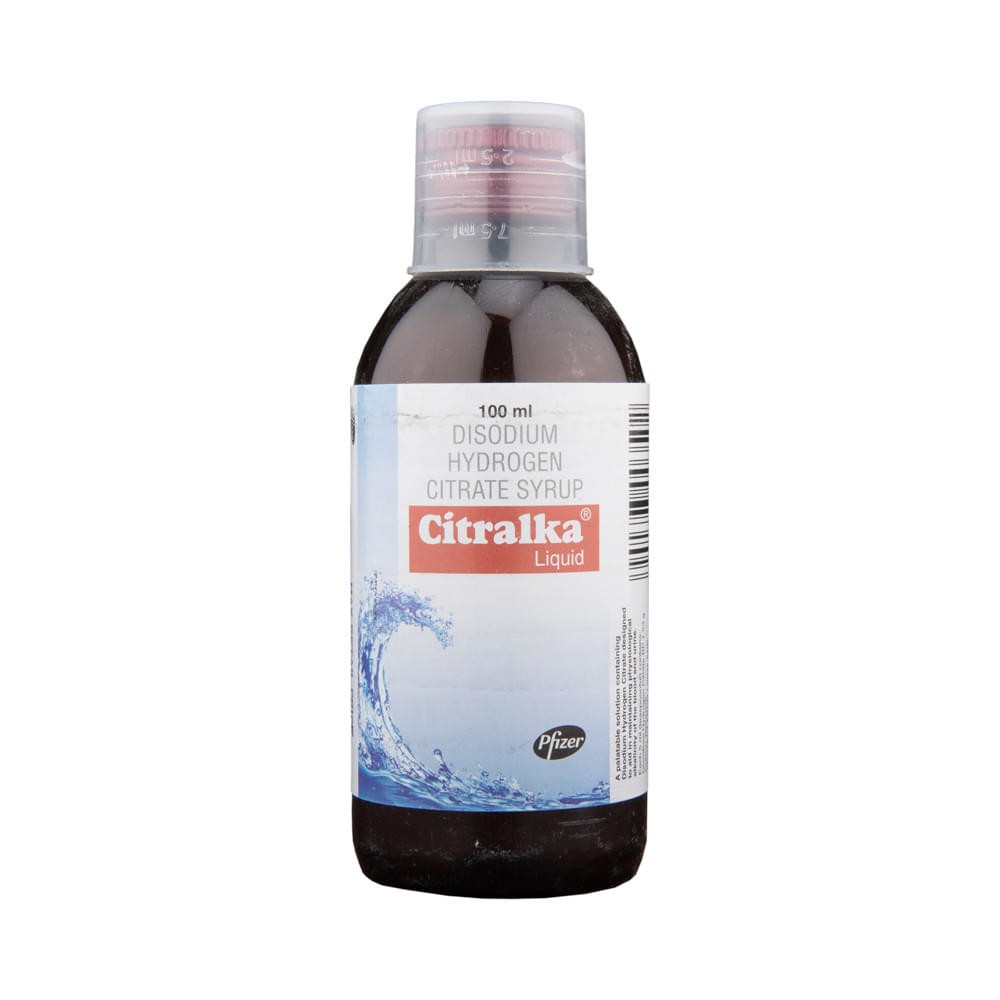
Images are for product identification. Refer to the selected batch for packaging and availability.
Citralka Liq 100 Ml
Disodium Hydrogen Citrate (1.53gm/5ml)
YOUR PURCHASE PRICE
24 in stockInclusive of all taxes
Available batch
1 offerSign in to order for your pharmacy.
Product information
- Manufacturer
- Pfizer Ltd
- Category
- Allopathy
- Composition
- Disodium Hydrogen Citrate (1.53gm/5ml)
- Packaging
- 100 ML
- Box / case pack
- 1 / —
Description
Citralka Liquid 100 ML
Citralka Liquid 100 ML, manufactured by Pfizer Ltd., is an oral solution primarily used as a urine alkalizer to manage various conditions.
Composition
- Active Ingredients: Each 5 ml of Citralka Liquid contains 1.53 Gm of Disodium Hydrogen Citrate.
Uses
Citralka Liquid is prescribed for the following medical conditions:
- Urinary Alkalinization: It effectively reduces the acidity of urine, which is beneficial in preventing the formation of kidney stones, particularly those composed of uric acid or cystine.
- Gout Management: By decreasing the production of uric acid and promoting its excretion through urine, it helps to alleviate discomfort associated with gout and reduces the risk of uric acid crystal formation.
- Kidney Stone Prevention and Treatment: It supports kidney health by inhibiting the growth of calcium-based kidney stones and aiding in the dissolution of existing ones by making the urine less acidic.
- Urinary Tract Infections (UTI): The alkalizing effect helps create an unfavorable environment for bacterial growth, assisting in the treatment of UTIs and relieving painful or difficult urination.
- Metabolic Acidosis: It helps in correcting chronic metabolic acidosis, especially in conditions related to renal insufficiency.
- Digestive Comfort: It can neutralize excess stomach acid, providing relief from heartburn, acid reflux, and indigestion, and balancing stomach pH to soothe bloating.
Dosage and Administration
- Adults: The recommended dosage is typically 30 ml (two tablespoonfuls) taken four times daily.
- Children (6 to 12 years): A dosage of 10 or 15 ml (two or three tablespoonfuls) can be administered three to four times daily.
- Administration: It should generally be taken after meals with plenty of water or as directed by a healthcare professional. Adults may take it without dilution, followed by liquid if preferred. Shake the bottle well before each use. For similar citrate solutions, it's advised to dilute the dose in 4 to 8 ounces (120 to 240 milliliters) of cold water or juice.
- Do not discontinue use without consulting a doctor. Use in children under two years of age is not established for similar citrate solutions.
Side Effects
Common side effects may include:
- Diarrhea
- Nausea
- Stomach pain (most common)
- Vomiting
- Increased urination
- Tiredness or weakness
Precautions
- Pre-existing Conditions: Exercise extreme caution if you have stomach disorders, liver impairment, acute dehydration, Addison's disease, heart disease, high blood potassium levels, irregular heartbeat, or kidney disease.
- Pregnancy and Breastfeeding: Not recommended for pregnant or breastfeeding women due to insufficient safety and efficacy data.
- Kidney Impairment: Not recommended for individuals with severe kidney impairment.
- Drug Interactions: Inform your doctor about all other medications you are taking, especially certain antibiotics (e.g., ciprofloxacin, norfloxacin), diuretics (e.g., spironolactone), blood pressure/heart medications (e.g., enalapril), lithium, methenamine, stimulant medications, aspirin, NSAIDs, digoxin, quinidine, antifungals (e.g., ketoconazole), potassium supplements, or potassium-sparing diuretics, as interactions may occur.
Storage
- Keep the bottle tightly closed.
- Store at a controlled room temperature, typically between 20°C and 25°C (68°F and 77°F).
Frequently asked questions
What is Citralka Liquid used for?
Citralka Liquid is primarily used as a urinary alkalinizer. It helps treat conditions such as renal tubular acidosis, gout, and various types of kidney stones (like uric acid and cystine stones) by making the urine less acidic. It is also used to alleviate symptoms associated with urinary tract infections (UTIs), such as burning sensation and discomfort during urination, and can help in cases of painful or difficult urination. Additionally, it may be prescribed to manage metabolic acidosis in specific situations.
How does Citralka Liquid work?
Citralka Liquid contains disodium hydrogen citrate, which, after being absorbed into the body, is metabolized into bicarbonate. These bicarbonate ions are then excreted in the urine, increasing the urinary pH and making the urine less acidic. This process helps to dissolve certain types of kidney stones and prevents new ones from forming. It also increases the solubility of uric acid, facilitating its removal from the body through urine, which is beneficial in conditions like gout. The alkaline environment created in the urine can also inhibit bacterial growth, aiding in the treatment of UTIs.
What is the usual dosage of Citralka Liquid?
For adults, the typical dosage is 30 ml (two tablespoonfuls) taken four times daily. For children aged 6 to 12 years, the recommended dose is 10 or 15 ml (two or three teaspoonfuls) three to four times daily. It should be diluted in water or milk. Adults may take it undiluted, followed by a liquid, if preferred. It is important to shake the bottle well before use and to take the medicine after meals to minimize stomach upset. Always follow your doctor's specific instructions regarding dosage and duration.
What are the possible side effects of Citralka Liquid?
Common side effects can include abdominal discomfort, diarrhea, nausea, vomiting, tiredness, frequent urge to urinate, stomach pain or cramps, and an unpleasant taste. If these side effects persist or worsen, you should consult your doctor. In rare cases or with excessive doses, more serious effects like hypocalcemia (low calcium), hypokalemia (low potassium), metabolic alkalosis, sodium overload, mood changes, shortness of breath, muscle weakness, or irregular heartbeat may occur.
Is Citralka Liquid safe during pregnancy or breastfeeding?
The safety of Citralka Liquid during human pregnancy and lactation has not been established. It is generally not recommended for use during pregnancy or by nursing mothers unless the potential benefits clearly outweigh the potential risks. Always consult your doctor before taking this medicine if you are pregnant, planning a pregnancy, or breastfeeding.
Can Citralka Liquid be taken with other medications?
Citralka Liquid can interact with several other medications. It is not recommended to take it concurrently with aluminum-containing antacids, especially in patients with kidney problems, as it can increase aluminum absorption and lead to toxicity. It can also interact with mood stabilizers like lithium, anti-arrhythmic medicines such as quinidine and flecainide, and may lessen the effectiveness of anti-gout medications like allopurinol and probenecid. Inform your doctor about all prescription, over-the-counter medications, and herbal supplements you are currently taking to avoid potential interactions.
What precautions should be taken while using Citralka Liquid?
Citralka Liquid should not be used if you have severe kidney impairment (with conditions like oliguria or anuria), untreated Addison's disease, acute dehydration, heat cramps, or severe myocardial damage. It is also contraindicated for individuals on a sodium-restricted diet or if you are allergic to disodium hydrogen citrate. Caution is advised if you have stomach disorders, liver impairment, hyperkalemia (high potassium levels), hypocalcemia (low calcium levels), high blood pressure, edema, or a pre-existing urinary tract infection. It is crucial to drink plenty of water throughout the day while taking this medicine. Do not discontinue the medication without consulting your doctor.
What happens if a dose of Citralka Liquid is missed?
If you miss a dose of Citralka Liquid, take it as soon as you remember. However, if it is almost time for your next scheduled dose, skip the missed dose and continue with your regular dosing schedule. Do not take a double dose to make up for a missed one.
How should Citralka Liquid be stored?
Citralka Liquid should be stored in a cool and dry place, protected from light and excessive heat, ideally below 30°C or between 10°C and 25°C. Ensure the bottle is tightly closed when not in use to prevent contamination and maintain its stability. Keep the medicine out of reach and sight of children. The shelf life is typically 24 months when stored correctly.