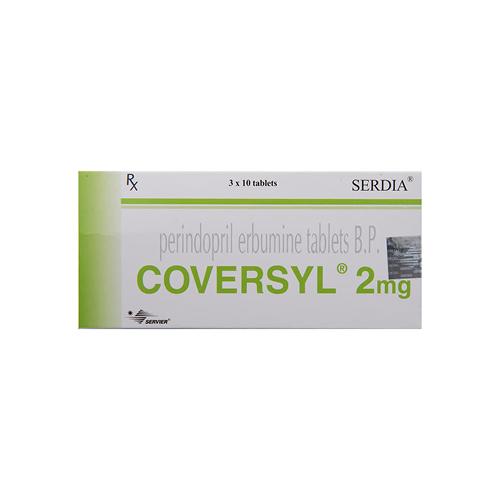
Images are for product identification. Refer to the selected batch for packaging and availability.
Coversyl 2mg-10 Tab
Perindopril Erbumine (2mg)
YOUR PURCHASE PRICE
37 in stockInclusive of all taxes
Available batch
1 offerSign in to order for your pharmacy.
Product information
- Manufacturer
- Serdia Pharmaceuticals (india) Pvt. Ltd.
- Category
- Allopathy
- Composition
- Perindopril Erbumine (2mg)
- Packaging
- 10 TABLET
- Box / case pack
- 1 / —
Description
COVERSYL 2MG-10 TAB
Name
- Generic Name: Perindopril Erbumine
- Brand Name: Coversyl
Composition
- Active Ingredient: Perindopril Erbumine 2 mg per tablet
Uses
Coversyl is an angiotensin-converting enzyme (ACE) inhibitor prescribed for:
- Hypertension (high blood pressure)
- Heart failure
- Reduction of risk of cardiac events in patients with stable coronary artery disease
Dosage and Administration
- Typical Adult Dosage:
- For hypertension: 2–4 mg once daily, adjusted as needed, up to a maximum of 8 mg per day
- For heart failure: Usually started at 2 mg once daily, increased gradually as tolerated
- Administration: Take orally, preferably in the morning before a meal
Side Effects
Common Side Effects
- Cough
- Headache
- Dizziness
- Fatigue
- Gastrointestinal disturbances (nausea, diarrhea)
Serious Side Effects
- Angioedema (swelling of face, lips, tongue, or throat)
- Hypotension (low blood pressure)
- Hyperkalemia (high potassium levels)
- Renal impairment
- Allergic reactions
Precautions
- Not recommended in pregnancy or breastfeeding
- Use with caution in patients with renal impairment, liver dysfunction, or electrolyte imbalances
- May interact with potassium-sparing diuretics, potassium supplements, lithium, and NSAIDs
- Monitor blood pressure, renal function, and serum potassium regularly
Storage
- Store below 25°C (77°F)
- Keep in the original packaging, protected from moisture and light
- Keep out of reach of children
Frequently asked questions
Coversyl 2mg FAQs
What is Coversyl 2mg used for?
Coversyl (perindopril) is an ACE inhibitor used to treat high blood pressure (hypertension), heart failure, and to reduce the risk of heart attack or stroke in certain patients.
How does Coversyl work?
Coversyl works by relaxing blood vessels, making it easier for the heart to pump blood, which helps lower blood pressure and reduces strain on the heart.
What is the usual dosage of Coversyl?
The typical starting dose for adults is 2mg once daily, which may be adjusted by your doctor based on your response. Always follow your doctor's prescription and do not change the dose without consulting them.
What are the possible side effects of Coversyl?
Common side effects include dizziness, headache, tiredness, dry cough, and gastrointestinal symptoms like nausea. Rare but serious side effects include angioedema (swelling of face, lips, or tongue) and kidney problems.
Is Coversyl safe during pregnancy or breastfeeding?
Coversyl should not be used during pregnancy, especially after the first trimester, as it can harm the unborn baby. It is also generally not recommended during breastfeeding. Consult your doctor if you are pregnant, planning to become pregnant, or breastfeeding.
Can Coversyl be taken with other medications?
Some medications can interact with Coversyl, such as diuretics, potassium supplements, NSAIDs, and other blood pressure medicines. Always inform your doctor about all medications and supplements you are taking.
What precautions should be taken while using Coversyl?
Monitor your blood pressure regularly. Inform your doctor if you have kidney problems, liver disease, or a history of angioedema. Avoid potassium-rich salt substitutes unless prescribed.
What should I do if I miss a dose?
If you miss a dose, take it as soon as you remember unless it’s almost time for your next dose. Do not take two doses at once. Continue with your regular dosing schedule.
How should Coversyl be stored?
Store Coversyl tablets at room temperature, away from moisture and heat. Keep the medication out of reach of children.
When should I seek medical attention?
Seek immediate medical help if you experience signs of an allergic reaction (such as swelling of the face or difficulty breathing), severe dizziness, or fainting.