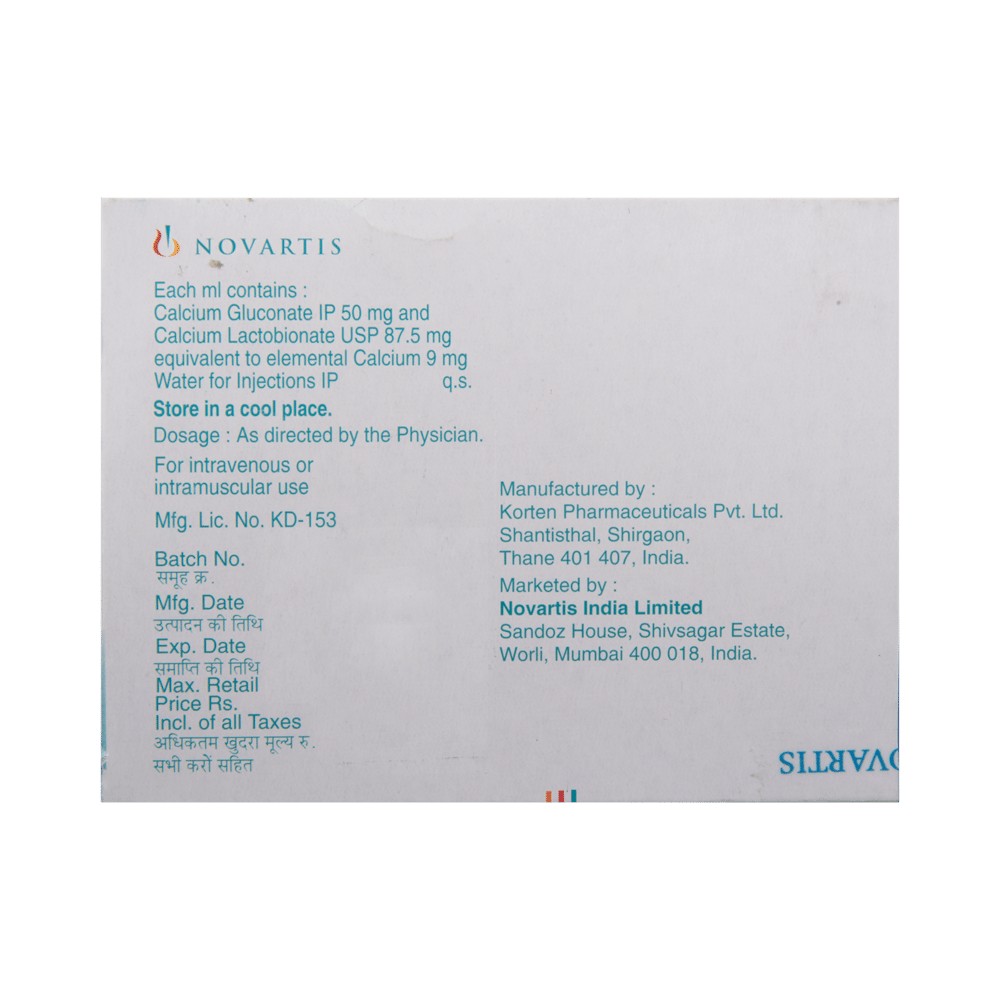
Images are for product identification. Refer to the selected batch for packaging and availability.
Calcium Sandoz Injection 10 Ml
Calcium Gluconate (50mg) + Calcium Lactobionate (87.5mg)
YOUR PURCHASE PRICE
6 in stockInclusive of all taxes
Available batch
1 offerSign in to order for your pharmacy.
Product information
- Manufacturer
- Dr. Reddys Laboratories Ltd.
- Category
- Allopathy
- Composition
- Calcium Gluconate (50mg) + Calcium Lactobionate (87.5mg)
- Packaging
- 10 ML
- Box / case pack
- 1 / —
Description
CALCIUM SANDOZ INJECTION 10 ML by DR. REDDYS LABORATORIES LTD.
Calcium Sandoz Injection 10 mL is a mineral supplement indicated for conditions associated with calcium deficiency. It is administered by healthcare professionals to help restore calcium levels in the body.
Composition
Calcium Sandoz Injection contains a combination of active ingredients:
- Calcium Gluconate: 50 mg/mL
- Calcium Lactobionate: 87.5 mg/mL
- Elemental Calcium: 9 mg/mL
Uses
This injection is primarily used to treat:
- Acute symptomatic hypocalcemia (low calcium levels in the blood).
- Calcium deficiency related to conditions such as rickets (weak and soft bones in children), osteomalacia (weak and soft bones in adults), and neuromuscular weakness (muscle weakness caused by nerve problems).
- General calcium supplementation when dietary intake is insufficient. It also helps in maintaining and strengthening bones.
Dosage and Administration
Calcium Sandoz Injection is administered intravenously by a trained healthcare professional in a medical setting. It should not be self-administered. The dosage and duration of treatment will be determined by the doctor based on the patient's age, body weight, and medical condition.
Side Effects
Common side effects may include:
- Tiredness
- Vomiting
- Nausea
- Pain, swelling, or redness at the injection site
- Constipation
- Stomach upset
- Warmth or tingling sensation
- Chalky taste
Serious side effects, though rare, can occur. Discontinue use and seek immediate medical attention if you experience:
- Little or no urination
- Swelling, rapid weight gain
- Light-headed feeling
- Slow or irregular heartbeats
- High levels of calcium in the blood (symptoms include nausea, vomiting, constipation, increased thirst or urination, muscle weakness, bone pain, confusion, lack of energy)
- Hypersensitivity reactions like rash, itching, and swelling
- Severe allergic reactions such as anaphylaxis
Precautions
- Allergies: Inform your doctor if you are allergic to any of its ingredients.
- Pre-existing Conditions: Do not receive Calcium Sandoz Injection if you have hypercalcaemia (high calcium levels in the blood), hypercalciuria (high calcium levels in urine), or overactive parathyroid glands (hyperparathyroidism). Caution is advised for patients with kidney disease, and dose adjustments may be necessary.
- Pregnancy and Breastfeeding: Inform your doctor if you are pregnant or breastfeeding. Limited information is available on its safety during pregnancy, and the doctor will weigh the benefits and potential risks. It is considered safe during breastfeeding if prescribed.
- Drug Interactions: Inform your doctor about all prescription or non-prescription medications, vitamins, or herbal supplements you are taking to avoid potential interactions.
- Driving: It is not known if Calcium Sandoz Injection affects the ability to drive. It is advised to drive only if you are alert, as it may cause dizziness or weakness.
- Children: Not recommended for use in children below 28 days old receiving ceftriaxone.
Storage
Store Calcium Sandoz Injection in a cool and dry place, away from direct sunlight and moisture. Keep it out of reach of children and pets. The ideal storage temperature is between 10ºC to 25ºC or below 30ºC. Discard any unused medicine.
Frequently asked questions
What is Calcium Sandoz Injection used for?
Calcium Sandoz Injection is primarily used to treat calcium deficiency, also known as hypocalcemia. It acts as a nutritional supplement when dietary intake of calcium is insufficient. It is also prescribed for medical conditions involving bone loss, weak bones (such as rickets and osteomalacia), and certain muscle problems or neuromuscular weakness.
How does Calcium Sandoz Injection work?
This medicine works by increasing the calcium levels in your blood. It contains calcium salts, typically Calcium Gluconate and Calcium Lactobionate. Calcium Gluconate dissociates into ionized calcium in the bloodstream, which is essential for various bodily functions including strong bone formation, proper nerve and muscle function, and normal heart activity. It can also bind to excess potassium or magnesium in the blood.
What is the usual dosage for Calcium Sandoz Injection?
Calcium Sandoz Injection is always administered by a doctor or nurse in a healthcare setting. You should not attempt to self-administer this injection. The precise dosage and duration of treatment will be determined by your doctor, based on your age, body weight, specific medical condition, and the severity of your calcium deficiency.
What are the possible side effects of Calcium Sandoz Injection?
Common side effects may include reactions at the injection site such as pain, swelling, or redness. Other possible side effects include constipation, stomach upset, a chalky taste, tingling sensation, feeling of warmth, tiredness, vomiting, nausea, light-headedness, or muscle weakness. If any side effects persist or worsen, it's important to inform your doctor.
Is Calcium Sandoz Injection safe during pregnancy or breastfeeding?
Pregnancy: Limited information is available regarding the use of Calcium Sandoz Injection during pregnancy. It should only be used if prescribed by your doctor, who will carefully weigh the potential benefits against any possible risks, as animal studies have shown some harmful effects on the developing baby.
Breastfeeding: Calcium Sandoz Injection is generally considered safe for use during breastfeeding when prescribed by a doctor, as its components are not known to pass into breast milk in significant amounts or are not harmful to the baby.
Can Calcium Sandoz Injection be taken with other medications?
It is crucial to inform your doctor about all prescription and non-prescription medications, supplements, or herbal products you are currently taking or plan to take. Calcium Sandoz Injection may interact with certain medicines, including those for heart diseases (especially cardiac glycosides like digoxin, as it increases the risk of toxicity and arrhythmias), steroidal medicines, antihypertensives, antibiotics, and iron supplements. Your doctor will assess for potential interactions.
What precautions should be taken while receiving Calcium Sandoz Injection?
Do not self-administer this injection; it must be given by a healthcare professional. Inform your doctor if you have any known allergies to the medicine or its ingredients, or if you have severe kidney disease, high calcium levels in your blood (hypercalcemia), or high calcium levels in your urine. Caution is advised for patients with kidney disease, and your doctor may adjust the dose and monitor your calcium levels. To help prevent dizziness after administration, you may be advised to lie down for a short period.
What happens if a dose of Calcium Sandoz Injection is missed?
Since Calcium Sandoz Injection is administered in a healthcare setting under medical supervision, it is unlikely that a dose will be missed. However, if you believe a dose has been missed, you should inform your doctor or nurse immediately.
How should Calcium Sandoz Injection be stored?
Calcium Sandoz Injection should be stored below 25°C or 30°C in a cool and dry place, away from direct sunlight and moisture. It should be kept out of the reach of children and pets. Any unused medicine should be discarded properly. Do not freeze the injection.