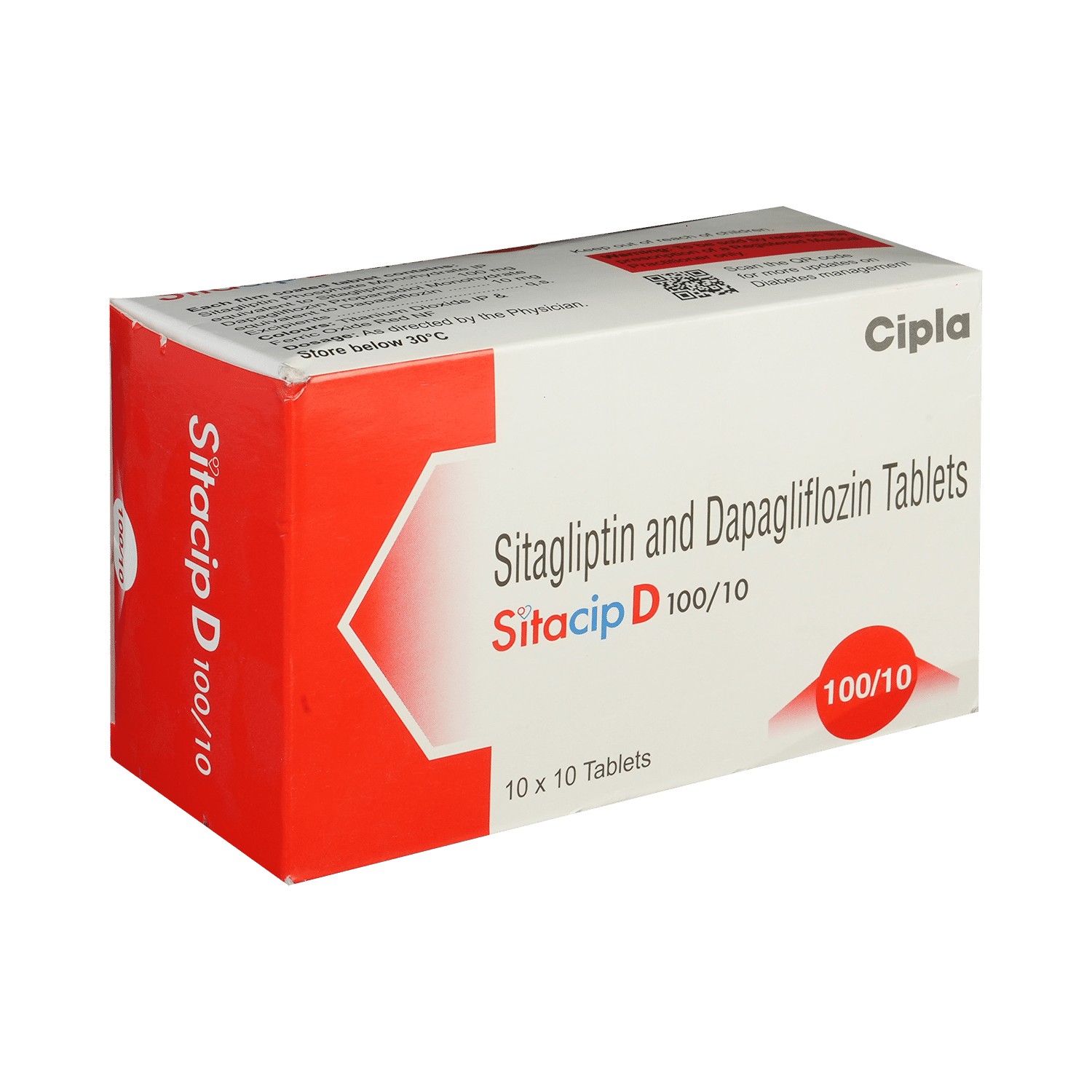
Images are for product identification. Refer to the selected batch for packaging and availability.
Sitacip D 100/10 Mg Tablet (10 Tab)
Drug Formula unavailable
YOUR PURCHASE PRICE
13 in stockInclusive of all taxes
Choose your batch
2 offersSign in to order for your pharmacy.
Product information
- Manufacturer
- Cipla Ltd
- Category
- Allopathy
- Composition
- Not provided
- Packaging
- 10 TABLET
- Box / case pack
- 1 / —
Description
SITACIP D 100/10 MG TABLET
SITACIP D 100/10 MG Tablet, manufactured by Cipla Ltd., is a combination medication used to manage Type 2 Diabetes Mellitus in adults. It is prescribed when diet, exercise, and other medications alone are not sufficient to achieve adequate blood sugar control.
Composition SITACIP D 100/10 MG Tablet contains two active ingredients:
- Sitagliptin (100 mg): A dipeptidyl peptidase-4 (DPP-4) inhibitor. It works by increasing the levels of incretin hormones, which stimulate insulin release after meals and decrease glucose production by the liver.
- Dapagliflozin (10 mg): A sodium-glucose co-transporter-2 (SGLT2) inhibitor. It works by blocking the reabsorption of glucose in the kidneys, leading to increased excretion of excess glucose through urine and thus lowering blood sugar levels. Dapagliflozin may also contribute to weight loss and blood pressure reduction.
Uses SITACIP D 100/10 MG Tablet is primarily used for:
- Treatment of Type 2 Diabetes Mellitus in adults.
- Lowering elevated blood glucose levels.
- Improving glycemic control.
- May reduce the risk of heart attack, heart failure, or other cardiovascular events.
- Treatment of chronic kidney disease in adults with reduced kidney function.
Dosage and Administration
- Typically, SITACIP D 100/10 MG Tablet is taken orally once daily, as directed by a healthcare provider.
- It can be taken with or without food, but it is recommended to take it at the same time each day to maintain stable blood sugar levels.
- The tablet should be swallowed whole and not chewed, crushed, or broken.
- Do not stop taking the medicine abruptly without consulting your doctor, as this can lead to an increase in blood sugar levels.
Side Effects Common side effects may include:
- Urinary tract infection (UTI)
- Genital fungal infections (in both males and females)
- Nasal congestion, sore throat, or upper respiratory tract infection
- Headache
- Diarrhea, nausea, vomiting, stomach pain
- Hypoglycemia (low blood sugar), especially when used with other antidiabetic medicines or alcohol
- Dizziness or light-headedness
Serious side effects, though rare, can include:
- Pancreatitis (inflammation of the pancreas), characterized by severe and persistent stomach pain.
- Serious allergic reactions (rash, hives, swelling of the face, tongue, and throat).
- Dehydration.
Precautions
- Inform your doctor about any existing medical conditions, especially kidney problems, liver problems, heart disease, bladder infections, or a history of pancreatitis.
- Avoid alcohol consumption as it may cause serious side effects and affect blood sugar levels.
- Pregnant or breastfeeding women should consult their doctor before taking this medicine, as dapagliflozin is contraindicated in the second and third trimesters of pregnancy.
- Caution is advised in elderly patients.
- This medicine is not recommended for Type 1 Diabetes Mellitus or severe kidney/liver disease.
- Interactions can occur with diuretics, insulin, insulin secretagogues, oral contraceptives, and certain antibiotics.
Storage
- Store in a cool and dry place, away from direct sunlight.
- Ideally, store at room temperature, below 30°C.
- Keep out of the sight and reach of children.
- Keep the product in its original packaging to protect it from light and moisture.
Frequently asked questions
What is SITACIP D 100/10 MG TABLET used for?
SITACIP D 100/10 MG TABLET is primarily used for the management of type 2 diabetes mellitus in adults. It is prescribed when diet, exercise, and other medications like metformin alone are not enough to control blood sugar levels. Additionally, it helps to reduce the risk of serious complications associated with diabetes, such as heart attack, heart failure, and chronic kidney disease in adults with reduced kidney function.
How does SITACIP D 100/10 MG TABLET work?
This medicine contains two active ingredients: Sitagliptin and Dapagliflozin. Sitagliptin is a DPP-4 inhibitor that works by increasing the levels of natural substances called incretins in the body. These incretins help stimulate insulin release after meals and decrease the amount of glucose produced by the liver. Dapagliflozin is an SGLT2 inhibitor that works by blocking a protein in the kidneys, causing excess glucose to be removed from the body through urine. Together, they help to lower blood sugar levels through different mechanisms.
What is the usual dosage for SITACIP D 100/10 MG TABLET?
SITACIP D 100/10 MG TABLET is typically taken once daily. It can be taken with or without food, but it's recommended to take it at the same time each day for optimal benefits. Your doctor will determine the appropriate dosage based on your medical condition and response to treatment.
What are the possible side effects of SITACIP D 100/10 MG TABLET?
Common side effects may include urinary tract infections, fungal infections in the genital area, nasal congestion, sore throat, upper respiratory tract infections, headache, nausea, vomiting, and diarrhea. Low blood sugar (hypoglycemia) can occur, especially when SITACIP D is used with other antidiabetic medicines like insulin or sulfonylureas. Drink plenty of fluids to prevent dehydration.
Is SITACIP D 100/10 MG TABLET safe during pregnancy or breastfeeding?
SITACIP D 100/10 MG TABLET is not recommended during pregnancy, especially during the second and third trimesters, as there is limited information and potential risks of adverse effects on fetal kidney development have been observed in animal studies with dapagliflozin. It is also generally not recommended while breastfeeding because it is not known how much of the medicine passes into breast milk and it could potentially affect the baby's sugar levels and kidney development. Always consult your doctor if you are pregnant, planning to become pregnant, or breastfeeding.
Can SITACIP D 100/10 MG TABLET be taken with other medications?
SITACIP D 100/10 MG TABLET may interact with certain other medications. Particular care should be taken if you are also taking diuretics (water pills) like furosemide, as this can increase the risk of dehydration and low blood pressure. Combining it with insulin or insulin secretagogues (like sulfonylureas) may increase the risk of extremely low blood sugar levels. Inform your doctor about all other medicines, herbal products, or supplements you are taking to avoid potential interactions.
What precautions should be taken while taking SITACIP D 100/10 MG TABLET?
Before starting SITACIP D 100/10 MG TABLET, inform your doctor if you have kidney or liver problems, a history of urinary tract infections, or heart failure. It is important to avoid excessive alcohol consumption as it may increase the risk of certain side effects. Regular monitoring of your blood sugar levels is crucial while on this medication. Do not stop taking the medicine abruptly without consulting your doctor, as this can lead to increased blood sugar levels and serious complications.
What happens if a dose of SITACIP D 100/10 MG TABLET is missed?
If you miss a dose, take it as soon as you remember. However, if it is almost time for your next scheduled dose, skip the missed dose and continue with your regular dosing schedule. Do not take a double dose to make up for a forgotten one. If you frequently miss doses, consider setting an alarm or asking your pharmacist for advice on how to remember your medication.
How should SITACIP D 100/10 MG TABLET be stored?
SITACIP D 100/10 MG TABLET should be stored in a cool and dry place, away from direct sunlight and out of the reach of children. The recommended storage temperature is generally between 20°C and 25°C (68°F and 77°F). Do not use the medicine after its expiry date.