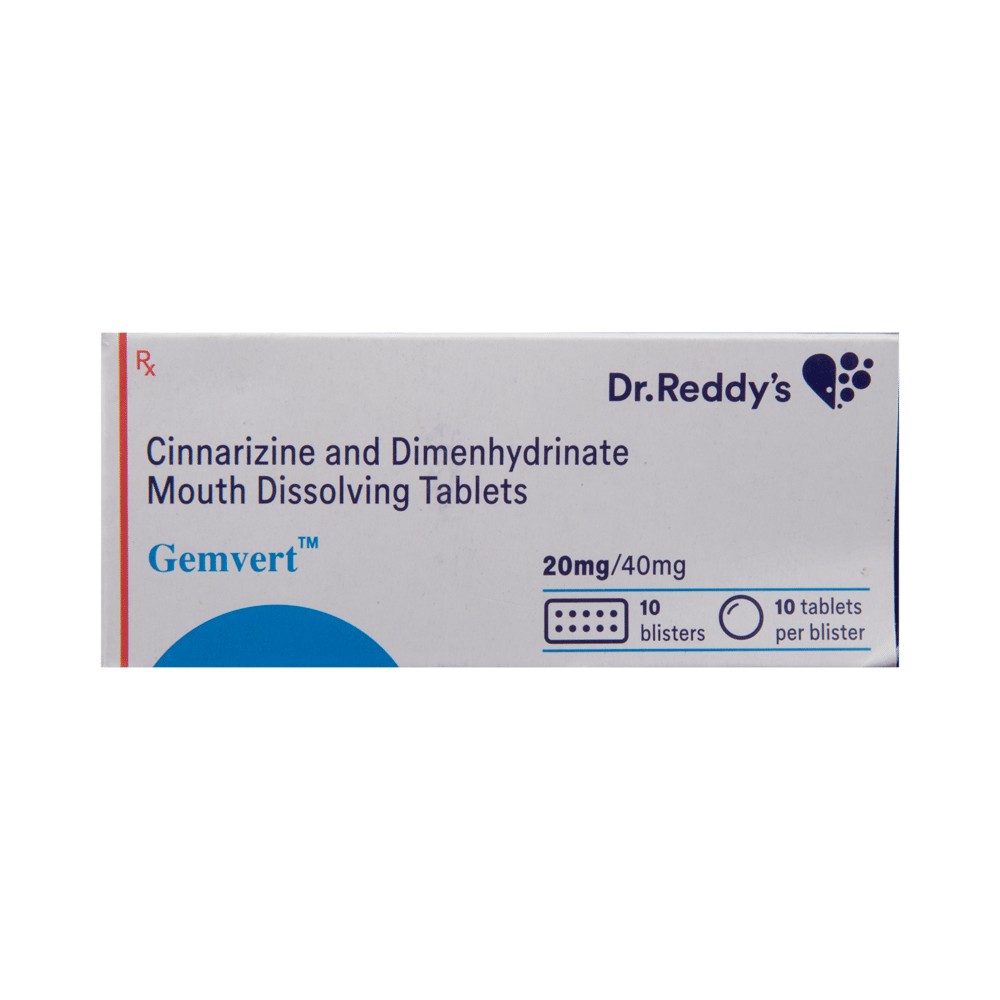
Images are for product identification. Refer to the selected batch for packaging and availability.
Gemvert 20 Mg/ 40 Mg Tablet
Cinnarizine (20mg) + Dimenhydrinate (40mg)
YOUR PURCHASE PRICE
2 in stockInclusive of all taxes
Available batch
1 offerSign in to order for your pharmacy.
Product information
- Manufacturer
- Dr Reddy S Laboratories Ltd
- Category
- Allopathy
- Composition
- Cinnarizine (20mg) + Dimenhydrinate (40mg)
- Packaging
- 10 TABLETS
- Box / case pack
- 1 / —
Description
GEMVERT 20 MG/40 MG TABLET
Gemvert 20 mg/40 mg Tablet is a combination medication manufactured by Dr. Reddy's Laboratories Ltd., primarily used for the treatment of vertigo and its associated symptoms.
Composition Gemvert Tablet contains two active ingredients:
- Cinnarizine (20 mg): This acts as a calcium channel blocker and antihistamine, working to prevent the narrowing of blood vessels in the inner ear, thereby improving blood circulation.
- Dimenhydrinate (40 mg): This is an antihistamine that acts on the vestibular system, which is responsible for balance and spatial orientation. It helps block the action of chemical messengers (histamine) that cause lightheadedness, nausea, and vomiting.
Uses Gemvert Tablet is prescribed for the symptomatic treatment of vertigo, a condition characterized by a feeling of dizziness, spinning, or a false sense of motion. It helps alleviate associated symptoms such as nausea, vomiting, dizziness, and disturbances in balance. It is also used for motion sickness and vestibular disorders.
Dosage and Administration The tablet should be taken orally, usually with food, or as directed by your doctor. It should be swallowed whole with a sufficient amount of water; do not break, crush, or chew the tablet. The dose and duration of treatment are determined by the doctor based on the severity of the condition. It is important not to abruptly discontinue the medicine without consulting a doctor.
Side Effects Common side effects may include:
- Drowsiness/Sleepiness
- Headache
- Dry mouth
- Stomach discomfort and pain/Indigestion
- Nausea/Vomiting
- Fatigue/Unusual tiredness and weakness
Less common or more serious side effects can include visual disturbances, skin rash, weight gain, muscle stiffness and trembling, swelling of face/lips/eyelids/tongue/hands/feet, blurred vision, confusion, muscle weakness, tremors, or urinary retention. If any side effects persist or worsen, medical advice should be sought.
Precautions
- Drowsiness: Gemvert Tablet can cause drowsiness, so avoid driving or operating heavy machinery until you know how the medicine affects you.
- Alcohol: Consumption of alcohol is not recommended as it can increase drowsiness and dizziness.
- Medical Conditions: Inform your doctor if you have liver or kidney problems, seizures (fits), glaucoma, cardiovascular disease (e.g., irregular heartbeat, altered blood pressure), asthma/COPD, Parkinson's disease, or a history of peptic ulcer or low blood pressure.
- Pregnancy and Breastfeeding: Not recommended during pregnancy unless absolutely necessary. It is also not recommended for breastfeeding women, and breastfeeding should be discontinued while taking the medicine.
- Children: Not recommended for use in children below 18 years of age as safety and efficacy data are not clinically established.
- Drug Interactions: Inform your doctor about all current medicines, including antibiotics (e.g., streptomycin, gentamicin), anticholinergic medicines, MAOIs, and antiparkinson medications, to avoid potential interactions.
Storage Store Gemvert Tablet at room temperature, ideally below 30°C. Keep it in a tightly closed container, protected from light and moisture, and out of reach of children and pets. Ensure it is used before its expiry date.
Frequently asked questions
What is Gemvert 20 MG/40 MG Tablet used for?
Gemvert 20 MG/40 MG Tablet is primarily used to treat vertigo, a condition characterized by a sensation of dizziness or spinning, and associated symptoms such as nausea and vomiting. It is also prescribed for motion sickness, Meniere's disease, benign paroxysmal positional vertigo, vestibular neuritis, and labyrinthitis.
How does Gemvert 20 MG/40 MG Tablet work?
This medicine is a combination of Cinnarizine (20 mg) and Dimenhydrinate (40 mg). Cinnarizine acts as a calcium channel blocker, which helps to improve blood circulation in the inner ear by preventing the narrowing of blood vessels. Dimenhydrinate is an antihistamine that blocks the action of histamine, a chemical messenger responsible for causing symptoms like light-headedness, nausea, and vomiting associated with vertigo.
What is the usual dosage of Gemvert 20 MG/40 MG Tablet?
The dosage of Gemvert 20 MG/40 MG Tablet is determined by your doctor based on your specific medical condition and its severity. It is typically taken orally with food. For motion sickness, adults might take 50 to 100 mg 30 minutes before travel, followed by 50 to 100 mg every 4 to 6 hours, with a maximum of 400 mg per day. For children aged 6 to 12 years, the dose is generally 25 to 50 mg every 6 to 8 hours, with a maximum of 150 mg per day.
What are the possible side effects of Gemvert 20 MG/40 MG Tablet?
Common side effects can include drowsiness, dry mouth, headache, nausea, indigestion or stomach discomfort, and fatigue. Other reported side effects may include skin rash, visual disturbances, weight gain, muscle stiffness, trembling, blurred vision, confusion, muscle weakness, tremors, and difficulty in urination (urinary retention). If these symptoms persist or worsen, consult your doctor.
Is Gemvert 20 MG/40 MG Tablet safe during pregnancy or breastfeeding?
Gemvert 20 MG/40 MG Tablet is generally not recommended during pregnancy due to limited information regarding its safety for the developing baby. Similarly, it is not recommended for use by breastfeeding mothers as the medicine may pass into breast milk. Always consult your doctor to discuss the potential benefits and risks if you are pregnant or breastfeeding.
Can Gemvert 20 MG/40 MG Tablet be taken with other medications?
Gemvert 20 MG/40 MG Tablet can interact with various medications. It may increase drowsiness when taken with other Central Nervous System (CNS) depressants like benzodiazepines or opioids. Concomitant use with anticholinergic drugs can enhance side effects such as dry mouth, blurred vision, and urinary retention. Interactions with Monoamine Oxidase Inhibitors (MAOIs) can lead to a hypertensive crisis, and with Selective Serotonin Reuptake Inhibitors (SSRIs), it may increase the risk of serotonin syndrome. It can also interact with blood thinners, potentially increasing the risk of bleeding. It is crucial to inform your doctor about all medicines, supplements, or herbal products you are currently taking to avoid any adverse interactions.
What precautions should be taken while taking Gemvert 20 MG/40 MG Tablet?
This medicine can cause drowsiness and sleepiness, so it is advisable to avoid driving or operating heavy machinery until you understand how it affects you. Do not stop taking Gemvert abruptly, as this can lead to the reappearance of symptoms. It is not recommended for use in children below 18 years of age. Inform your doctor if you have pre-existing conditions such as cardiovascular disease, asthma, COPD, Parkinson's disease, kidney or liver problems, glaucoma, seizures, increased pressure in the brain, enlarged prostate glands, or low blood pressure.
What happens if a dose of Gemvert 20 MG/40 MG Tablet is missed?
If you miss a dose of Gemvert 20 MG/40 MG Tablet, take it as soon as you remember. However, if it is almost time for your next scheduled dose, skip the missed dose and continue with your regular dosing schedule. Do not double the dose to make up for a missed one.
How should Gemvert 20 MG/40 MG Tablet be stored?
Gemvert 20 MG/40 MG Tablet should be stored at room temperature, away from direct sunlight and moisture. Keep the medicine in its original container, tightly closed, and out of reach of children.
Can I consume alcohol while taking Gemvert 20 MG/40 MG Tablet?
No, consuming alcohol is not recommended while taking Gemvert 20 MG/40 MG Tablet. Alcohol can increase the risk of side effects such as drowsiness and dizziness, which are already potential side effects of this medication.