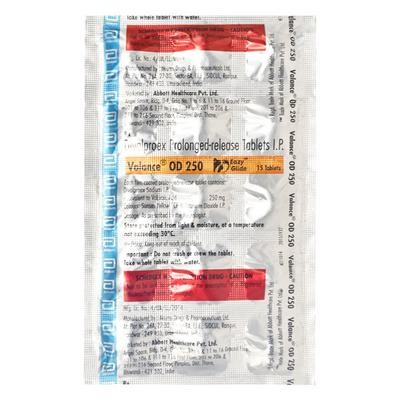
Images are for product identification. Refer to the selected batch for packaging and availability.
Valance Od 250 Tablet
Divalproex (250mg)
YOUR PURCHASE PRICE
27 in stockInclusive of all taxes
Available batch
1 offerSign in to order for your pharmacy.
Product information
- Manufacturer
- Abbott
- Category
- Allopathy
- Composition
- Divalproex (250mg)
- Packaging
- 15 TABLET
- Box / case pack
- 1 / —
Description
VALANCE OD 250 TABLET by ABBOTT
VALANCE OD 250 TABLET is a medication primarily used to manage neurological and mood disorders.
-
Composition VALANCE OD 250 TABLET contains Divalproex (250 mg) as its active ingredient. Divalproex works by increasing the levels of gamma-aminobutyric acid (GABA) in the brain, a neurotransmitter that helps stabilize electrical activity and calm nerve cells, thereby suppressing abnormal neuronal firing.
-
Uses This medication is prescribed for:
- Epilepsy/Seizures: Managing various types of seizures, including generalized tonic-clonic, partial, and complex absence seizures.
- Bipolar Disorder: Stabilizing mood and managing manic episodes associated with bipolar disorder.
- Migraine Prophylaxis: Preventing migraine headaches.
-
Dosage and Administration VALANCE OD 250 TABLET should be taken exactly as prescribed by your doctor. The tablet should be swallowed whole with water and not crushed or chewed, as this can affect its effectiveness. It can be taken with or without food, though taking it with food may help minimize stomach upset. For best results, take it at the same time each day. Do not stop the medication without consulting your doctor, as this can worsen your condition or trigger seizures.
-
Side Effects Common side effects include diarrhea, abdominal pain, loss of appetite, weight changes, drowsiness, headache, nausea, vomiting, dizziness, hair loss, skin rashes, and tremor. Serious side effects, though rare, can include liver damage (jaundice, dark urine, severe stomach pain), pancreatitis, blood disorders, and suicidal thoughts, requiring immediate medical attention.
-
Precautions
- Pregnancy: VALANCE OD 250 TABLET is not recommended during pregnancy due to the risk of birth defects; effective contraception should be used by women of childbearing age.
- Alcohol: Avoid consuming alcohol, as it can increase side effects like dizziness and drowsiness and potentially affect liver function.
- Liver/Kidney Disease: Use with caution in patients with liver or kidney problems; not recommended for severe hepatic impairment or urea cycle disorders.
- Driving: Avoid driving or operating machinery if you experience dizziness or drowsiness.
- Drug Interactions: Inform your doctor about all other medications you are taking, as interactions can occur with antidepressants, anti-anxiety medicines, and other drugs.
-
Storage Store VALANCE OD 250 TABLET in a cool, dry place at room temperature (below 30°C), away from direct sunlight and moisture. Keep it out of reach of children.
Frequently asked questions
VALANCE OD 250 TABLET, which contains divalproex (a form of valproic acid), is an anticonvulsant medication used to manage various neurological and psychiatric conditions.
Here are some frequently asked questions about VALANCE OD 250 TABLET:
What is VALANCE OD 250 TABLET used for?
VALANCE OD 250 TABLET is primarily used to treat different types of seizures (epilepsy) in adults and children aged 10 years and older. It is also prescribed to manage manic episodes associated with bipolar disorder and for the prophylactic management of migraine headaches.
How does VALANCE OD 250 TABLET work?
VALANCE OD 250 TABLET contains divalproex, which works by increasing the levels of gamma-aminobutyric acid (GABA), an inhibitory neurotransmitter in the brain. This action helps to decrease excessive and abnormal nerve activity, thereby stabilizing electrical activity in the brain, which helps control seizures, stabilize mood, and reduce the frequency and severity of migraine attacks.
What is the usual dosage for VALANCE OD 250 TABLET?
The dosage of VALANCE OD 250 TABLET is individualized and determined by your doctor based on factors such as body weight, medical history, age, and response to treatment. For epilepsy, the usual initial dose for adults and children 10 years or older is typically 10 to 15 mg per kilogram of body weight per day, gradually increasing by 5 to 10 mg per kilogram per week as needed, up to a maximum of 60 mg per kilogram per day. If the total daily dose exceeds 250 mg, it is usually given in divided doses. As VALANCE OD is an "Once Daily" formulation, your doctor will provide specific instructions.
What are the possible side effects of VALANCE OD 250 TABLET?
Common side effects can include stomach pain, nausea, vomiting, diarrhea, dizziness, drowsiness, headaches, tremors, changes in appetite, and weight gain. More serious side effects, though less common, can include liver problems (yellowing of the skin or eyes, dark urine, severe tiredness), pancreatitis (severe stomach pain, nausea, vomiting, fever), unusual bruising or bleeding, and changes in mood or behavior, including suicidal thoughts. It is important to contact your doctor immediately if you experience any serious side effects.
Is VALANCE OD 250 TABLET safe during pregnancy or breastfeeding?
VALANCE OD 250 TABLET (valproate) is generally not recommended during pregnancy due to a significant risk of birth defects (such as neural tube defects, heart defects, cleft palate) and neurodevelopmental problems in the child, including lower IQ scores. Women of childbearing potential should use effective contraception and be enrolled in a valproate pregnancy prevention program. If pregnancy occurs, immediate consultation with a doctor is crucial; never stop the medication suddenly without medical advice.
During breastfeeding, very small amounts of valproate pass into breast milk and usually do not cause side effects in healthy, full-term infants. However, other treatments might be more suitable, and your doctor may only recommend valproate if it's the only effective medicine for you, with careful monitoring of the infant.
Can VALANCE OD 250 TABLET be taken with other medications?
VALANCE OD 250 TABLET can interact with several other medications. Concomitant use with certain antidepressants (e.g., fluoxetine, paroxetine) and anti-anxiety medicines (e.g., alprazolam, diazepam) can potentially increase side effects or alter their effects. It can also interact with other antiepileptic drugs (like carbamazepine, lamotrigine, phenobarbital, phenytoin, topiramate), aspirin, warfarin, and zidovudine, potentially requiring dose adjustments or closer monitoring. Always inform your doctor about all medicines, vitamins, and herbal supplements you are taking.
What precautions should be taken while on VALANCE OD 250 TABLET?
Do not stop taking VALANCE OD 250 TABLET suddenly without consulting your doctor, as this can lead to an increase in seizure frequency and severity. Caution should be exercised if you have liver problems, kidney disease, mitochondrial disorders, or urea cycle disorders, as these can be contraindications or require careful monitoring. Regular liver function tests are often required, especially during the first six months of treatment. The medication may cause dizziness or drowsiness, so avoid driving or operating heavy machinery until you know how it affects you. Alcohol consumption should be avoided as it can increase some side effects.
What happens if a dose of VALANCE OD 250 TABLET is missed?
If you miss a dose, take it as soon as you remember. However, if it is almost time for your next scheduled dose, skip the missed dose and continue with your regular dosing schedule. Do not take a double dose to make up for a missed one. Consistency is important for maintaining effectiveness, especially for seizure control.
How should VALANCE OD 250 TABLET be stored?
VALANCE OD 250 TABLET should be stored at controlled room temperature, typically between 15°C and 30°C (59°F and 86°F). Keep it in a cool, dry place, protected from light and moisture, and out of the reach of children. Repackaging liquid forms of valproate into polypropylene syringes is not recommended due to drug loss.